Guides
Practical camp stove buying content — burner count, fuel types, BTU output, wind resistance, and car-camping vs backpacking trade-offs explained.
Troubleshooting
Why your canister stove dies in the cold — and why it's the fuel, not the stove
A canister stove burns the gas above the liquid, never the liquid itself — and cold switches that gas off. Why a sloshing canister isn't empty, why a half-used can is worse, the two free tests, and the fixes that actually work in winter (a bigger stove isn't one of them).
Buying guide
How to choose a camp stove: burners, fuel type, and output
1 vs 2 vs 3 burners, propane vs isobutane vs liquid fuel, BTU output explained, wind resistance features, and when to choose car-camping stoves vs portable single-burner systems.
Why this page exists
Camp stove marketing leads with BTU numbers without explaining that raw BTU output matters less than flame control and wind resistance in most real cooking situations. A 20,000 BTU burner that can't simmer without scorching food is less useful than a 10,000 BTU burner with precise low-end control.
This page explains the specs that actually matter for different cooking styles and trips.
Plain note about money. Links below go to eBay searches with an affiliate tag. If you buy through one, a small commission comes to this site. Your price is identical either way.
Camp stoves worth searching on eBay
We earn a small commission on qualifying sales; your price is unchanged. Full disclosure.
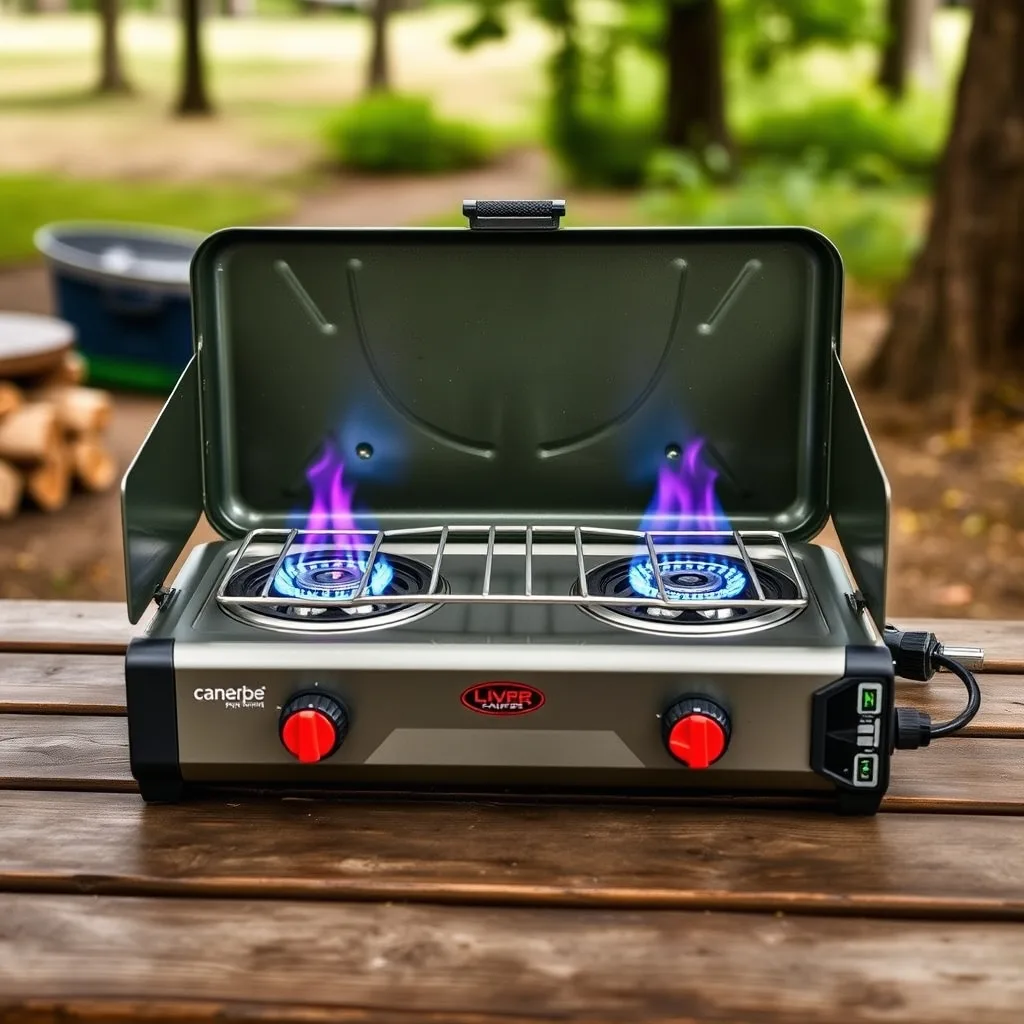
 2 burner camp stove
The standard for car camping — cook a main on one burner, simmer a side on the other. Look for cast-iron or porcelain grates and independent burner control.
View on eBay →
Propane camp stove
Connects to standard 1 lb green canisters or bulk tank via hose adapter. Consistent pressure and output; widely available fuel. Best for car camping where canister weight is irrelevant.
View on eBay →
2 burner camp stove
The standard for car camping — cook a main on one burner, simmer a side on the other. Look for cast-iron or porcelain grates and independent burner control.
View on eBay →
Propane camp stove
Connects to standard 1 lb green canisters or bulk tank via hose adapter. Consistent pressure and output; widely available fuel. Best for car camping where canister weight is irrelevant.
View on eBay →
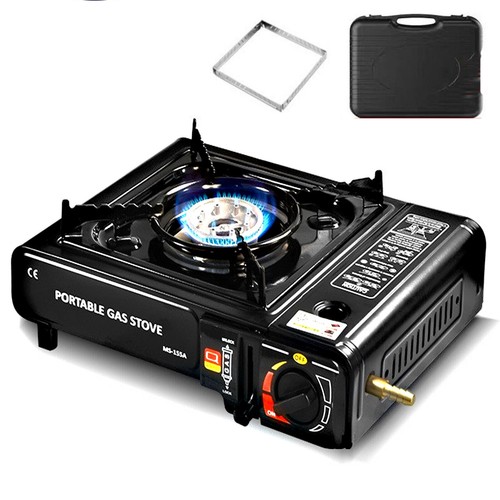 Portable camping stove
Compact single-burner designs that use butane canisters or isobutane-propane mixes. Suitable for backpacking, solo trips, or as a secondary stove. Check minimum operating temperature for cold-weather use.
View on eBay →
Portable camping stove
Compact single-burner designs that use butane canisters or isobutane-propane mixes. Suitable for backpacking, solo trips, or as a secondary stove. Check minimum operating temperature for cold-weather use.
View on eBay →
 Camping grill stove
Combo units with both a burner grate for pots and a grill surface for direct cooking. Useful for versatility; burner and grill performance are typically both adequate rather than excellent.
View on eBay →
Camping grill stove
Combo units with both a burner grate for pots and a grill surface for direct cooking. Useful for versatility; burner and grill performance are typically both adequate rather than excellent.
View on eBay →
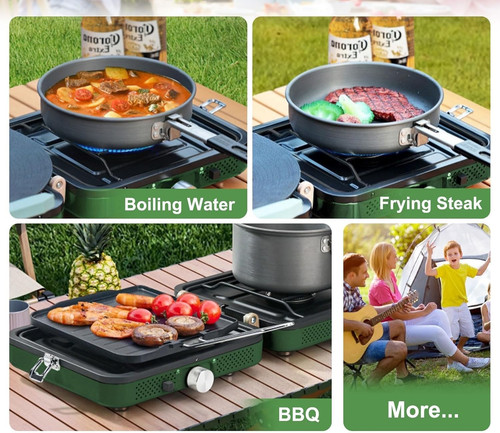 Camp stove with griddle
Two-burner stove with a reversible griddle/grate accessory. Ideal for camp breakfasts — pancakes, eggs, and bacon across a full flat surface. Check griddle material (cast iron vs cold-rolled steel).
View on eBay →
Camp stove with griddle
Two-burner stove with a reversible griddle/grate accessory. Ideal for camp breakfasts — pancakes, eggs, and bacon across a full flat surface. Check griddle material (cast iron vs cold-rolled steel).
View on eBay →