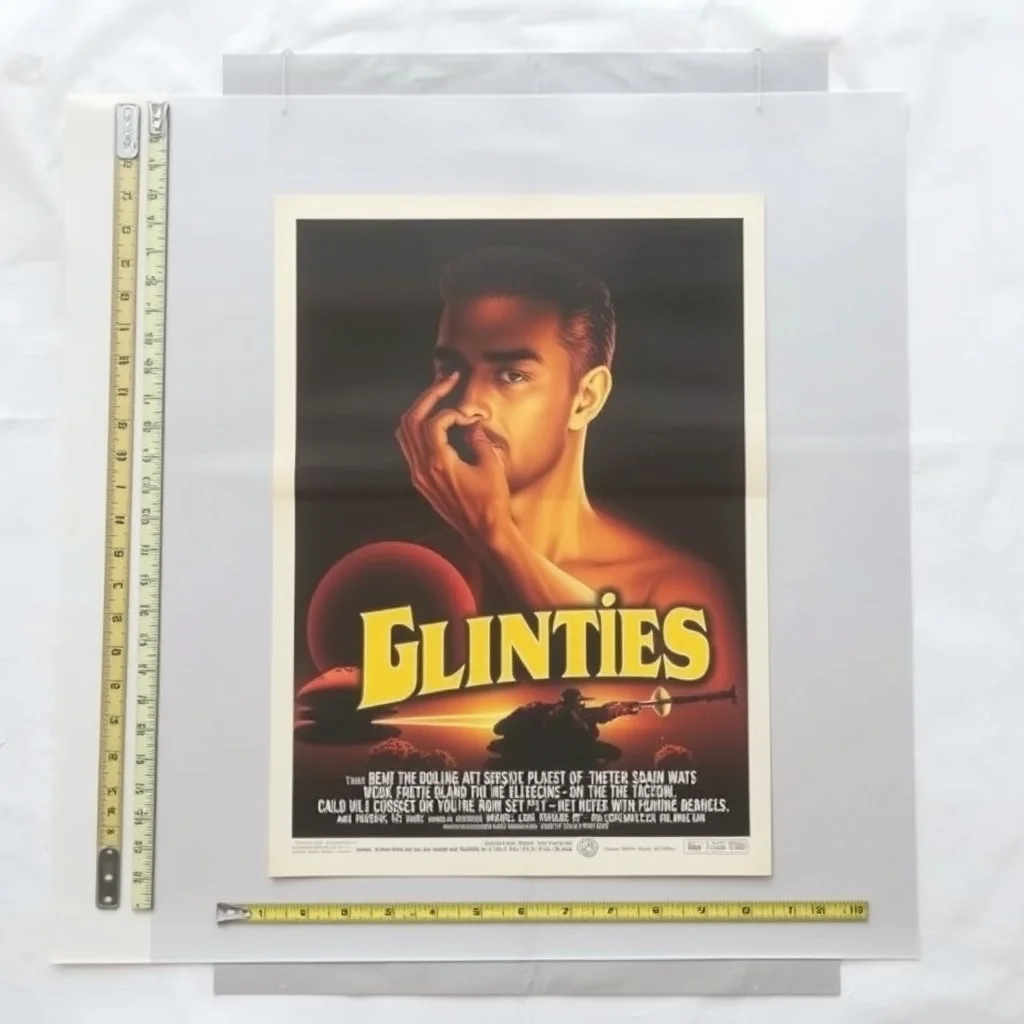
Standard US movie poster formats and dimensions
The US theatrical poster industry standardized around a set of format names and dimensions that remained largely consistent from the 1920s through the 1980s. Understanding these formats is the first layer of authentication — a poster that claims to be a "one-sheet" but measures differently than standard is a flag worth investigating.
| Format | Dimensions (approx.) | Notes |
|---|---|---|
| One-sheet | 27 × 41 inches | The primary US theatrical format. Displayed in theater lobbies and cases. Most collected format. |
| Half-sheet | 22 × 28 inches | Landscape orientation typically. Used in smaller display positions. Horizontal format differs from one-sheet. |
| Insert | 14 × 36 inches | Narrow vertical format. Used in theater case displays. Distinct aspect ratio from one-sheet. |
| Three-sheet | 41 × 81 inches | Large format displayed on theater exterior columns. Three panels typically printed separately and assembled. |
| Six-sheet | 81 × 81 inches | Very large, typically printed in multiple sections. Rare survivals. |
| Lobby card | 11 × 14 inches | Photographs of film scenes distributed in sets of 8. Title card (card #1) typically most prized. |
| Window card | 14 × 22 inches | Printed with blank space at top for theater to add local show information by hand. |
Folded vs rolled: the condition split
US one-sheets prior to approximately 1985 were distributed folded (in thirds horizontally and then folded or quartered), because shipping flat tubes was less practical and theater storage was often folded flat. Beginning in the mid-1980s, some studios shifted to shipping posters rolled in tubes. This historical distribution practice creates a fundamental condition distinction in the collector market.
Folded posters
A folded one-sheet has fold lines where the paper was creased. The fold lines are permanent; they cannot be fully eliminated even by linen-backing. Fold intersection points (where two fold lines cross) are the weakest areas and most prone to separation, tears, and paper loss. A C8 (Very Fine) folded poster will have clean folds with no separation; a C4 might show separation at intersection points and some fold-area fading.
The standard one-sheet fold pattern creates four quadrants in the upper half and four in the lower half with the tri-fold — three visible horizontal fold lines and usually one central vertical fold, for a total of six or seven visible fold lines. Counting fold lines can help verify whether a poster was originally distributed folded (as expected for pre-1985 US one-sheets) or was subsequently folded for storage from a rolled original.
Rolled posters
Rolled posters stored in archival tubes and kept flat are the preferred condition for post-1985 originals. An unfolded rolled poster in good storage may have no fold lines at all, presenting flat with minor edge handling wear only. For pre-1985 films, a "rolled" copy is unusual — it may indicate the poster was unfolded from a folded original, which typically still shows the fold impressions in raking light even if not visible in normal light. Genuine pre-1985 rolled copies that were stored rolled from original distribution are rare and command premiums.
Linen-backing: what it does and what it costs you
Linen-backing (also called linen-mounting) is a conservation process where a poster is mounted onto a sheet of linen (or sometimes Japanese tissue on a linen backing) using wheat-paste or a similar archival adhesive. The process was developed to stabilize fragile or damaged posters for display and handling.
What linen-backing does
- Stabilizes tears and separations: Missing paper at fold points is typically filled with Japanese tissue and toned to match. Tears are laid flat and supported.
- Allows display without further damage: A linen-backed poster can be displayed without framing concerns about paper movement.
- Can reduce or flatten fold lines: Fold impressions are minimized in well-executed linen-backing, though typically not eliminated entirely.
- Conceal extent of restoration: This is the double-edge. Professional linen-backing can make a poster in C5 condition appear much closer to C7 or C8 visually. The backing and fill work is not always disclosed by sellers.
The value question for linen-backed posters
A high-quality linen-back on an original poster does not reduce value; many collectors and dealers prefer linen-backed posters for display purposes and willingly pay appropriate premiums. However, a linen-back that conceals undisclosed restoration — fills, color touch, paper replacement — reduces value exactly as restoration reduces comic book value. The difference between "linen-backed for preservation with disclosed fills at fold intersections" and "linen-backed to conceal extensive restoration" is the entire disclosure question.
Reversed linen-backing (removing the backing to return a poster to paper state) is possible but expensive and potentially damaging to fragile original paper. A poorly executed linen-back that has been aging for decades may be impossible to reverse without damage. Assume a linen-backed poster will remain linen-backed permanently.
Shopping for vintage movie posters? Browse current eBay listings → (we earn a small commission; your price is unchanged).
Reissue vs original: the authentication problem
Studios regularly reissued popular films with new advertising materials. A "1939 Gone with the Wind poster" acquired in the 1980s might be a 1954 reissue, a 1961 reissue, a 1967 reissue, or the original 1939 theatrical. Each reissue has different artwork, different printing methods, and very different collector value. For major films, the original release poster can be worth multiples of a reissue of the same title.
NSS numbers and printer attribution
Pre-1985 US theatrical posters distributed by the National Screen Service (NSS) typically have an NSS distributor number printed in the lower margin, often in very small type. The format is typically the year and a sequential issue number — for example, "62/123" would indicate 1962 distribution. This is one of the most reliable indicators for dating US one-sheets from that era. The absence of an NSS number is a flag; its presence in the correct format for the claimed release year is a positive indicator, though not a guarantee of authenticity.
Printing method tells the era
Pre-1960s US one-sheets were predominantly printed by stone lithography or offset lithography. Stone-litho posters have a characteristic texture and color density different from photographic offset prints. Under magnification, offset printing shows a dot pattern (halftone); stone lithography shows a different grain structure. Post-1975 posters are almost exclusively photographic offset.
A claimed 1940s one-sheet that shows photographic offset halftone dots under magnification is almost certainly a later reprint or reproduction, not an original. Similarly, a claimed 1930s poster with paper stock and printing characteristics of 1980s production is not original.
Paper stock aging indicators
Original theatrical posters age in characteristic ways. Pre-1960s posters were often printed on relatively thick paper stock that shows particular aging patterns — edge tanning, slight brittleness, appropriate paper darkening. A "vintage" poster on bright white paper with no aging characteristics is not consistent with genuine theatrical age.
UV light (blacklight) examination reveals restoration fills, paper replacements, and color touch on poster paper just as it does on comic books. Fills and touch-ups typically fluoresce differently from surrounding original paper. This is a practical examination step for any poster above a few hundred dollars in purchase price.
Grading standards for movie posters
The Cinema Antiques and Collectibles Association (CACA) and Heritage Auctions use a C1–C10 grading scale where C10 is mint and C1 is poor. The scale is not universally adopted and individual auction houses and dealers often grade with descriptive language rather than numerical grades. Be cautious of dealer-assigned grades on individual posters being sold at retail — sellers grade optimistically.
For high-value purchases, third-party authentication through Heritage Auctions' expert staff, Posteritati, or established specialist dealers provides meaningful validation. CGC does not grade movie posters. There is no equivalent dominant third-party grader for the movie poster category as of this writing.
Practical authentication checklist
- Measure the poster against standard dimensions for the claimed format.
- Check for NSS number in the lower margin (US pre-1985 theatrical).
- Examine printing method under magnification — dot pattern indicates offset; absence indicates older printing methods.
- UV examine for fills, color touch, and paper replacement on any poster over ~$200.
- For folded posters: count fold lines and verify they match expected distribution format for the era.
- For linen-backed posters: ask specifically about disclosed restoration — fills, color touch, paper replacement — before purchase.
- Check reverse (back of poster) for printing characteristics, studio markings, and distributor stamps consistent with claimed era.
Search eBay for vintage movie posters
 Vintage movie poster one sheet
27 × 41 inch US theatrical format. Confirm folded/rolled and ask about linen-backing.
Vintage movie poster one sheet
27 × 41 inch US theatrical format. Confirm folded/rolled and ask about linen-backing.
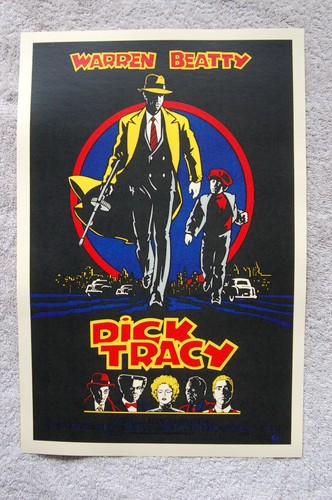 Movie poster lobby card
Sets of 8 scene cards. Title card (#1) typically priced highest within a set.
Movie poster lobby card
Sets of 8 scene cards. Title card (#1) typically priced highest within a set.
 Vintage film poster
International formats often feature different artwork — UK quads and Italian fotobuste are strong collector categories.
Vintage film poster
International formats often feature different artwork — UK quads and Italian fotobuste are strong collector categories.