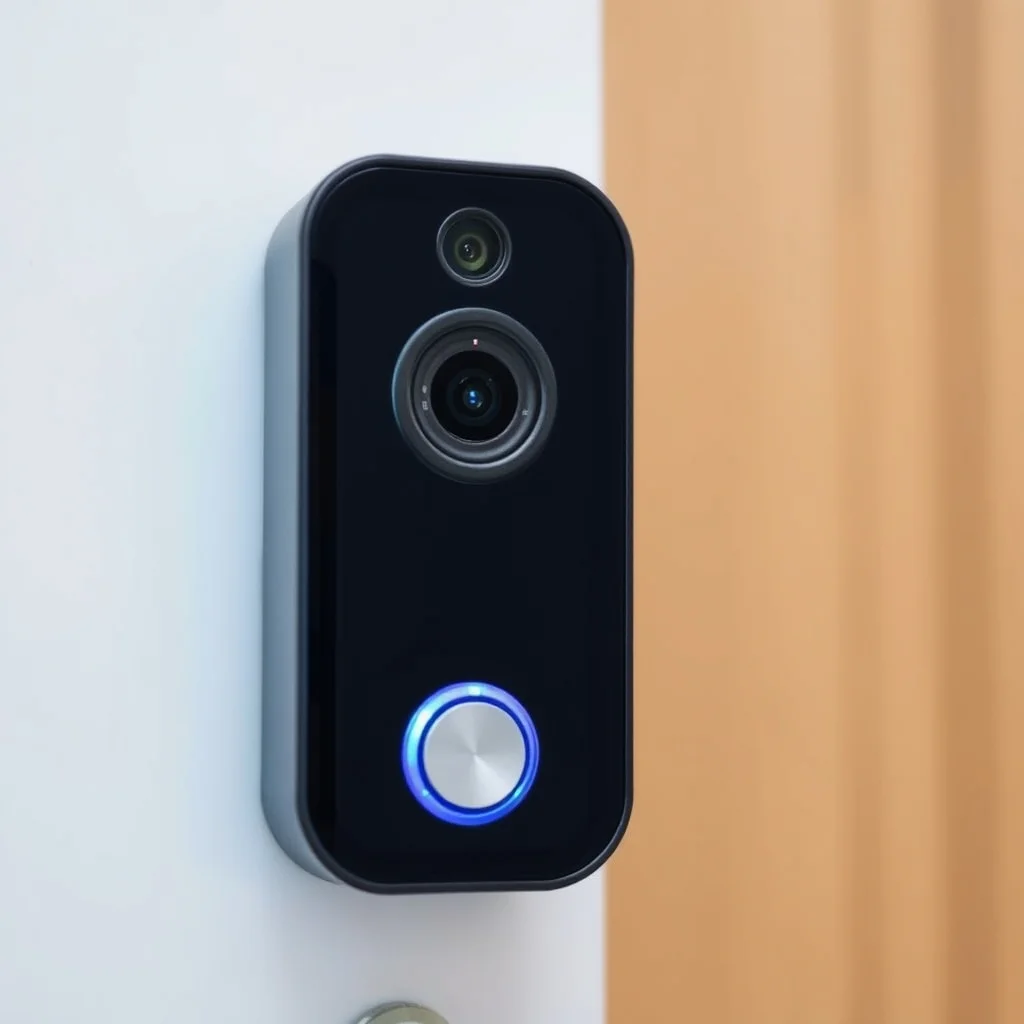
Wired vs battery: the power decision affects everything else
Wired doorbells use your home's existing doorbell wiring — typically a 16–24V AC transformer connected to a low-voltage doorbell circuit. If your home has an existing mechanical or digital chime, it almost certainly has this wiring. Wired doorbells draw continuous power, which enables features that battery doorbells cannot offer reliably: always-on live view, continuous recording, pre-roll buffering (recording a few seconds before motion triggers), and faster response times.
Battery doorbells use rechargeable lithium packs and enter a low-power sleep mode between events to conserve charge. The tradeoff is a detection delay — the camera needs to "wake up" when motion triggers, which can mean missing the first second or two of an event. On a doorbell covering a narrow entry path where someone walks up quickly and presses the button, that wake-up latency can mean you see the back of someone's head rather than their face.
Battery life: advertised vs real
Battery doorbell manufacturers typically advertise 6-month battery life in conditions that assume minimal motion events per day. In practice, a doorbell on a busy street — receiving 20–50 motion events daily from passing cars and pedestrians — might need recharging every 4–8 weeks. Motion sensitivity settings, video resolution, and two-way talk frequency all affect drain rate. If your location is high-traffic, budget for monthly recharges or investigate a hardwiring kit (many battery doorbells offer a hardwire power adapter as an accessory).
| Feature | Wired | Battery |
|---|---|---|
| Continuous live view | Yes | Limited (drains battery) |
| Pre-roll buffering | Common | Rare |
| Detection latency | Low (<1 sec) | 1–3 sec wake-up delay |
| Maintenance | None | Recharge every 1–6 months |
| Install requirement | Existing wiring or new run | No wiring needed |
| Chime compatibility | Often uses existing chime | Usually requires plug-in chime |
Aspect ratio: why tall (3:4) beats wide (16:9) at a doorstep
This is the most underexplained spec in video doorbell marketing. A standard wide-angle camera uses a 16:9 landscape aspect ratio — the same as your TV. A video doorbell with a tall aspect ratio uses something closer to 3:4 or 1:1.
At a doorstep, you need to see two things simultaneously: the person's face at shoulder height, and the package they just left at ground level. A 16:9 wide frame captures a lot of horizontal space — useful for a security camera covering a parking lot, but wasteful at a door where what matters is the vertical space between ground and head height.
A 3:4 or 1:1 aspect ratio doorbell covers roughly 8 feet of vertical space in a single frame, letting you see the visitor's face and the package without any digital zoom. With a 16:9 camera, you're often choosing between framing it for faces (leaving the ground out) or for packages (leaving heads out).
Shopping for video doorbells? Browse current eBay listings → (we earn a small commission; your price is unchanged).
Storage: local vs subscription
Most video doorbells store clips in the cloud and charge a monthly or annual subscription for access to recorded footage beyond the last few events. Plans typically offer 30–60 days of rolling storage; without a plan, you may have no recorded history at all — only the live view. Check before you buy whether the doorbell functions as a basic recorder without a subscription, or whether cloud storage is mandatory for any footage retention.
Some doorbells support local storage via a microSD card slot (typically 32GB–256GB). A 32GB card stores roughly 24–48 hours of continuous 1080p footage, or weeks of motion-triggered clips depending on activity level. This eliminates the monthly subscription entirely. The tradeoff is that local storage is on-device — a stolen or damaged doorbell takes the footage with it. Some systems use a hub device (separate from the doorbell) that stores clips locally inside the home, giving you the bandwidth of local storage with better physical security.
Chime compatibility
Wired doorbells typically connect to your existing mechanical or digital chime using the same two doorbell wires. Most modern wired doorbells are compatible with common chime types, but some digital chimes (particularly older or proprietary ones) may require a resistor or bypass kit. Check the manufacturer's chime compatibility list before purchase — this is one of the most common return reasons for wired doorbells.
Battery doorbells usually include a separate plug-in chime unit or rely on phone notifications only. If you want an audible in-home alert independent of your phone, verify the chime is included in the box or budget for it separately — it's often $20–$40 as an accessory.
Motion zones and false alerts
A video doorbell on a street-facing door that triggers on every passing car will quickly become useless — you'll disable notifications to stop the noise. Motion zone configuration lets you draw a region of interest (typically within the app) so the doorbell only alerts on motion within a specific area, like the 6-foot zone directly in front of the door.
More sophisticated doorbells offer person detection (distinguishing humans from cars and animals using on-device or cloud ML) and package detection. Person detection meaningfully reduces false alerts. Check whether person detection requires a subscription tier or is included in the base purchase — policies vary significantly by brand.
Ecosystem and integration
Video doorbells are often sold as entry points into brand ecosystems. Before committing, consider:
- Does the doorbell work with your existing smart home platform (Google Home, Amazon Alexa, Apple HomeKit, SmartThings)?
- What happens to your footage and access if the company discontinues service or raises subscription prices?
- Is two-way audio quality good enough for a real conversation, or primarily for short "I'll be right there" replies?
HomeKit Secure Video (HSV) is worth noting for Apple users: doorbells that support HSV process footage on-device and store encrypted video in your iCloud account, which is included in iCloud+ tiers you may already pay for. This avoids a separate doorbell subscription while keeping footage accessible from any Apple device.
Search eBay for video doorbells
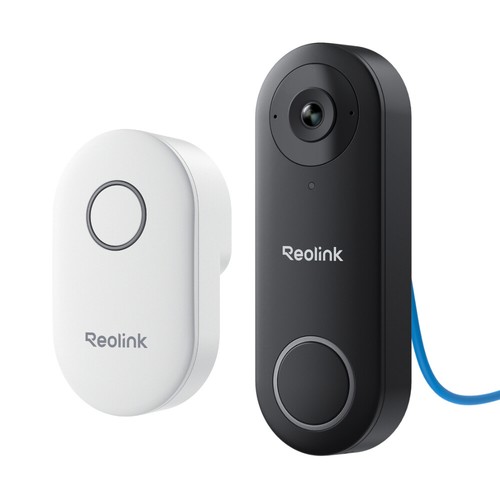 Smart Doorbell Wired
Hardwired for continuous power. Check transformer voltage compatibility (16–24V AC typical).
Smart Doorbell Wired
Hardwired for continuous power. Check transformer voltage compatibility (16–24V AC typical).
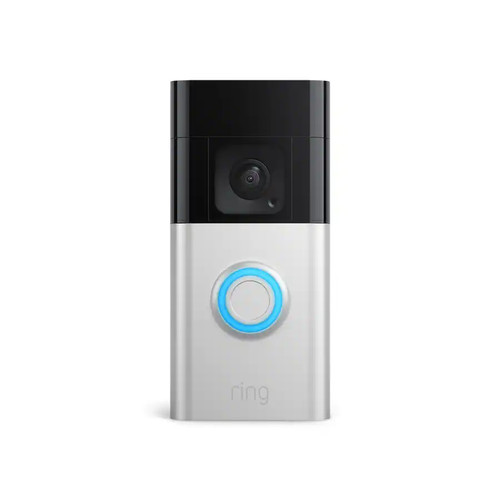 Battery Doorbell Camera
No wiring required. Look for quick-release battery designs for easier recharging.
Video Doorbell
General search. Filter by resolution and confirm subscription storage requirements.
Battery Doorbell Camera
No wiring required. Look for quick-release battery designs for easier recharging.
Video Doorbell
General search. Filter by resolution and confirm subscription storage requirements.
 Doorbell with Chime
Kits including plug-in chime unit for homes without existing doorbell wiring.
Wireless Doorbell Camera
Battery or solar-assisted doorbells for rental properties or no-drill installs.
Doorbell with Chime
Kits including plug-in chime unit for homes without existing doorbell wiring.
Wireless Doorbell Camera
Battery or solar-assisted doorbells for rental properties or no-drill installs.