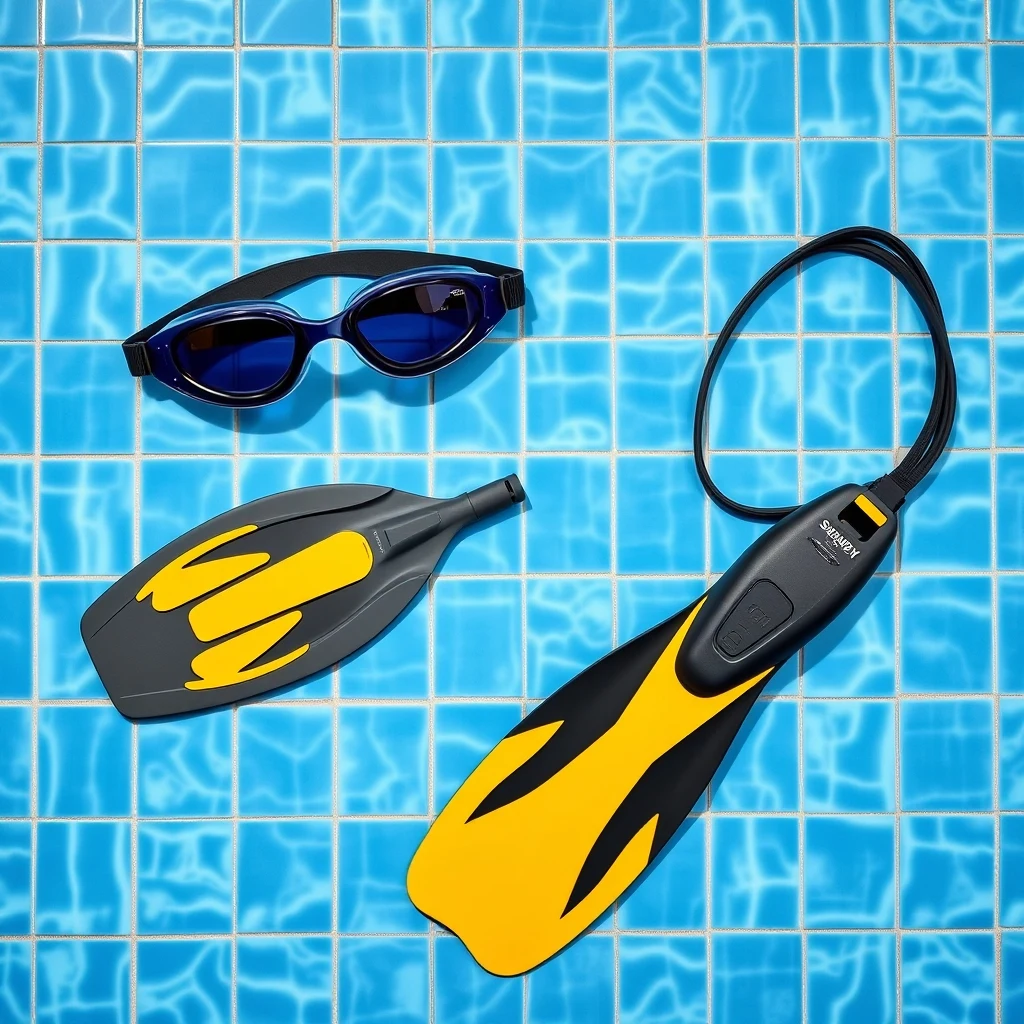
Goggles: fit first, lens second
A leaking goggle is more disruptive to training than slightly imperfect optics. Fit comes first. The standard test: press the goggle lenses gently to your eye sockets without using the strap. They should suction-cup briefly — holding for 3–5 seconds with light pressure indicates a good seal shape for your face. If they immediately fall away, the gasket shape does not match your orbital socket geometry.
Gasket type and pressure
Soft silicone gasket goggles (wide-frame, cushioned) are more comfortable for training sets but create slight drag. Hard gasket racing goggles (no foam, rigid silicone or plastic) sit flush to the orbital socket and are faster but less comfortable for long training sets. For pool training, soft gasket is typically the right choice. Reserve hard gasket for races or time trials.
Lens selection
Tinted/mirrored lenses for outdoor pools and bright indoor pools. Clear or lightly tinted lenses for dark indoor pools. Polarized lenses reduce glare for open water. UV-protective coatings are relevant for outdoor use. Anti-fog coating degrades with chlorine exposure over time — store goggles dry, don't wipe the interior lens surface with fingers, and rinse with fresh water after pool use to extend coating life.
| Goggle type | Best for | Trade-off |
|---|---|---|
| Wide frame, soft gasket | Long training sets, recreational | Slightly more drag; comfortable for 60+ min sets |
| Low-profile, hard gasket | Racing, time trials, shorter sets | Faster; less comfortable over long distances |
| Swedish goggles (no gasket) | Experienced swimmers who assemble their own fit | Customizable nose bridge; unforgiving to facial shape variation |
| Mask-style | Open water, triathletes | Wide field of view; more drag; useful for navigation |
Training fins: length, stiffness, and what each trains
Training fins make you faster in the water, but the goal in training is usually not to go fast — it is to improve kick technique, build ankle flexibility, or add cardiovascular load to specific sets. Fin selection should follow your training objective.
Short blade fins (8–13" blade)
Short blade fins are the standard for most training programs. They allow a natural kick tempo (roughly matching your normal stroke cadence) while adding resistance. Softer short fins are easier on ankles and good for high-rep kick sets. Stiffer short fins create more resistance and are used for power development. The popular Speedo Biofuse and TYR Flex are examples of softer training fins; the FINIS Positive Drive Fin is a stiffer option that promotes a front-quadrant kick.
Long blade fins (scuba/diving fins)
Long blade fins are not appropriate for competitive swim training. They change kick tempo dramatically and do not translate to stroke improvement. Avoid them for pool training.
Ankle flexibility fins (monofin-style or no-blade resistance fins)
Some fins are designed specifically to improve ankle plantar flexion range of motion. These provide little forward propulsion and are used for specific flexibility drills rather than general kick sets.
Shopping for swimming training gear? Browse current eBay listings → (we earn a small commission; your price is unchanged).
Hand paddles: sizing and shoulder risk
Hand paddles increase the surface area of your pull, adding resistance to each stroke. They are effective for building upper-body strength and feeling the catch more clearly. They also significantly increase shoulder stress — oversized paddles are one of the most common causes of swimmer's shoulder (rotator cuff impingement) in pool training.
Sizing rule
Start with a paddle that is approximately the same size as your hand (no larger than your hand spread flat). Many experienced coaches recommend beginning with a paddle that is one size smaller than seems intuitive. Increase size only after establishing consistent catch mechanics without shoulder discomfort.
Paddle types
Flat paddles with wrist and finger straps are the standard. The wrist strap alone (removing the finger strap) forces a more active catch — if your catch mechanics break down, the paddle falls off, which is informative. Contoured/curved paddles (e.g., Speedo Power Paddle) are gentler on wrist alignment. Finger paddles (small, just covering the fingers) add light resistance while preserving more tactile feedback.
Pull buoy: using it correctly
A pull buoy is a foam float gripped between the upper thighs to provide buoyancy to the lower body, eliminating the kick so you can focus entirely on pull mechanics. It is simple and highly effective for isolating the upper body — most swimmers can hold a noticeably faster pace with a pull buoy than swimming full-stroke, which shows how much faster the pull can become with focused training.
Common mistake: gripping the pull buoy too low (between calves or ankles). The correct position is high between the thighs, near the crotch. Too low and you create an exaggerated hip-high body position that does not transfer to full-stroke swimming. Some swimmers with naturally high hip position find that the buoy creates an even more extreme position and prefer to use a smaller or thinner buoy.
Kickboard: isolating the kick
Kickboards allow isolated kick training by supporting the upper body while you focus on leg drive. Standard rectangular boards are appropriate for most training. For long kick sets, a cutout kickboard (with a notch cut from the front) allows you to hold the board with extended arms rather than bent elbows, reducing the elevated shoulder position that can aggravate shoulder impingement.
Streamline kick (arms extended without a board, face down or to the side to breathe) is generally preferred by competitive swimmers for technique transfer — kickboard kick does not perfectly replicate the body position of full-stroke kick. Use both: kickboard for aerobic kick sets, streamline kick for technique-focused work.
Training snorkel: what it adds
A center-mount training snorkel attaches to the center of the forehead and allows breathing without head rotation. This is useful for focusing on stroke mechanics — particularly catch and pull — without the coordination demand of head turn breathing. It also eliminates the timing element of breathing, which can reveal asymmetries in the pull that breathing masks.
Not everyone finds snorkel training comfortable. Some swimmers experience pressure buildup in the mask or difficulty maintaining the seal at race pace. Use the snorkel for technique drills and aerobic sets, not sprints. The purge valve on quality training snorkels (such as FINIS brands) helps clear water during tumble turns.
Building a training gear kit
You do not need everything at once. A reasonable progression: goggles first (mandatory), then fins and a pull buoy (highest immediate training benefit), then hand paddles once your catch mechanics are solid, then a kickboard for supplemental kick sets. A snorkel is optional and best introduced after you have established consistent stroke mechanics.
Search eBay for swimming training gear
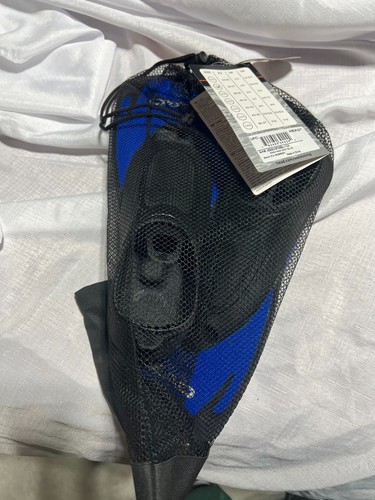 Swim training fins
Short blade fins for pool training. Softer for flexibility; stiffer for power work.
Swim training fins
Short blade fins for pool training. Softer for flexibility; stiffer for power work.
 Swim hand paddles
Start hand-sized or smaller. Increase only after consistent catch mechanics without shoulder pain.
Swim hand paddles
Start hand-sized or smaller. Increase only after consistent catch mechanics without shoulder pain.
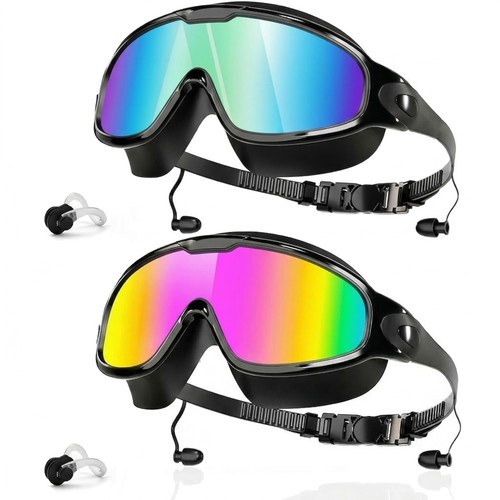 Swimming goggles
Press-test fit before buying. Tinted for bright pools; clear for dark indoor pools.
Swimming goggles
Press-test fit before buying. Tinted for bright pools; clear for dark indoor pools.
 Pull buoy
Grip high between thighs. Figure-8 standard shape fits most adult swimmers.
Pull buoy
Grip high between thighs. Figure-8 standard shape fits most adult swimmers.
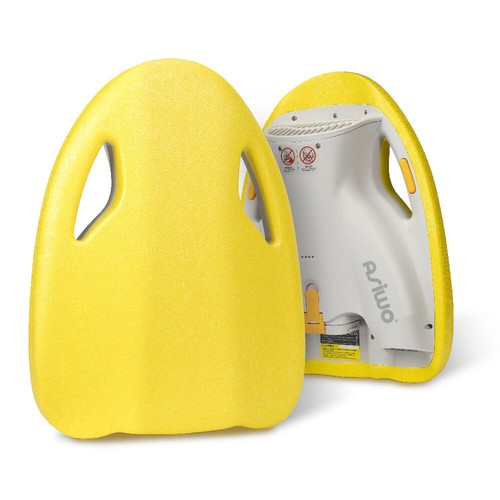 Swim kickboard
Cutout design reduces shoulder elevation for long kick sets.
Swim kickboard
Cutout design reduces shoulder elevation for long kick sets.