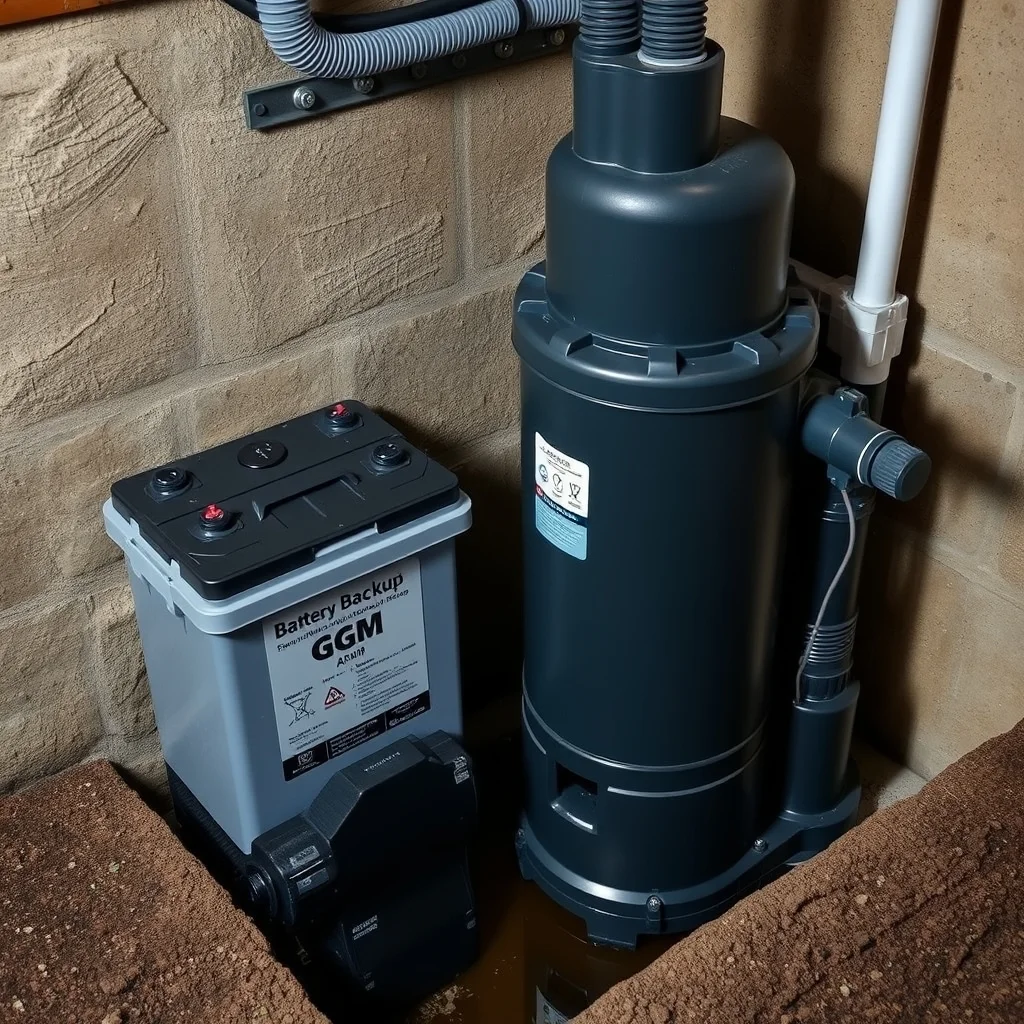
Submersible vs pedestal: which type for your pit
Submersible sump pumps have the motor sealed inside a waterproof housing that sits at the bottom of the pit, fully submerged during operation. The water surrounding the motor acts as a coolant. Advantages: quieter operation, no visible motor above the pit opening, handles some debris without the intake clogging. Most residential sump pumps sold today are submersible.
Pedestal sump pumps mount the motor above the pit on a column, with only the impeller and intake strainer submerged. Advantages: easier to access and service without entering the pit; longer-lived motor since it doesn't run in water; better choice for pits narrower than about 15 inches in diameter where a submersible motor housing won't fit. Significantly louder during operation than a comparable submersible.
| Feature | Submersible | Pedestal |
|---|---|---|
| Motor location | In the pit, submerged | Above the pit on a column |
| Noise level | Lower — water dampens sound | Higher — motor runs in air |
| Pit diameter needed | 18"+ typically | Works in pits as narrow as 12" |
| Serviceability | Must enter pit or drain it | Motor accessible above pit |
| Motor cooling | By water (efficient) | By air (may overheat in heavy-cycle use) |
| Debris handling | Generally better | More sensitive to sediment |
Understanding GPH capacity: the head pressure problem
Pump capacity is rated in GPH (gallons per hour). The maximum GPH listed on packaging is always at zero feet of head — a theoretical condition where the pump is discharging water at the same level it's picking it up. In real installations, the discharge pipe rises vertically to exit the basement, adding what's called "static head."
For every foot of vertical lift, performance drops. For every foot of horizontal discharge pipe (including elbows), a fraction of a foot of equivalent head is added. The pump's performance curve (found in the spec sheet or installation manual) shows GPH at various head pressures.
A practical example: a pump rated at 5,100 GPH at 0 feet might deliver 3,500 GPH at 10 feet of head — the typical vertical lift in a residential basement discharge situation. Before buying, look up the performance curve for the specific model. Manufacturers publish these; if they don't, treat that as a red flag about the manufacturer's transparency.
Horsepower ratings: what they mean in practice
Residential sump pumps are typically rated at 1/3 HP, 1/2 HP, 3/4 HP, or 1 HP. These ratings correlate with capacity, but not linearly — the relationship is governed by the motor's torque output and the pump impeller design.
- 1/3 HP: Appropriate for modest groundwater infiltration in stable soil conditions. Lower flow rate at head pressure — check the curve for your actual application.
- 1/2 HP: The most common residential choice. Generally adequate for typical basement moisture control in non-flood-prone areas.
- 3/4 HP: For high-inflow situations — homes near a high water table, next to bodies of water, or with significant storm-event infiltration.
- 1 HP and above: Heavy-duty situations, crawl spaces with large surface area, or commercial-adjacent residential applications.
Don't over-size significantly. A pump that runs briefly and cycles frequently is better than an oversized pump that "short-cycles" (runs for very short periods), which is harder on the motor and switch mechanism.
Shopping for sump pumps? Browse current eBay listings → (we earn a small commission; your price is unchanged).
Float switch types: vertical vs tethered vs electronic
Vertical (column) float switch
A weighted float moves up and down on a vertical rod alongside the pump body. When water rises to the set level, the float rises and closes the switch circuit, activating the pump. When the pump lowers the water level, the float drops and the pump shuts off. Reliable in any pit shape; not affected by pit walls. The most common switch type on quality submersible pumps.
Tethered ball float switch
A buoyant ball on a cord is attached to the pump or pit wall. As water rises, the ball floats upward until the angle of the tether closes the switch. Simple and cheap, but the tether can snag on rough pit walls or the pump body, causing the pump to run continuously (pump stays on even when pit is empty) or fail to activate. Less reliable in irregular pits. Common on budget pumps.
Electronic (pressure) switch
A diaphragm pressure sensor reads water depth and triggers the pump without any moving float components. No float to snag, stick, or fail mechanically. Higher cost. Used on premium pumps and some battery backup systems. Generally the most reliable switch type, particularly for pits with uneven walls or where debris could interfere with a float.
Battery backup systems: what they actually deliver
Battery backup sump pumps are a separate pump (DC motor) that activates when the primary AC pump fails or when household power is lost. This is not an optional feature in flood-prone basements — the scenarios where the primary pump is most needed (heavy storm events) are exactly when power outages are most likely.
Key specifications:
- Pump capacity (backup pump GPH at head): Backup pumps are typically smaller than primary pumps — 1,200 to 2,000 GPH at 10 feet is common. This is adequate for moderate inflow but will not keep pace with a high-inflow situation that already required a 3/4 HP primary pump. Size the backup knowing it will face a reduced version of your worst-case scenario.
- Battery type and capacity: Sealed AGM (absorbent glass mat) 12V batteries are maintenance-free and the standard for backup systems. Battery capacity is rated in amp-hours (Ah). A 75 Ah battery running a typical backup pump might deliver 5–8 hours of continuous pumping at moderate load, or many more hours if the pump cycles intermittently. Verify the specific pump's current draw and calculate against the battery Ah rating.
- Charger/monitor: The backup system includes a battery charger and usually a status LED or alarm. Batteries degrade over time; quality backup systems alert you when battery health is degraded. Replace the battery on schedule (typically every 3–5 years for AGM under normal float-charge conditions).
- High-water alarm: Most backup systems include an audible alarm that activates if water reaches a set high-water level, which is useful for monitoring even when power is on but the primary pump has failed for another reason (switch failure, seized motor, impeller clog).
Discharge pipe sizing and check valve
Most residential sump pumps discharge through 1.5" or 2" PVC pipe. The pipe diameter affects system efficiency — undersized discharge pipe adds friction loss that reduces effective GPH at head. Match the discharge diameter to the pump's outlet size, or upsize it by one size if the run is long.
A check valve on the discharge pipe prevents backflow — water in the vertical discharge pipe falling back into the pit when the pump shuts off, which would cause it to re-fill and cycle unnecessarily. A spring-loaded check valve is quieter than a flap-style valve. The check valve should be installed within 12" of the pump outlet on the vertical section of pipe.
When to replace vs repair
Sump pumps are consumable equipment. A submersible pump in a working installation should typically last 10–15 years with normal maintenance. Common failure modes and what to check:
- Float stuck or failed — pump runs continuously or won't activate. Test by manually lifting the float; if the pump doesn't respond, the switch or motor may be failed.
- Impeller clogged — pump runs (motor hums) but moves little water. Disconnect power and remove the pump; clear debris from the impeller screen and housing.
- Motor seized — pump doesn't run at all, may trip the breaker. Usually means motor replacement or whole-pump replacement; motor-only replacement is typically not economical for residential units.
- Bearing noise — grinding or rattling during operation indicates worn bearings, especially in pedestal units where the motor runs in air. Replace before full failure.
 Submersible Sump Pump
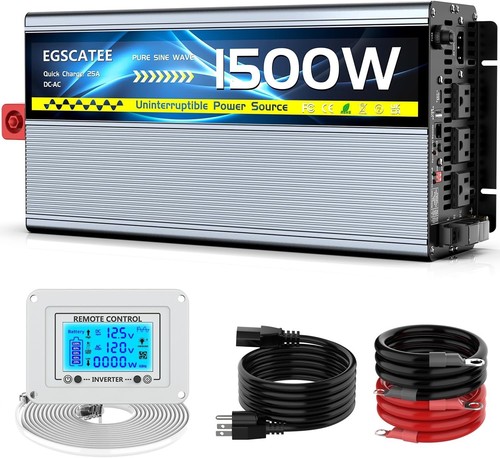 Battery Backup Sump Pump
 Sump Pump 1/2 HP