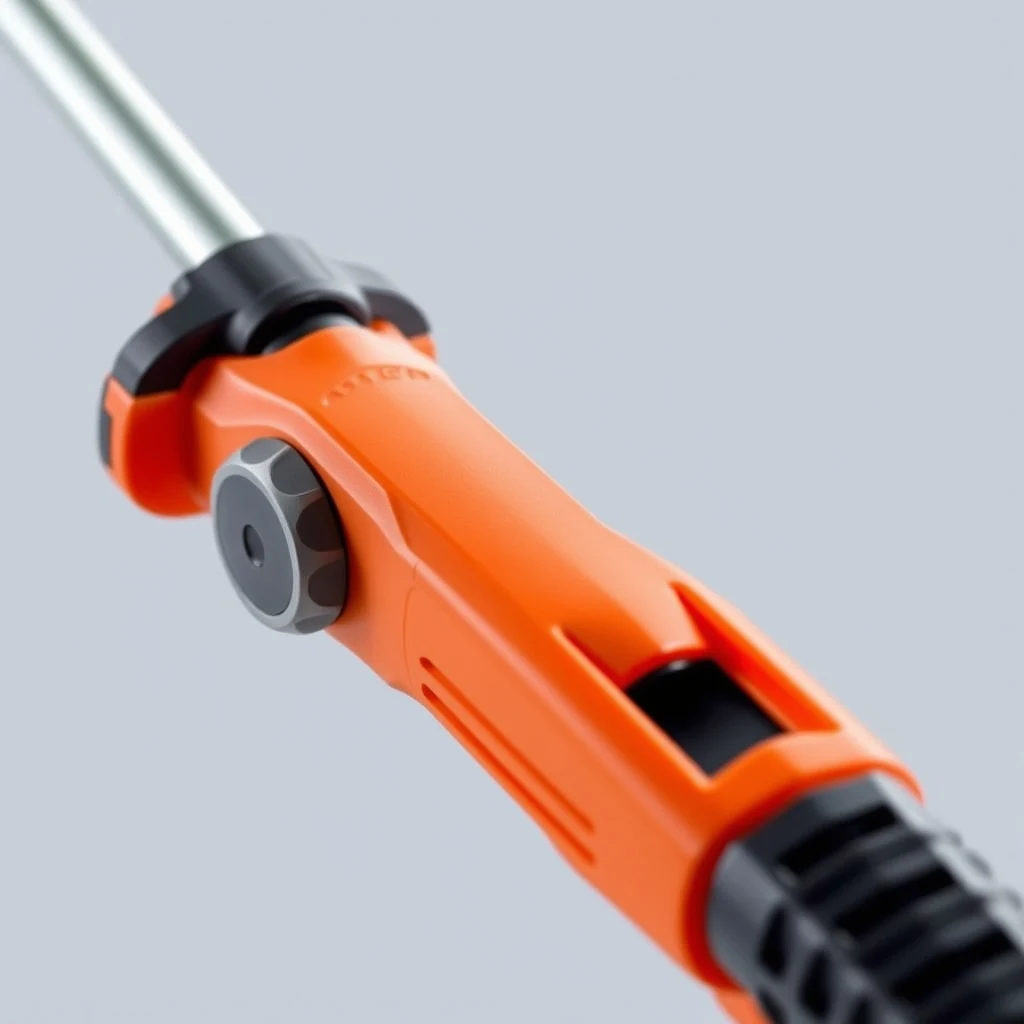
Power source: gas vs battery vs corded
The three power sources each have genuine trade-offs that matter more or less depending on your property and work patterns. This isn't a case where one is objectively better — it's a match question.
Gas (two-stroke)
Gas trimmers use two-stroke engines that require premixed fuel (typically 40:1 or 50:1 gas-to-oil ratio, depending on the manufacturer). The primary advantages are unlimited run time and maximum torque for thick brush and heavy vegetation. A full tank typically runs 30–45 minutes under normal use.
The trade-offs are real: two-stroke engines require periodic maintenance (air filter, spark plug, fuel line), emit exhaust, and produce significantly more noise than battery alternatives. You'll also deal with fuel storage and mixing. For occasional use — trimming once a week in summer — the maintenance overhead of a gas trimmer is higher than necessary. For large properties, acreage, or sustained professional use, gas remains the most capable option.
Battery (cordless)
Battery trimmers have improved substantially in the 40V–80V range. At 40V with a 4.0Ah battery, a typical residential trimmer handles about 25–40 minutes of work depending on vegetation and line gauge used. Higher-voltage platforms (56V, 80V) deliver more torque and run time, but the batteries are heavier.
The significant advantage of battery tools is platform compatibility — if you already own a cordless lawn mower, leaf blower, or drill on a specific battery platform (Greenworks, EGO, Ryobi ONE+, Milwaukee, Makita, etc.), adding a trimmer on the same platform gives you interchangeable batteries. This is often a stronger argument for battery than the power specs alone.
Corded electric
Corded trimmers are the lightest and least expensive option with zero run time limitations, but the cord range (typically 100 feet with a 25-foot tool cord and 75-foot extension) is a real constraint. They suit small yards where the cord doesn't become a tangle problem — typically under about 3,000–4,000 sq ft. Any yard with obstacles (trees, flower beds, structures) makes cord management annoying enough that battery becomes the better choice.
| Power Source | Best Use Case | Key Trade-offs |
|---|---|---|
| Gas (2-stroke) | Large lots, heavy brush, professional | Max torque, unlimited run time; maintenance, noise, emissions |
| Battery (40–80V) | Typical residential lots | Quiet, low maintenance; run time limited by battery capacity |
| Corded electric | Small flat yards under ~4,000 sq ft | Zero run time limit, lightest; cord range restricts movement |
Line gauge: matching thickness to vegetation
Line gauge (diameter) is measured in thousandths of an inch. Heavier line handles tougher vegetation and lasts longer, but requires more motor torque to spin — which matters for battery trimmers where efficiency affects run time.
- 0.065": Fine grass and light weeds around edges. The lightest commonly available gauge. Appropriate for corded models and light-duty battery trimmers on well-maintained lawns.
- 0.080": Standard light-duty residential. Works for maintained lawns with light weed pressure.
- 0.095": The most common general-purpose residential gauge. Handles grass, clover, light weeds, and moderate weed pressure. Most mid-range trimmers ship with this gauge.
- 0.105": Heavier residential and light commercial. Better for thick crabgrass, overgrown areas, and dense weeds. Requires sufficient motor torque — not all battery models can spin this efficiently.
- 0.130"+ : Commercial and heavy brush. Two-stroke gas trimmers territory. Significant motor torque required.
Line cross-section shape also matters. Round line is the most common — it's durable and quiet. Twisted (spiral) line cuts more aggressively with the same gauge. Star-shaped (5-point) line creates more air turbulence and cuts efficiently on thin grass but wears faster. For general residential use, round or twisted line in 0.080"–0.095" handles the vast majority of jobs.
Shopping for string trimmers? Browse current eBay listings → (we earn a small commission; your price is unchanged).
Shaft type: straight vs curved
Shaft geometry is one of the most consequential spec choices and one that's rarely given adequate explanation.
Curved shaft
A curved shaft is shorter and lighter, placing the cutting head at a natural angle for upright trimming. The weight balance tends to suit shorter operators. However, curved shaft models are almost universally incompatible with attachment systems (edger attachments, hedge trimmer heads, brush cutter blades). They also have shorter effective reach — getting the head under a deck or fence rail requires more body bending.
Straight shaft
A straight shaft provides longer reach — useful for trimming under fences, decks, and shrubs without bending. It's also the geometry required by virtually all commercial attachment systems. If you're buying a trimmer with the expectation of adding an edger wheel, hedge trimmer head, or brush cutter blade from the same platform, you need a straight shaft model.
The trade-off is that straight shafts are typically heavier (longer overall), and some users find the balance point less comfortable for sustained work. This is personal and worth holding a few options in a store if possible.
Feed systems: bump feed, auto-feed, and fixed line
String trimmer heads advance line by three mechanisms:
- Bump feed: You tap the head on the ground while spinning to advance more line. The most common system — works reliably on most surfaces. If you're trimming on pavement or hard soil, bump feed works well. On soft lawn where the head sinks, you may advance line without intending to.
- Auto-feed: The head automatically advances line based on centrifugal force as line wears short. Convenient, but can advance too much on some models, wasting line. Auto-feed is more common on battery and corded models.
- Fixed line: No head — a fixed-length line segment. Requires manual replacement when worn. Rarely used on residential models but found on some commercial units.
For most users, bump feed is the most reliable. Auto-feed is fine for low-maintenance use but can be less efficient with line consumption.
Weight and handle ergonomics
Trimmer weight matters more than most buying guides acknowledge. A typical gas trimmer with fuel weighs 10–14 lbs. A battery trimmer (tool + battery) typically runs 8–11 lbs for residential models. Corded models can be as light as 5–7 lbs.
For sessions longer than 20–30 minutes, the harness strap becomes relevant. Most mid-range and commercial trimmers include a shoulder or hip harness mount that redistributes weight during extended use. If you're trimming a large property, look for a model with a harness attachment point — trimming without one for 45+ minutes is genuinely fatiguing on the wrists and forearms.
Common mistakes
- Using too-light line: Underspec'd line wears quickly, snaps in heavy vegetation, and forces constant feed advances. Match gauge to your typical vegetation load.
- Buying curved-shaft when you need attachments: If there's any chance you'll want an edger or brush cutter head, buy straight shaft from the start.
- Ignoring battery platform lock-in: The cheapest trimmer today may be on a battery platform with limited expansion. If you're going to own multiple outdoor power tools, invest in a platform with a full lineup.
- Spinning at full throttle constantly: For residential trimming, full throttle isn't always necessary and burns through battery/fuel faster. Half to three-quarter throttle handles most maintained lawn edges effectively.
Search eBay for these trimmers
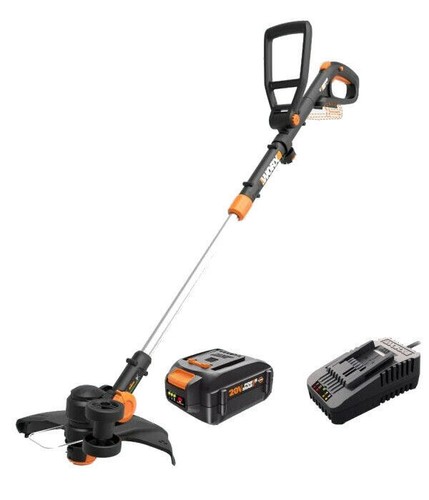 Cordless string trimmer
Filter by voltage platform. Check battery compatibility with tools you already own.
Cordless string trimmer
Filter by voltage platform. Check battery compatibility with tools you already own.
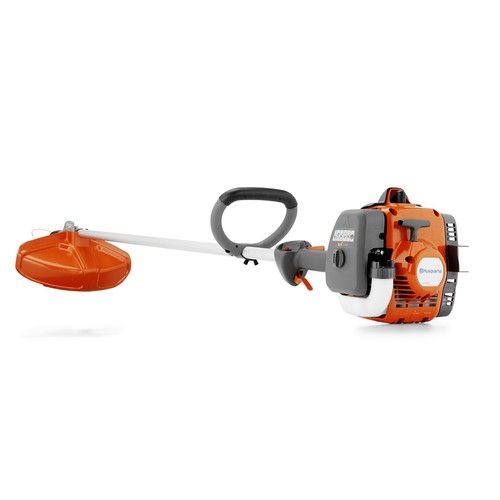 Gas string trimmer
Best for large lots. Verify fuel-mix ratio (40:1 or 50:1) before first use.
Gas string trimmer
Best for large lots. Verify fuel-mix ratio (40:1 or 50:1) before first use.
 Replacement trimmer line
Match diameter to your head's range and line cross-section to your vegetation.
Replacement trimmer line
Match diameter to your head's range and line cross-section to your vegetation.