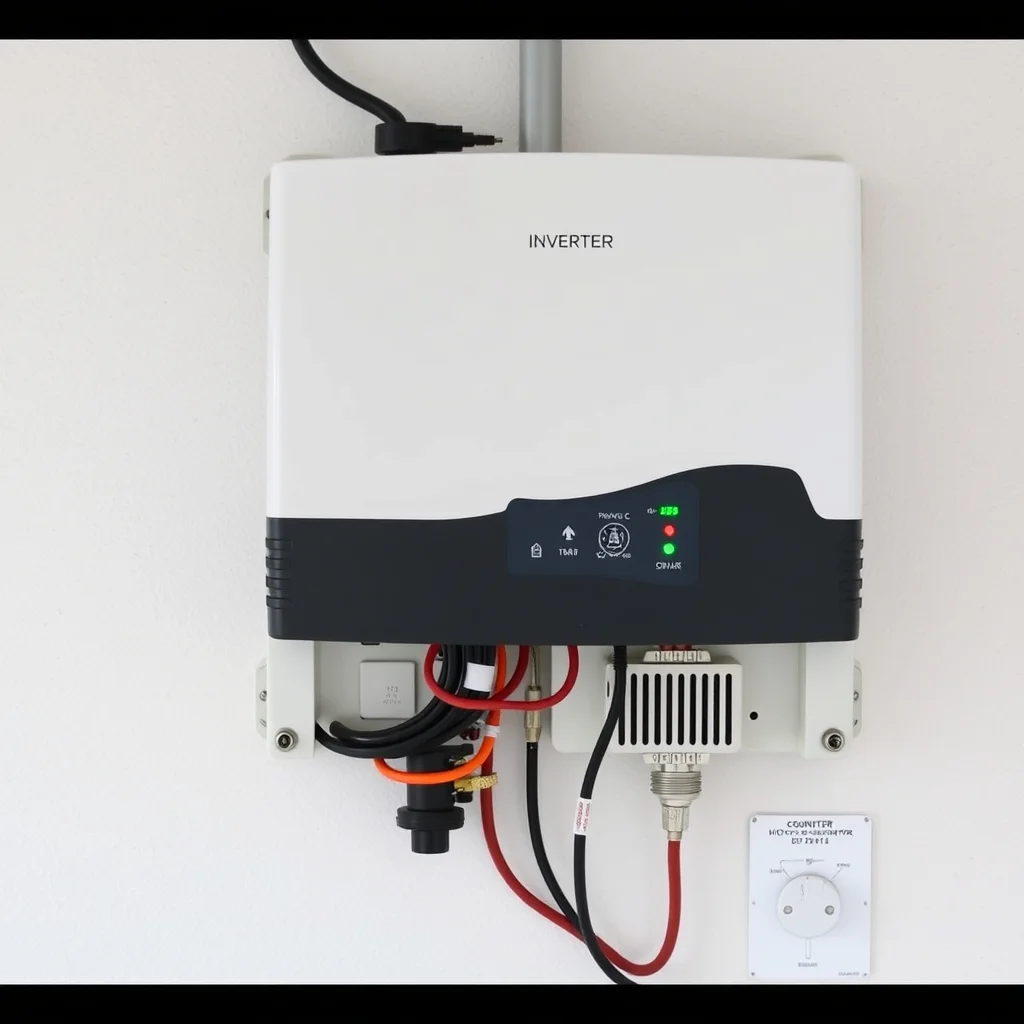
Waveform: pure sine vs modified sine
An inverter converts DC battery voltage to AC power. The shape of that AC signal — the waveform — determines what devices you can safely run from it.
Pure sine wave
Pure sine wave inverters produce a smooth sinusoidal output that matches utility grid power. Every AC device is designed to run on a sine wave, so there are no compatibility concerns. Motors run cooler, battery chargers (for tools, laptops, phones) operate correctly, audio equipment doesn't hum, and medical devices work as intended. Pure sine is the correct default choice for any system where you're unsure of the loads.
Modified sine wave
Modified sine wave (sometimes called quasi-sine) produces a stepped approximation of a sine wave. It costs less than pure sine and works acceptably for resistive loads: incandescent lights, simple heating elements, basic power tools. Problems arise with induction motors (refrigerator, air conditioning, pumps — may run hotter or not start), switching power supplies (many laptop chargers work fine, some older ones don't), audio equipment (audible hum), and CPAP machines (often explicitly voided by the manufacturer if run on modified sine). If you're powering anything motor-driven or electronically sensitive, spend the extra for pure sine.
Continuous watts vs surge (peak) watts
This is where most buyers get burned. A label reading "3000W inverter" almost always refers to the surge or peak wattage — the maximum the unit can supply for 1–5 seconds to handle motor startup. The continuous rating is what it can sustain indefinitely. For many consumer-grade inverters, the continuous rating is 50–60% of the peak rating.
A refrigerator rated at 150W running watts might need 700–900W to start the compressor. An inverter with 1,500W continuous and 3,000W surge handles that easily. An inverter with 1,000W continuous and 2,000W surge also handles the surge — but if you're simultaneously running the fridge, a laptop, and lights, you may exceed its continuous rating.
Grid-tie vs off-grid vs hybrid
Grid-tie inverters
Grid-tie (or grid-interactive) inverters convert DC from your solar panels directly to AC and feed it to the utility grid or your home loads. They require a live grid connection — if the utility power goes out, a standard grid-tie inverter shuts down (anti-islanding protection prevents live power from reaching utility workers on downed lines). No battery required, and any excess solar production can be credited back via net metering. Simple, high efficiency, no battery cost. Trade-off: zero power during an outage unless you add battery backup or use a hybrid unit.
Off-grid inverters
Off-grid inverters draw from a battery bank and produce AC power independently of the utility grid. They typically include a built-in battery charger so the bank can be topped up from a generator or shore power when solar is insufficient. The inverter must be sized for your peak loads, and the battery bank must be sized for your storage needs. Common in cabins, van builds, boats, and remote properties where grid connection isn't available or practical.
Hybrid inverters
Hybrid inverters combine grid-tie and off-grid capability. They manage a battery bank while staying grid-connected, can sell excess solar to the grid, prioritize solar over grid for your loads, and switch to battery power seamlessly during a grid outage. More complex to install and configure than either pure option, but the most flexible choice for a grid-tied home that wants outage resilience. Brands like Victron, SMA, Fronius, and Growatt produce popular hybrid units; verify compatibility with your battery chemistry before purchasing.
| Type | Battery Required | Works in Outage | Best For |
|---|---|---|---|
| Grid-tie | No | No (standard) | Grid-connected homes, maximum simplicity |
| Off-grid | Yes | Yes | Cabins, vans, boats, no grid access |
| Hybrid | Yes | Yes | Grid-connected home with outage resilience |
System voltage: 12V, 24V, or 48V
Off-grid and hybrid inverters have an input voltage that must match your battery bank configuration. The voltage also determines how much current flows in the DC wiring between batteries and inverter — lower voltage means higher current for the same power, which means thicker (more expensive) cables and higher resistive losses.
Shopping for solar inverters? Browse current eBay listings → (we earn a small commission; your price is unchanged).
- 12V — Common in small van and boat builds (under ~2,000W inverter). Easy to find compatible components, but wiring currents are high. At 2,000W, you're drawing 167A from a 12V bank — cables need to be very short and very heavy gauge.
- 24V — A reasonable middle ground for medium builds. Halves the current vs 12V for the same power, halves the cable size required. Common in mid-size off-grid setups.
- 48V — The standard for larger off-grid and hybrid home systems. Quarter the current of 12V, much smaller wiring. Most modern LiFePO4 battery packs are designed around 48V (16 cells in series). Required for most inverters above ~3,000W.
Efficiency and idle consumption
Inverter efficiency is typically 85–95% at full load, but drops at very light loads. Idle consumption — the power drawn by the inverter itself when nothing is plugged in — ranges from under 5W for efficient units to 20W or more for budget models. In a van or cabin where the inverter runs continuously, 20W idle draws 480 Wh/day — nearly half the output of a 100W panel on a good day. Look for inverters with a "search" or "power save" mode that wakes the unit only when a load is detected.
What to check before buying
- Continuous watt rating (not just peak) vs your expected simultaneous load
- Input voltage (12V/24V/48V) matches your battery bank
- Pure sine wave output unless your specific loads are confirmed to work with modified sine
- Transfer time (for hybrid/off-grid with grid backup) — under 20ms for seamless switching, critical for computers and medical devices
- Battery charger amperage (for off-grid units with built-in charger) — determines how fast a generator charges the bank
- UL or ETL listing if you're doing a permitted installation in a structure