
HO slot car basics: scale, track, and the magnet question
Most vintage American slot cars from the 1960s through 1990s are HO scale — roughly 1:64, though manufacturers were not precise about this. They run on a two-rail track with a center slot (hence "slot car") that guides the car via a metal pin or guide blade on the car's undercarriage. The guide blade contacts a metal braid that picks up current from the track rails, powering a small DC motor.
The magnet question divides the hobby. In the 1970s, Aurora introduced Magna-Traction — a small magnet mounted to the chassis that generates downforce on the metal track rails. Magnet-equipped cars corner faster and are more forgiving of driver error. Non-magnet (no-mag) cars require more precise throttle control and follow track curvature through momentum management. Organized racing generally runs separate magnet and no-mag classes because the two handling characteristics are incompatible for meaningful competition.
Aurora AFX chassis generations
Aurora Plastics Corporation introduced their AFX (Automatic Flying Exchanger — the lane-change system) slot cars in 1970. Aurora went bankrupt in 1977 but the tooling and brand were acquired by Processed Plastic, then by Life-Like Trains, and eventually the AFX brand was revived by Racing Champions/ERTL. Identifying the generation matters for parts compatibility:
Original AFX G-Plus chassis (1970–1977, Aurora production)
The G-Plus chassis is the original AFX design. Identified by its distinctive elongated chassis body with the motor mounted amidships (center of the car). Key features:
- Motor: typically a small 18,000–20,000 RPM DC motor with metal endbell
- Guide blade: brass, flat, slots into a front pivot
- Rear axle: solid rear with inline motor drive via a gear and crown gear
- No magnet in standard G-Plus; magnet cars are marked Magna-Traction (see below)
- Body mounting: snap-on body clips at front and rear
Aurora Magna-Traction chassis (1975–1977)
Magna-Traction added a small bar magnet to the G-Plus chassis, positioned between the rear axle and the track surface. Magna-Traction cars are identifiable by the magnet visible on the underside of the chassis (silver or gray rectangular magnet held by a plastic retainer clip). On cars that have had magnets removed or replaced, check for the retainer clip even if the magnet is absent. Magna-Traction cars typically have "Magna-Traction" molded into the chassis plastic.
Post-Aurora AFX production (1977 onward)
After Aurora's bankruptcy, the AFX chassis continued under Life-Like and later ERTL/Racing Champions. Later production introduced the Super G+ chassis (slightly revised body mount and different plastic color, often black vs. the original gray or dark brown) and eventually the Tomy AFX Turbo chassis. Tomy acquired rights to produce AFX-compatible cars separately in some markets. The Tomy SRT chassis (Super Road Track) is dimensionally compatible with Aurora HO track but uses a different motor specification.
| Chassis | Era | Magnet | Track compatible |
|---|---|---|---|
| Aurora G-Plus | 1970–1977 | No | HO (AFX, Tyco) |
| Aurora Magna-Traction | 1975–1977 | Yes (bar magnet) | HO (AFX, Tyco) |
| Life-Like Super G+ | 1977–1990s | Varies | HO (AFX, Tyco) |
| Tomy AFX/SRT | 1980s–present | Varies | HO (AFX, Tyco) |
Tyco chassis identification
Tyco produced HO slot cars from the mid-1960s through the 1990s and went through multiple chassis designs:
Tyco 440 (early production, mid-1960s–early 1970s)
The original Tyco HO chassis. Inline motor, relatively simple mechanism. The 440 designation refers to Tyco's marketing of their motor specification. These are the least capable of the Tyco designs for racing but are the most historically significant. Identified by the rounded chassis shape and older motor can design.
Tyco 440-X2 (mid-1970s–1980s)
Tyco's most widely produced and restored chassis. The 440-X2 introduced a can motor with the motor positioned at the rear rather than the center, improving weight distribution. Identified by a slightly squarer chassis profile and the rear motor position. The 440-X2 is the most common Tyco chassis on the secondary market and the one for which parts (brushes, guide pins, braids) are most readily available today through hobby suppliers and specialty restorers.
Tyco Turbo (late 1970s–1980s)
Tyco's attempt at a higher-performance chassis. Uses a different motor mount and has a distinct chassis shape with more aggressive wheel arch cutouts. The Turbo is less common than the 440-X2 and parts are harder to source.
Carrera vs Scalextric: not the same as HO
Both Carrera and Scalextric produce quality slot car systems, but they are largely not HO-compatible and deserve separate treatment:
Scalextric
Scalextric is a 1:32 scale system produced in the UK since 1957. Track rail spacing is wider than HO — approximately 52mm between rail centers. Scalextric cars cannot run on HO track and HO cars cannot run on Scalextric track without modification. Scalextric Sport (current system) features a routed plastic track with metal contact strips rather than raised rail. Scalextric Classic (pre-2000 production) used a different track profile than Sport. They are not directly cross-compatible without adapters.
Scalextric's collectible appeal comes from their licensed car bodies — accurate 1:32 representations of Formula 1, GT, and touring car liveries. Vintage Scalextric from the 1960s and 1970s (Classic era) is genuinely collectible; early sets with original boxes and cars in good condition attract collector premiums.
Carrera
Carrera is a German manufacturer producing slot car systems in 1:32 (Carrera Evolution, Digital 132), 1:43 (Carrera GO), and 1:24 (Carrera Exclusiv) scales. Carrera's current Digital 132 system allows lane changing and multi-car independent control — the closest analog to DCC for slot cars. Carrera GO (1:43) uses narrower track that is also not HO-compatible despite the smaller car size.
For vintage collecting, Carrera's 1960s and 1970s 1:32 production is sought by European collectors. Current Carrera Evolution is an active hobby with new car releases; the secondary market is robust for both current and vintage production.
Magnet stripe vs no-mag: what the class distinction means
Organized vintage slot car racing typically runs two classes:
- Magnet class (mag racing): Cars with factory or aftermarket magnets. Magnet-equipped cars handle more like real cars in some ways — the magnet generates artificial downforce that increases grip. Magnets allow higher cornering speeds and are more forgiving at the throttle. Recommended for newcomers learning the hobby.
- No-mag class: Cars with magnets removed or never present. No-mag racing requires actual throttle management — braking before corners, power on exit. More technically demanding. Considered the "pure" slot car racing class by many club racers. Vintage no-mag racing is popular at organized club events.
Converting a mag car to no-mag: remove the magnet (and retainer if present), clean the chassis mounting area. For Aurora Magna-Traction cars, the magnet is held by a small plastic clip — remove the clip and magnet together. The chassis otherwise runs identically.
Restoration sourcing: where to find parts today
The vintage HO slot car parts market is active and specialist-driven:
Brushes and braids
Carbon brushes (motor brushes) and track braids (the flexible contacts that pick up current from the rails) are the most commonly replaced parts. Multiple online retailers specialize in these: check Slot Car Corner, Wesco Ent., and specialized eBay sellers. Specify the chassis generation (G-Plus, 440-X2, etc.) when ordering brushes, as the dimensions vary.
Guide pins and blades
Guide blades (the flat fin that rides in the track slot) wear or break. Replacement blades are available for most common chassis. Aurora uses a flat-tab blade; Tyco uses a flag-style guide. Universal guide pin kits are sold that cover multiple chassis with adapter hardware.
Rear tires
Original rubber tires deteriorate — they harden, crack, or develop flat spots. Replacement urethane rear tires are widely available for HO slot cars and typically outperform original rubber. Measure the rear tire outer diameter and width on your chassis before ordering; dimensions vary by chassis generation.
Bodies
Vintage car bodies in original paint are more fragile than the chassis. Bodies with original factory paint and no cracks command significant premiums over repainted examples. Reproductions of popular bodies exist for some Aurora subjects. When evaluating condition, check the post holes (front and rear mounting points) for cracks — a cracked post hole typically means the body won't mount securely.
Search eBay for vintage slot cars
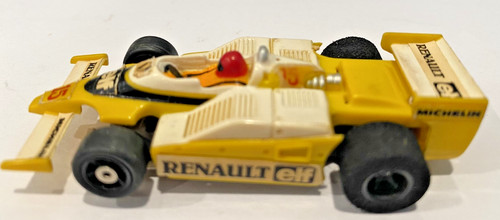 Aurora AFX vintage
Search for G-Plus and Magna-Traction specifically; confirm magnet presence in listing photos.
Aurora AFX vintage
Search for G-Plus and Magna-Traction specifically; confirm magnet presence in listing photos.
 Tyco vintage slot car
440-X2 is the most restorable. Ask about brush and braid condition before buying non-running examples.
Tyco vintage slot car
440-X2 is the most restorable. Ask about brush and braid condition before buying non-running examples.
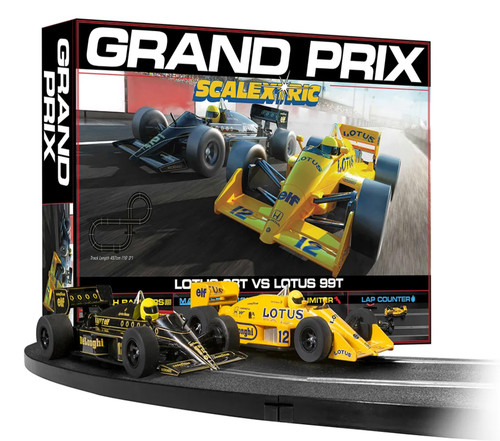 Scalextric sets
1:32 scale, not HO-compatible. Classic and Sport eras; original boxes improve collectible value significantly.
Scalextric sets
1:32 scale, not HO-compatible. Classic and Sport eras; original boxes improve collectible value significantly.
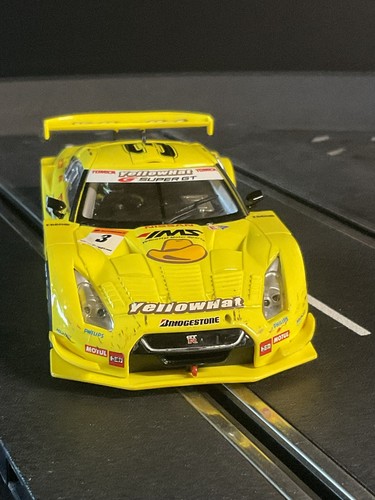 Carrera Digital
Current production with lane-change capability. Digital 132 cars and track are the active collector tier.
HO slot car lot
Broad category lots often yield good chassis for parts. Sort by recently listed to catch estate sale lots.
Carrera Digital
Current production with lane-change capability. Digital 132 cars and track are the active collector tier.
HO slot car lot
Broad category lots often yield good chassis for parts. Sort by recently listed to catch estate sale lots.