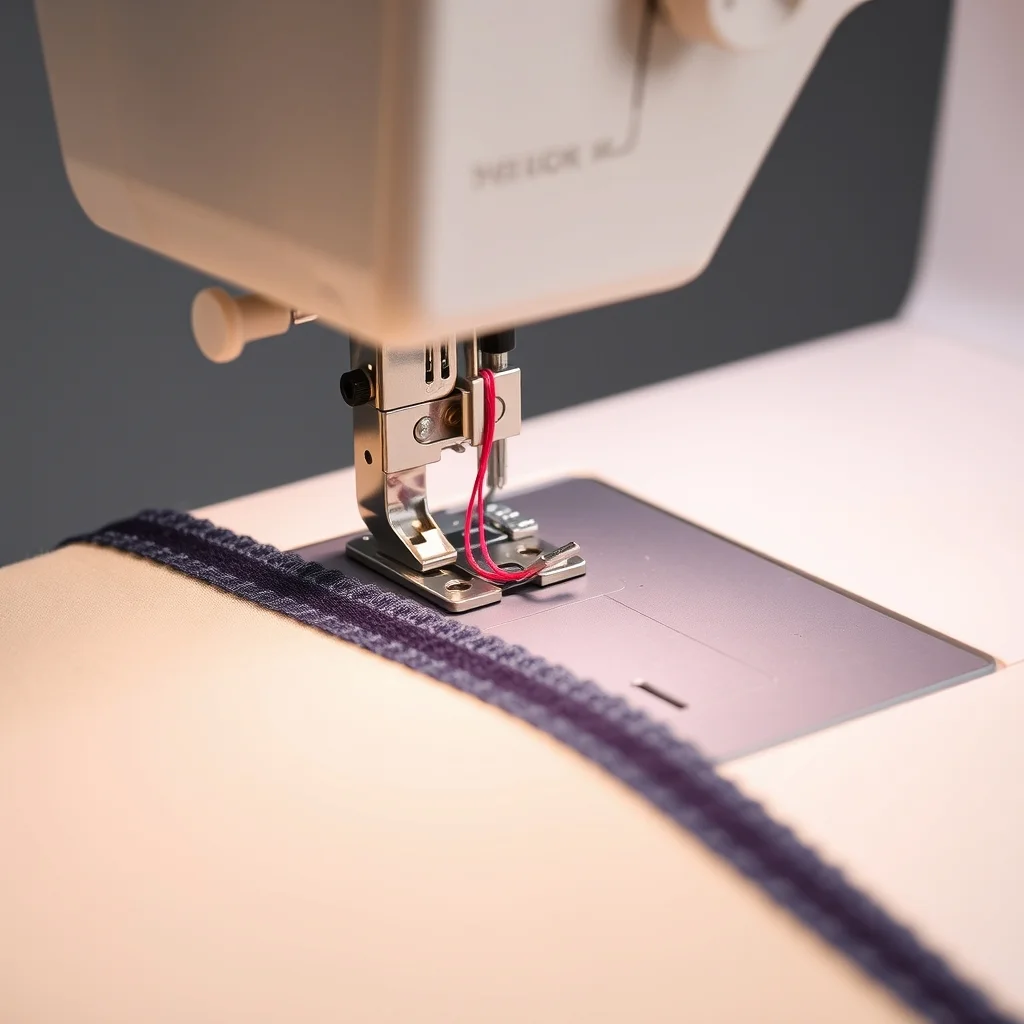
What a serger does that a sewing machine can't replicate efficiently
A serger performs three operations in a single pass: it trims the seam allowance with a built-in blade, wraps thread around the cut edge (the overlock stitch), and forms a seam with a looper-and-needle mechanism that creates a chain stitch capable of stretching with the fabric. On a standard sewing machine, you would need three separate steps — trim with scissors, zigzag the edge, and reinforce the seam — to approximate this result, and the stretch performance is still typically inferior.
For garment construction with knit fabrics like jersey, ribbed knit, or stretch denim, a serger is not a luxury; it is the practical tool for professional results. The overlock stitch's inherent elasticity means it won't pop under the stresses of normal wear, which straight-stitched knit seams frequently do.
Thread count: 3-thread, 4-thread, and 5-thread configurations
Thread count in serger terms refers to how many thread paths the machine runs simultaneously during an overlock stitch, not stitch count as in standard machines. Each configuration produces a structurally different result.
| Configuration | Needles | Loopers | Best use |
|---|---|---|---|
| 3-thread overlock | 1 | 2 (upper + lower) | Rolled hems, lightweight fabrics, narrow seam finishing. Less seam strength than 4-thread. |
| 3-thread narrow overlock | 1 | 2 | Chiffon, organza, fine knits. The rolled hem setting on most sergers is a 3-thread configuration. |
| 4-thread overlock | 2 | 2 (upper + lower) | Standard garment seams on wovens and knits. Two needles provide lateral seam strength; the most versatile configuration for general sewing. |
| 5-thread overlock + chain stitch | 2 | 3 (upper, lower, chain) | Industrial-grade seam strength. The chain stitch adds a third structural element. Used in commercial denim and activewear production. |
For most home sewists, a machine capable of 3-thread and 4-thread configurations covers everything from rolled hems on scarves to structural seams on jeans. The 5-thread configuration requires a dedicated chain stitch looper that not all home-class machines include.
Differential feed: the feature that matters most for knits
Differential feed controls the ratio of speed between the two sets of feed dogs on a serger (front and rear). When both sets move at the same rate, the fabric feeds normally. When the front set moves faster than the rear — differential feed ratio above 1.0 — it gathers the fabric slightly, preventing knit fabric from stretching as it passes through the machine. When the front set moves slower — ratio below 1.0 — it eases the fabric, which can create intentional gathering or ruffle effects on wovens.
Without differential feed, sewing knit fabric on a serger or even a regular sewing machine produces wavy, distorted seams. The fabric stretches as it moves through the machine, and when released, the stitch can't contract back with it. The result is a seam that waves along its length — the telltale sign of a knit sewn without differential feed control.
What the ratio range means in practice
Consumer sergers typically offer a differential feed ratio range of approximately 0.7 to 2.0. A range of 0.6 to 2.5 is better. Lightweight silk jersey at a ratio of 1.25 might sew flat; heavy rib knit might need 1.75 to avoid waviness. Having headroom at both ends matters:
- Ratios below 1.0: Easing / lettuce-edge effects on wovens. Useful for decorative work.
- Ratio = 1.0: Neutral. Standard woven fabrics on standard seams.
- Ratios 1.1–1.5: Light to medium knits, jersey, interlock.
- Ratios 1.5–2.0+: Heavy rib knits, thick stretch fabrics, fabrics with high stretch percentage.
A machine with a narrow ratio range (1.0 to 1.5) will struggle with heavy knits. This is often not disclosed prominently — check the manual or spec sheet for the full differential feed range before purchasing.
Threading systems: jet-air vs manual, and color-coding quality
Threading a serger is significantly more complex than threading a standard sewing machine. On most machines, you thread two needle eyes, an upper looper, and a lower looper — each following a specific path through tension discs, thread guides, and loops. Threading sequence matters; an error causes the machine not to form stitches, and diagnosing which looper is misthreaded requires methodical checking.
Jet-air threading (also called air-threading or self-threading)
Some higher-end machines (Babylock's jet-air system is the best-known implementation) use compressed air to thread the loopers automatically. You position the thread at the entry point, press a button, and the air jets carry it through the entire looper path in seconds. This reduces re-threading time from several minutes of fiddly manual work to under 30 seconds. For sewists who change thread colors frequently or work on diverse projects, the time saving is real.
The trade-off: jet-air systems add manufacturing complexity and cost. Machines with this feature typically start at a significantly higher price point than manual-threading equivalents. They also have an air pump mechanism that adds another potential failure mode, though in practice they are reliable.
Manual threading with quality color-coding
Most sergers thread manually. Quality of the color-coding system (the numbered sequence and color indicators on the threading path) varies significantly between machines. Good color-coding with clear diagrams on the machine itself substantially reduces threading errors. Poor diagrams in the manual, combined with confusingly marked threading paths, make an otherwise capable machine frustrating to use.
Shopping for sergers? Browse current eBay listings → (we earn a small commission; your price is unchanged).
Coverstitch capability: dedicated machine vs combo
A coverstitch is the two-parallel-rows-of-topstitching stitch with a chain stitch underside — the hem stitch on most commercial T-shirts and activewear. It stretches with the fabric while remaining flat and professional-looking on the right side. Creating a true coverstitch requires a different needle and looper configuration than an overlock stitch.
Dedicated coverstitch machine
A dedicated coverstitch machine (such as the Babylock Cover Stitch or Bernina L 890) does only coverstitch operations — no overlocking. This sounds limiting, but it offers advantages: the machine stays set up for coverstitch work, no configuration switching is needed, and the mechanism is optimized for one purpose. For sewists who make significant quantities of knit garments and hem them regularly, a dedicated coverstitch machine used alongside a separate serger is the professional approach.
5-thread combo machines with coverstitch
Several brands offer machines that switch between overlock and coverstitch modes (sometimes called 5-thread combo or serger/coverstitch combination). The Bernette b42, Babylock Triumph, and several others offer this. The appeal is obvious: one machine does both jobs.
The practical reality: switching between overlock and coverstitch modes on most combo machines requires re-threading. Not as quick as leaving two machines set up. If you frequently switch between the two operations in a single sewing session, a combo machine introduces friction. If you do a batch of overlocked seams and then a batch of coverstitch hems in separate sessions, the combo machine is perfectly workable.
Verify the coverstitch width options on any combo machine you consider. Some offer only 2-needle coverstitch; others offer 2 and 3 needle options (3-needle coverstitch creates a wider, more decorative stitch common in activewear).
Cutting blade: fixed vs retractable
All sergers include a built-in cutting blade that trims the seam allowance as you sew. On most machines this is active continuously when sewing. On some machines (typically at mid-range and above) the blade is retractable, allowing you to sew without trimming — useful when you want to apply an overlock stitch to fabric that's already been cut to size, or when you want to use the machine for specific decorative stitching without removing fabric.
A retractable blade is useful but not essential for most sewists. The more important question is blade replacement: how easy is it to replace the blade when it dulls? A dull cutting blade produces ragged cut edges rather than clean ones, and drags on the fabric. Serger blades need periodic replacement — check that replacement blades are available for the specific model you're considering, and that the replacement process doesn't require a service technician.
Stitch length and width adjustability
Stitch length (how far the fabric advances per stitch) and stitch width (the width of the overlock formation) are adjustable on any reasonable serger. For practical work:
- Stitch length range: Typically 1–4mm for home machines. Shorter lengths for fine fabrics; longer lengths for heavier fabrics or basting.
- Stitch width range: Typically 3–7mm. Wider for overlocking seam allowances on wovens; narrower for rolled hems.
- Narrow/rolled hem setting: Most machines have a specific position for this, often requiring a lower looper or presser foot adjustment. Verify the machine includes the required presser foot or setting rather than requiring an accessory purchase.
Speed: what the SPM rating means on a serger
Sergers run significantly faster than standard sewing machines. Entry home sergers typically operate at 1,100–1,300 stitches per minute (SPM); mid-range machines at 1,500 SPM; higher-end at 1,700+ SPM. These speeds feel fast — most sewists do not run the machine at maximum speed for sustained periods, particularly when learning.
Speed matters when you are doing repetitive, high-volume seaming (production-oriented home sewing or small-batch garment production). For typical hobby use, the difference between 1,100 and 1,500 SPM is less significant than differential feed range or threading system quality.
The honest buying framework
Start with what you primarily sew. If you work mainly with knit fabrics — jersey T-shirts, activewear, swimwear — a 3/4 thread machine with a full differential feed range (0.7–2.0 or wider) and clear color-coded threading is the right entry point. The differential feed is non-negotiable for knit work; everything else is secondary.
If you sew mixed fabrics including wovens for garment finishing, a 3/4 thread machine handles both. You use 4-thread for structural seams, 3-thread for rolled hems and fine finishing.
If you anticipate significant coverstitch hemming in your work, honestly assess whether you'll switch modes often enough that two machines is preferable to one combo machine. Two machines you'd run simultaneously in a session is a scenario where dedicated machines win; two machines you'd use on different days is a scenario where a combo is fine.
Threading anxiety is real for serger beginners — a machine with jet-air threading removes most of it, at a price. If budget is a constraint and you're willing to invest time learning to thread manually, a well-designed manual-threading machine with clear color-coding and a quality instruction manual is a reasonable starting point.
Search eBay for these machines
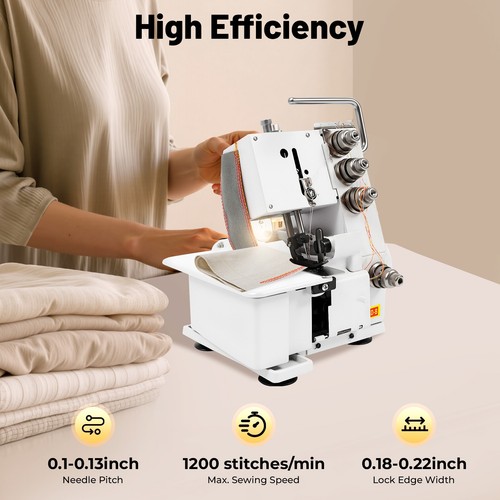 4 thread serger
Two-needle four-thread overlock for strong, versatile seam construction on wovens and knits.
4 thread serger
Two-needle four-thread overlock for strong, versatile seam construction on wovens and knits.
 Coverstitch machine
Dedicated coverstitch for professional T-shirt hems and activewear finishing.
Coverstitch machine
Dedicated coverstitch for professional T-shirt hems and activewear finishing.
 Overlock machine
European/industrial term for the same machine class. Broader listing coverage.
Overlock machine
European/industrial term for the same machine class. Broader listing coverage.