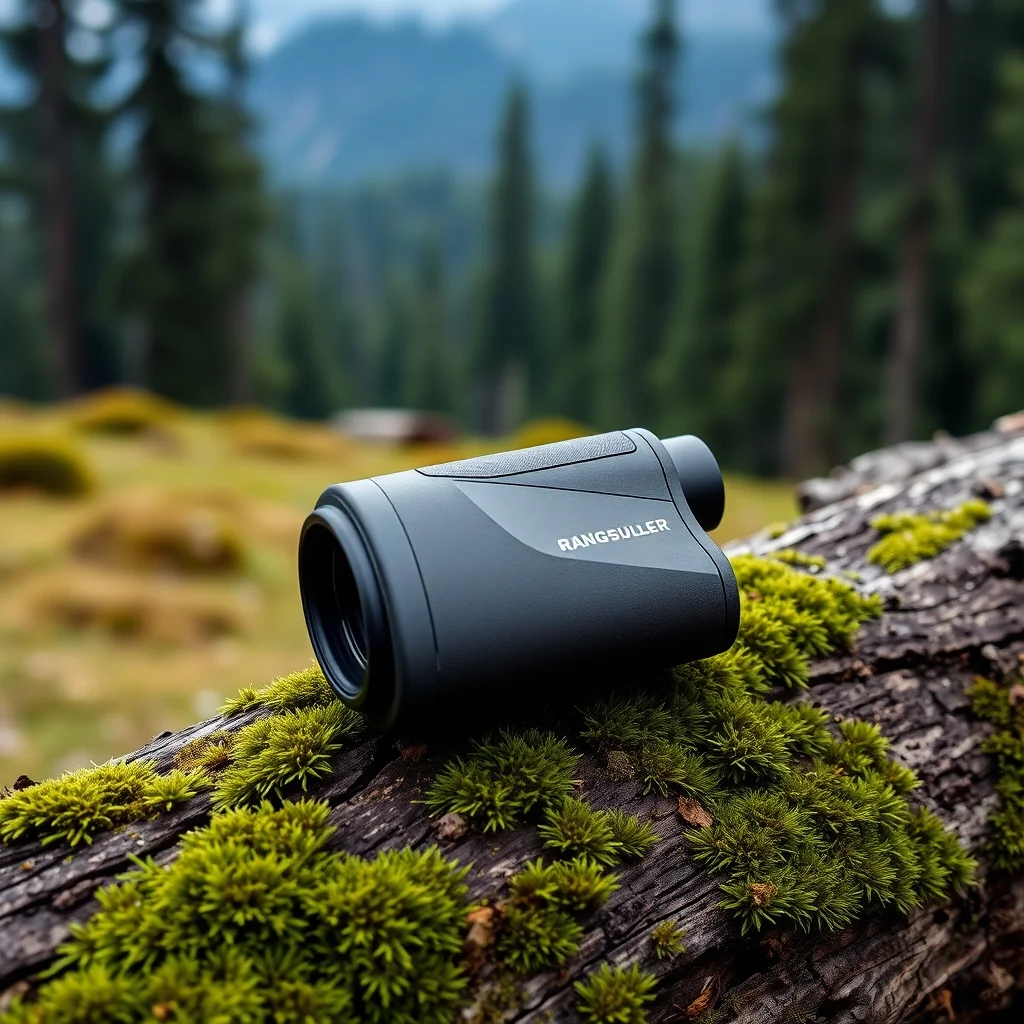
Rated range vs usable range on deer
Every rangefinder manufacturer tests maximum range on a highly reflective target — typically a white panel or large retroreflective surface — under clear conditions. That number appears on the box. It's the theoretical ceiling, not what you'll get in hunting conditions.
In practice, ranging a deer in the field at maximum rated distance often fails because deer hide absorbs laser energy rather than reflecting it cleanly. On a bright, sunny day with a broadside deer, you might achieve 60–70% of rated range before the unit returns errors or inconsistent readings. On an overcast day or at dusk — the conditions when you're actually about to shoot — effective range drops further.
A rough heuristic: expect reliable deer readings at 50–60% of rated range under hunting conditions, and plan your gear accordingly. If you want reliable readings to 300 yards on deer, a unit rated to 500–600 yards is a reasonable target. A unit rated to 1,000 yards will give you hunting-condition readings on deer to roughly 500–600 yards in typical conditions.
Magnification: the trade-off between power and field of view
Most hunting rangefinders are 6× magnification. Some models offer 7× or 8×. Golf rangefinders often use 6× with a tighter, cleaner sight picture. The trade-off:
- Higher magnification makes distant targets easier to identify and aim the ranging beam accurately, but narrows the field of view, making it harder to acquire a moving target quickly.
- Lower magnification provides a wider field of view for fast target acquisition but makes it harder to isolate a specific animal from surrounding brush at long range.
- Lens quality matters more than magnification for low-light performance. A 6× unit with premium glass (ED glass, fully multi-coated lenses) outperforms an 8× unit with mediocre optics in the dawn and dusk conditions typical of hunting.
For most whitetail hunting at distances under 60 yards from a treestand, 6× is entirely adequate. For western elk or mule deer hunting at 200–400+ yard ranges, 7× or 8× with quality optics makes identifying and accurately ranging specific animals meaningfully easier.
Angle compensation: bow mode vs rifle mode
Angle compensation (also called Angle Range Compensation, ARC, or equivalent) corrects for the fact that when you shoot at an upward or downward angle, bullet and arrow drop occur over horizontal distance, not slant distance. Shooting uphill or downhill at steep angles means the effective distance for holdover purposes is shorter than the actual slant distance to the target.
Bow mode (true horizontal distance)
For archery, the relevant number is horizontal distance. At archery ranges (under 60–70 yards), the difference between slant range and horizontal distance becomes significant only at angles steeper than about 20 degrees. At 30 yards from a treestand at a 30-degree downward angle, the true horizontal distance is about 26 yards — a difference that matters for pin placement.
Bow mode outputs the horizontal component of the slant distance directly. Set your sight pin for the number displayed in bow mode, not the actual slant distance the unit may also display.
Rifle mode (equivalent horizontal range)
For rifle shooting, angle compensation works differently because bullet ballistics are more complex than arrow trajectories. Most rifle-mode rangefinders use an Angle Modified Range (AMR) calculation that outputs an "equivalent" distance — the distance on flat ground that would produce the same bullet drop as your actual slant shot. This is a ballistic approximation that works well at moderate ranges but becomes less accurate at extreme long range where terrain angle compounds with atmospheric density differences.
Shopping for rangefinders? Browse current eBay listings → (we earn a small commission; your price is unchanged).
| Mode | Output | Use case | Accuracy note |
|---|---|---|---|
| Bow mode (ARC) | True horizontal distance | Archery, any angle | Highly accurate; set sight pin to displayed distance |
| Rifle mode (AMR) | Equivalent flat-ground range | Rifle, within ~500 yards | Good approximation; less precise at extreme range |
| Line-of-sight (no comp) | Slant distance | Flat ground, surveying | Accurate distance measurement; requires manual angle adjustment |
Display type: LCD vs LED
Rangefinder displays are either projected inside the optic (like a reticle) or viewed on an external LCD screen. Nearly all hunting rangefinders use internal LCD or LED projection — you see the distance number overlaid on the sight picture, which allows you to keep your eye on the target while reading the range.
- Red LCD: Most common. Visible in most lighting conditions. Can wash out in very bright direct sun, and some users find it hard to see against bright backgrounds.
- Black LCD: Better in bright sunny conditions where red can wash out. Less visible in low light.
- OLED/illuminated reticle: Found in premium units. Adjustable brightness handles both bright sun and dusk conditions. Best all-condition visibility.
Display brightness matters most at the edges of shooting light — dawn and dusk. A display that washes out in bright sun and disappears at dusk fails exactly when it matters most. If you're hunting in mountain terrain with wide light variation, adjustable display brightness is worth the added cost.
Scan mode: what it does and when to use it
Scan mode (also called continuous scan, priority mode, or second-priority mode depending on manufacturer) allows the rangefinder to continuously emit laser pulses and update the distance reading while you sweep the unit across a scene. Rather than a single range reading, you get a live updating number as you pan across different distances.
Scan mode is useful for two situations:
- Pre-hunt landmark ranging: Before an animal appears, you sweep your shooting lane to range trees, rocks, and landmarks at known distances. When the shot opportunity comes, you already know that the oak tree is 35 yards and the cedar is 52 yards — range without having to lift the rangefinder.
- Moving animal tracking: For elk calls or turkey hunting where animals approach actively, scan mode lets you watch an animal's distance decrease in real time and know when it enters your effective range.
Most scan modes update at roughly 0.5–1 second intervals. The limitation is battery drain — continuous mode uses significantly more battery than single-ping mode. Turn scan mode off when you don't need it.
First priority vs second priority ranging
Some hunting rangefinders offer a priority mode selection. "First priority" returns the range to the closest target the beam encounters — useful when ranging through brush where the closest object is the target. "Second priority" (also called distant priority) ignores close objects and returns the range to the most distant target the beam encounters — useful when branches or tall grass are between you and the animal, and you want the animal's range, not the branch in between.
This is a subtle but practically important spec for hunting from blinds or in brushy terrain where a ground blind's mesh window or vegetation is between you and the animal. Second-priority or "brush mode" ignores the near obstacle and ranges through to the target. Verify the mode is available before purchase if this applies to your situation.
Waterproofing and durability
Look for IPX4 minimum weatherproofing (splash-resistant from any direction) for hunting use. IPX7 (immersion to 1 meter) is better for rain-heavy environments or early-morning wet grass exposure. Budget rangefinders often lack meaningful weatherproofing ratings — check for explicit IPX ratings, not just "water resistant" marketing language.
Cold-weather operation matters for deer and elk seasons. Battery chemistry affects cold performance: CR2 lithium batteries maintain capacity much better below freezing than alkaline batteries. Most hunting rangefinders use a CR2 cell; verify the battery type and stock spares for cold-weather hunts.
Rangefinders worth looking at on eBay
We earn a small commission on qualifying sales; your price is unchanged. Full disclosure.
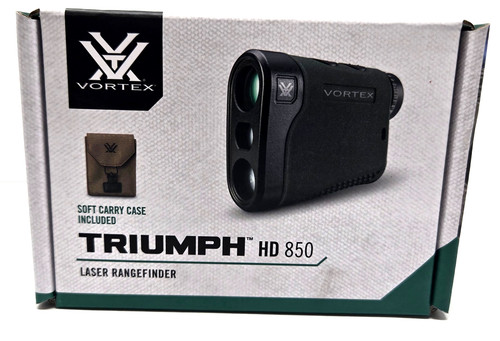 Hunting rangefinderScan mode, angle comp, optimized for game ranging in low light.View on eBay →
 Archery rangefinderARC bow mode outputs true horizontal distance for pin placement.View on eBay →
 Rangefinder with angle compensationBoth bow mode and rifle mode on one unit for mixed-weapon setups.View on eBay →
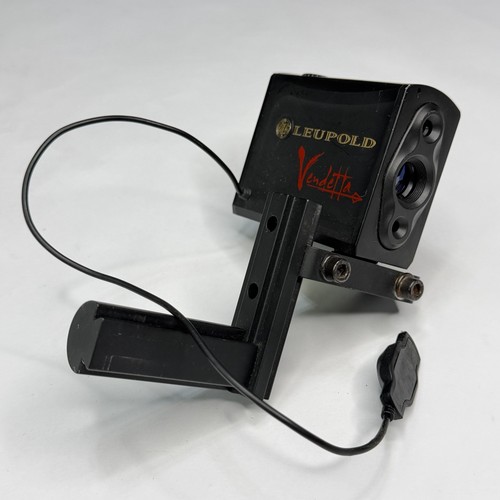 Bow rangefinderCompact one-hand design for quick ranging from a treestand.View on eBay →