Guides
Practical raised bed content — material comparisons, depth for root crops, soil mixes, and drainage. No padding.
GuideThe soil you fill it with is the whole decisionPeople agonise over the bed — the wood, the metal, the height, the kit. Then they fill it with whatever's cheapest and wonder why nothing thrives. The bed is…
Buying guide
How to choose a raised garden bed: metal vs wood vs fabric, depth, and soil
Galvanized steel lasts 20+ years and resists rot and pests. Cedar is the best natural wood option. Fabric beds drain exceptionally well but dry out faster. Depth is the spec that determines what you can grow.
Why this page exists
Raised bed listings on Amazon and in garden centers rarely explain the tradeoffs clearly. The material you choose determines how long the bed lasts, how it handles heat and cold, and whether you'll be replacing it in three years — and that matters more than brand.
This page explains galvanized metal vs cedar vs fabric beds, the minimum depth for different crops, how to calculate soil volume, and how drainage works in raised beds vs in-ground gardening.
Plain note about money. Links below go to eBay searches with an affiliate tag. If you buy through one, a small commission comes to this site. Your price is identical either way.
Raised garden beds worth searching on eBay
Metal, wood, and fabric beds with honest buying notes. We earn a small commission on qualifying sales; your price is unchanged. Full disclosure.
 Raised garden bed metal
Steel beds in traditional rectangular and circular shapes. Check listed depth — many are 11–12 inches, which suits most vegetables but not deep-rooting crops like carrots or parsnips.
View on eBay →
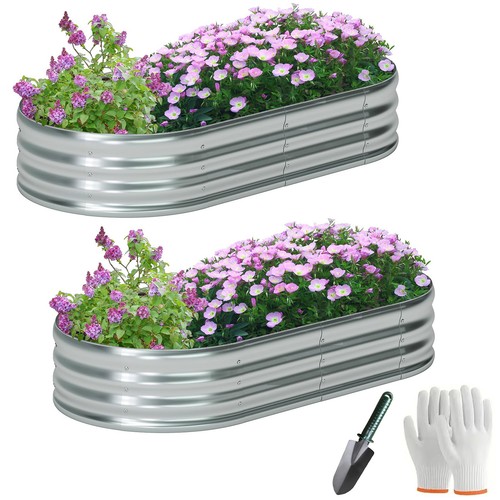
Raised garden bed galvanized
Hot-dip galvanized steel is the most durable option. Corrugated designs (often called "Corten-style" when left to weather) are the most common for garden aesthetics.
View on eBay →
Raised garden bed metal
Steel beds in traditional rectangular and circular shapes. Check listed depth — many are 11–12 inches, which suits most vegetables but not deep-rooting crops like carrots or parsnips.
View on eBay →
Raised garden bed galvanized
Hot-dip galvanized steel is the most durable option. Corrugated designs (often called "Corten-style" when left to weather) are the most common for garden aesthetics.
View on eBay →
 Cedar raised garden bed
Western red cedar is naturally rot-resistant and doesn't require treatment. Board thickness matters — 1.5 inch cedar outperforms thin slat construction significantly in longevity.
View on eBay →
Cedar raised garden bed
Western red cedar is naturally rot-resistant and doesn't require treatment. Board thickness matters — 1.5 inch cedar outperforms thin slat construction significantly in longevity.
View on eBay →
 Fabric raised bed
Fabric grow bags promote air pruning of roots. Excellent drainage. Lighter and portable. Trade-off: dry out faster and require more frequent watering in hot weather.
View on eBay →
Raised bed garden kit
Complete kits with hardware and brackets for assembly. Modular corner systems let you customize dimensions. Stackable designs let you add height after installation.
View on eBay →
Fabric raised bed
Fabric grow bags promote air pruning of roots. Excellent drainage. Lighter and portable. Trade-off: dry out faster and require more frequent watering in hot weather.
View on eBay →
Raised bed garden kit
Complete kits with hardware and brackets for assembly. Modular corner systems let you customize dimensions. Stackable designs let you add height after installation.
View on eBay →