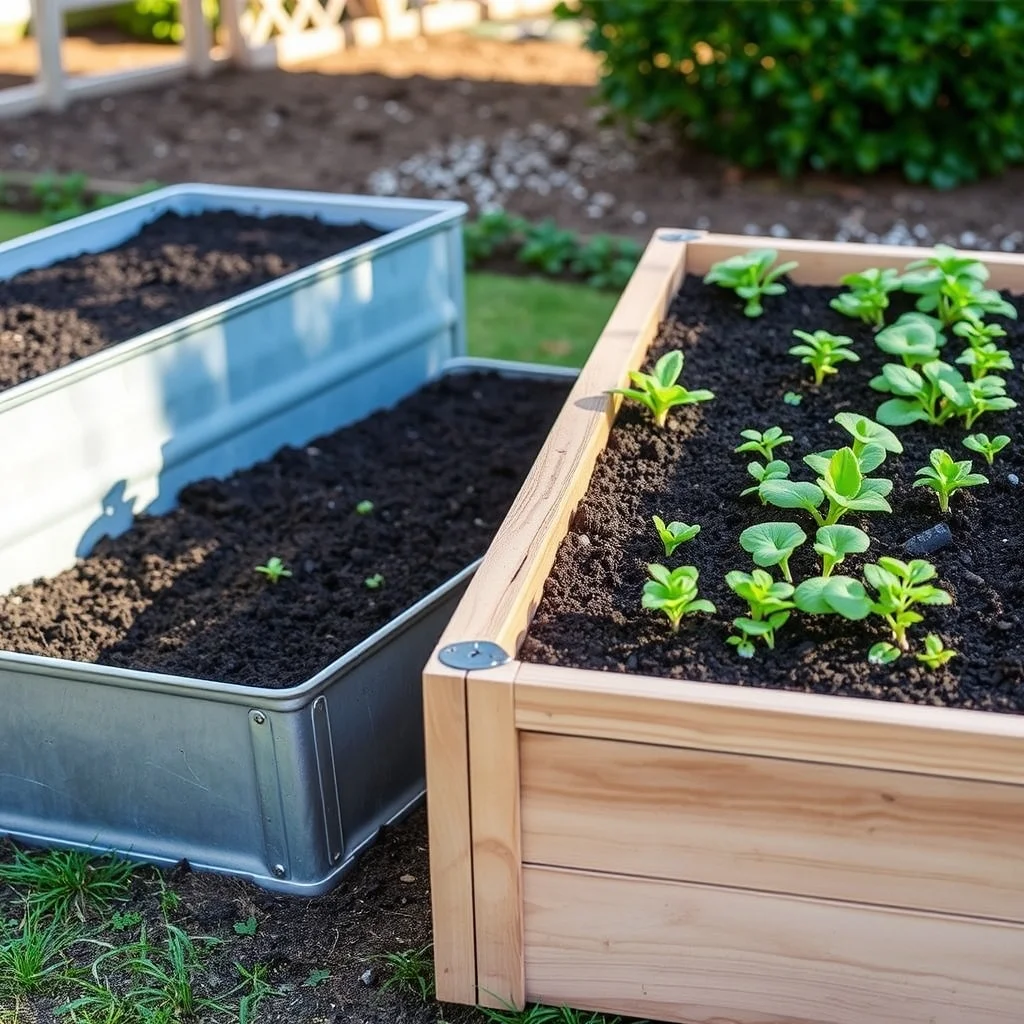
Material comparison: galvanized metal, cedar, and fabric
The three dominant raised bed materials each have a distinct tradeoff profile. There's no universal best choice — it depends on your budget, climate, and whether permanence or portability matters more.
Galvanized steel
Galvanized steel beds are the most durable option available. Hot-dip galvanization (zinc coating applied to steel) prevents rust and corrosion and typically lasts 20+ years in garden conditions. The corrugated panel style (often marketed as "Corten-inspired" despite actually being zinc-coated, not weathered steel) is the most common format in garden beds at $80–$250 for a 4×8 foot bed.
Steel heats up faster than wood or fabric in sun, which can extend your growing season in cold climates by warming the soil — a genuine benefit in short-season gardens. In very hot climates, it can run the opposite direction: extremely hot beds in full summer sun can stress roots near the edges. This is uncommon in practice but worth knowing if you're in USDA zone 9 or above.
One recurring concern is zinc leaching from galvanized metal into soil. The research on this is nuanced: zinc is a micronutrient plants need, and the leaching rate from hot-dip galvanized steel is generally considered safe for food gardening at the levels typically found. However, if this concerns you, a food-safe liner inside the bed addresses it entirely.
Cedar wood
Western red cedar is the best natural wood option for raised beds. Its natural oils make it resistant to rot, insects, and weathering without chemical treatment. A 1.5-inch thick cedar board bed typically lasts 10–20 years depending on climate and whether it contacts wet soil constantly (the bottom boards degrade fastest).
Cheaper wood alternatives — spruce, pine, fir — will rot within 3–5 years in contact with moist soil regardless of paint or sealant. The price gap between cedar and generic construction lumber narrows significantly when you factor in replacement costs. Avoid pressure-treated lumber for vegetable beds; older formulations contained arsenic compounds (now replaced with copper-based preservatives in modern PT lumber), but the precautionary principle applies when growing food.
Cedar boards also insulate soil temperature better than metal — less dramatic warming in spring, but also less heat stress in summer. For gardeners in consistently hot climates, this is typically an advantage.
Fabric grow bags and beds
Fabric containers (heavy-duty geotextile in 5- to 200-gallon sizes, and flat-sided fabric "beds" of 4×4 or 4×8 feet) offer exceptional drainage and a phenomenon called air pruning: when roots reach the air-permeable fabric wall, they stop growing and branch back inward, producing a dense, fibrous root system rather than pot-bound circling roots.
The main tradeoff is water retention. Fabric beds lose moisture through all surfaces, not just the bottom, and dry out significantly faster than wood or metal beds. In hot weather or full-sun locations, they may require daily watering during summer. This makes them well-suited for climates with regular rainfall or gardeners who have drip irrigation, but more demanding for hand-watering in dry climates.
Fabric beds are typically the cheapest option to start ($20–$60), easily portable, and store flat off-season. They degrade in 3–5 years from UV exposure, though this varies by material quality.
Shopping for raised garden beds? Browse current eBay listings → (we earn a small commission; your price is unchanged).
Depth: the spec that determines what you can grow
Raised bed depth is often marketed in vague terms ("standard depth," "deep," "jumbo"). The practical question is: what's the minimum depth for the crops you want to grow?
| Crop type | Min depth needed | Examples |
|---|---|---|
| Shallow-rooting | 6 inches (15 cm) | Lettuce, spinach, herbs, radishes |
| Medium-rooting | 12 inches (30 cm) | Tomatoes, peppers, beans, cucumbers, most flowers |
| Deep-rooting | 18–24 inches (45–60 cm) | Carrots, parsnips, beets, potatoes, squash |
Most packaged raised beds are 10–12 inches deep. This works well for the vast majority of vegetables — the standard depth is adequate for tomatoes, peppers, squash, and most common crops. If you specifically want to grow carrots (which need 12–18 inches of loose soil for full-length roots) or parsnips, plan for either a deeper bed or a stackable design that can be built up.
Tall vs standard beds: the ergonomics argument
Beds that are 17–24 inches tall ("tall" or "raised high" designs) significantly reduce bending during planting, weeding, and harvesting. For gardeners with back or knee issues, this can be the deciding factor. The tradeoff is substantially more soil needed (see below) and higher cost for frames that extend to that height.
Drainage: how it works and what to do about it
One major advantage of raised beds over in-ground gardening is drainage control. A raised bed filled with a well-draining mix drains freely from the bottom — roots get moisture without sitting in waterlogged soil, which prevents the root rot and anaerobic conditions that ruin heavy clay in-ground gardens.
If your bed sits on native soil, gravity handles drainage through the bottom. If it sits on hardscape (concrete, pavers), you need either a drainage layer at the bottom or drainage holes in the frame. Solid-bottom wood or metal beds on concrete trap water and create exactly the waterlogging conditions raised beds exist to avoid. For beds on hardscape, either drill drainage holes in the bottom or lay a 2-inch layer of coarse gravel or crushed stone at the base before filling with soil.
Soil volume: the expensive part you need to calculate first
For a standard 4×8 foot bed at 12 inches deep, you need approximately 32 cubic feet of soil. One cubic yard is 27 cubic feet — so you need slightly over one cubic yard for a single standard bed. At bulk delivery prices (varies by region), this is typically $40–$100 worth of soil mix per bed. For multiple beds, bulk delivery is significantly cheaper than buying bagged mixes.
The recommended soil mix for raised beds is often called "Mel's Mix" or a comparable formula: roughly 1/3 compost, 1/3 peat moss or coconut coir, and 1/3 coarse vermiculite or perlite. This mix drains well, retains moisture without waterlogging, and is light enough not to compact over time. Pure topsoil is not recommended — it compacts badly and drains poorly in a confined raised bed.
What to check before buying a raised bed kit
- Listed dimensions should include interior dimensions, not just exterior. Wall thickness reduces plantable area.
- Actual depth — some kits ship at 8 inches and describe themselves as "deep."
- Metal gauge — thicker gauge (lower number) means more rigid walls that won't bow outward under soil pressure. Most home garden beds use 22- or 20-gauge steel; commercial-grade is typically 18 gauge.
- Corner hardware — welded corners are stronger than screwed bracket corners on metal beds. Wood beds with 4×4 corner posts are stronger than simple butt-joined boards.
- Stackability — can you add height later? Modular systems that let you stack additional rings are worth the modest premium if you might want more depth in the future.
Shop raised garden beds on eBay
Metal, wood, and fabric beds in multiple sizes. We earn a small commission on qualifying sales; your price is unchanged. Full disclosure.
 Raised garden bed metal
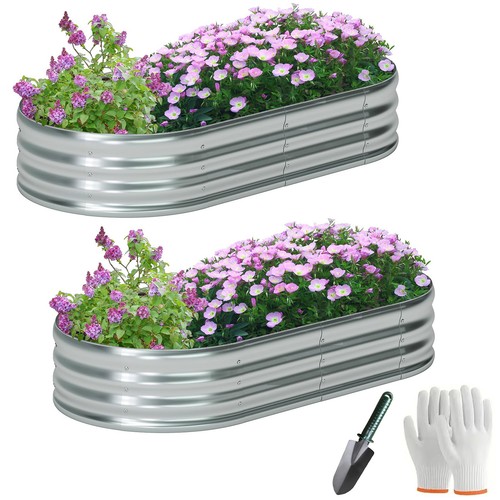
Steel beds in standard and tall heights. Check the listed depth and gauge in the description.
View on eBay →
Raised garden bed galvanized
Hot-dip galvanized corrugated panels. The most durable option for longevity. Look for welded corners.
View on eBay →
Raised garden bed metal
Steel beds in standard and tall heights. Check the listed depth and gauge in the description.
View on eBay →
Raised garden bed galvanized
Hot-dip galvanized corrugated panels. The most durable option for longevity. Look for welded corners.
View on eBay →
 Cedar raised garden bed
Naturally rot-resistant. 1.5-inch board thickness is the practical minimum for lasting 10+ years. Verify it's Western red cedar, not generic wood marketed as cedar.
View on eBay →
Cedar raised garden bed
Naturally rot-resistant. 1.5-inch board thickness is the practical minimum for lasting 10+ years. Verify it's Western red cedar, not generic wood marketed as cedar.
View on eBay →
 Fabric raised bed
Excellent drainage and air pruning. Best for gardeners with drip irrigation or reliable rainfall. Lightest and most portable option.
View on eBay →
Raised bed garden kit
Modular kits with hardware included. Stackable designs let you add height for root crops without replacing the whole bed.
View on eBay →
Fabric raised bed
Excellent drainage and air pruning. Best for gardeners with drip irrigation or reliable rainfall. Lightest and most portable option.
View on eBay →
Raised bed garden kit
Modular kits with hardware included. Stackable designs let you add height for root crops without replacing the whole bed.
View on eBay →