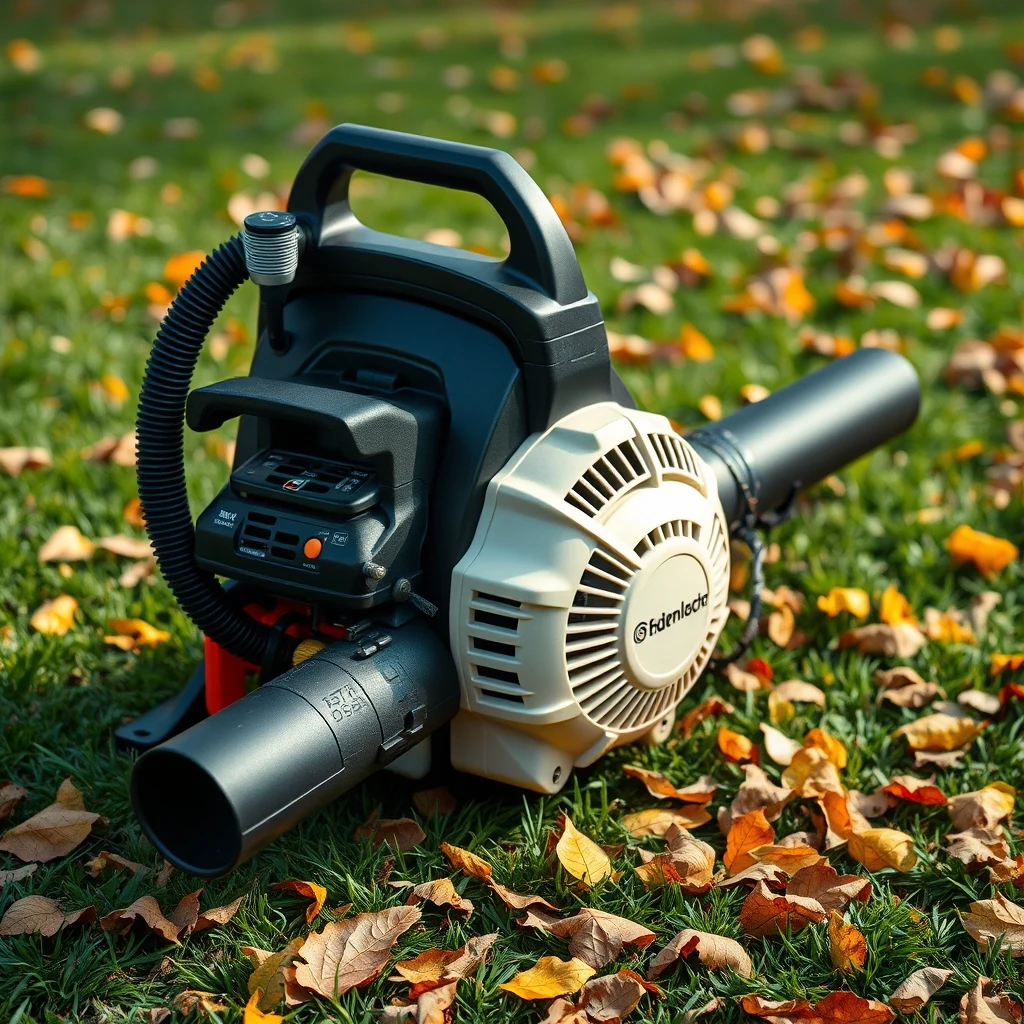
CFM vs MPH: the spec that actually matters
MPH (miles per hour) measures the velocity of air leaving the blower tube. CFM (cubic feet per minute) measures the volume of air moved per unit of time. Both matter, but they matter differently depending on the task.
High velocity (MPH) is useful for dislodging stuck or wet debris — lifting leaves that are packed against a curb or matted against wet pavement requires force concentrated at the nozzle. High volume (CFM) determines how quickly you can sweep a large area — moving a pile of dry leaves across an open lawn is primarily a CFM task.
The best single-number proxy for overall blower performance is Newton force (N), which multiplies air volume and velocity into a measure of actual pushing force. Some manufacturers publish this; many don't. When Newton force isn't listed, look at both CFM and MPH: a blower with 450 CFM and 120 MPH is more capable than one with 400 CFM and 180 MPH for most residential tasks, despite the lower MPH figure.
| Blower Category | Typical CFM | Typical MPH | Best Use |
|---|---|---|---|
| Corded electric (handheld) | 150–400 | 90–140 | Small yards, light debris, patios |
| Battery handheld (40V) | 300–500 | 90–150 | Typical residential lots under 1/4 acre |
| Battery handheld (56–80V) | 400–700 | 120–190 | Larger residential lots, moderate leaf fall |
| Gas handheld (2-stroke) | 400–600 | 150–200 | Large lots, heavy or wet leaves |
| Gas backpack | 600–900+ | 150–210 | Large properties, extended sessions, commercial |
Handheld vs backpack: the fatigue question
For most residential homeowners, a handheld blower — whether battery or gas — is sufficient. Handheld blowers are lighter, easier to store, and simpler to start and use. They're appropriate for yards up to roughly 1/4 to 1/2 acre depending on leaf fall volume and vegetation density.
Backpack blowers shift weight to the back and shoulders rather than the hands and wrists. For sessions over 20–30 minutes, this matters significantly. If you have a large wooded lot with heavy fall leaf drop that requires an hour or more of blowing, a backpack blower genuinely reduces fatigue compared to a handheld. The weight distribution also makes it easier to work on slopes.
Battery backpack blowers are available (EGO, Greenworks, and others make them) but carry the same run time constraints as handheld battery models — typically 30–60 minutes on a high-capacity battery. Gas backpack blowers remain the choice for extended commercial or heavy-duty residential use.
Shopping for leaf blowers? Browse current eBay listings → (we earn a small commission; your price is unchanged).
Power source trade-offs
Battery
Battery leaf blowers have become genuinely capable in the 40V–80V range, covering most residential needs. The key advantage beyond low noise and no fuel mixing is battery platform sharing — if you already own a cordless mower or trimmer on a compatible platform, the same batteries work in a blower. Run time on a typical 5.0Ah 56V battery runs approximately 25–45 minutes depending on model and throttle setting.
The limitation: if you have a heavily wooded lot with major fall leaf events that require hour-plus sessions, you'll need either multiple batteries or a gas alternative. Some battery backpack blowers accept dual batteries to extend run time.
Gas
Gas blowers — particularly two-stroke handheld and backpack models — remain the most powerful category and have unlimited run time. They require premixed fuel (typically 40:1–50:1), periodic maintenance (air filter, spark plug, carburetor cleaning), and produce the most noise (typically 95–106 dB compared to 60–80 dB for battery models).
Corded electric
Corded blowers are the quietest and most consistent in output — no battery degradation over time, no fuel. They're appropriate for small yards and patios where cord range (typically 25 feet on the tool plus extension cord) isn't limiting. For anything larger, cord management becomes impractical.
Noise: why it matters more than specs suggest
Gas leaf blowers generate 95–106 dB at operator level. At 100 dB, NIOSH recommends hearing protection for sessions over 15 minutes. Many municipalities and HOAs have noise ordinances that restrict gas power equipment to specific hours — commonly 8 AM–6 PM on weekdays, with shorter or no windows on weekends. Some jurisdictions have banned gas leaf blowers outright in residential areas (California has introduced state-level restrictions on small off-road engines).
Battery blowers typically measure 60–75 dB — comparable to a normal conversation — which is below most local noise ordinance thresholds and allows use at hours when gas equipment would be prohibited. If early morning or evening yard work is important to you, this is a meaningful operational advantage.
Vacuum and mulching capability
Some blowers convert to vacuum mode by reversing airflow and attaching a collection bag. The leaves are typically shredded by a metal impeller at roughly 10:1 reduction before entering the bag. This is useful for small yards where you want to collect and mulch leaf material for composting rather than pile it for pickup.
Vacuum mode is significantly slower than blowing — you're walking slowly with the nozzle over the lawn. For large areas, it's impractical. For a small patio, garden bed borders, or a compact backyard, it saves the secondary step of raking collected piles into bags.
Buying checklist
- Know your yard size: Under 1/4 acre and flat: a 40V battery handheld is likely sufficient. Over 1/2 acre or heavily wooded: consider 56V–80V battery or gas.
- Check battery platform compatibility: Before buying, verify whether the blower shares batteries with your existing tools. Platform lock-in is real — mixing platforms means buying duplicate batteries.
- Verify CFM measurement method: Ask or check whether CFM is measured at the tube or impeller. Tube measurement is more useful for comparison.
- Check local noise rules: If you're in an HOA or municipality with noise restrictions, battery over gas may be the only practical option for your schedule.
- Consider tube diameter and shape: Flat nozzle attachments concentrate airflow at ground level for moving stuck debris. Round tubes suit general blowing. Many models ship with both and you swap as needed.
Search eBay for these blowers
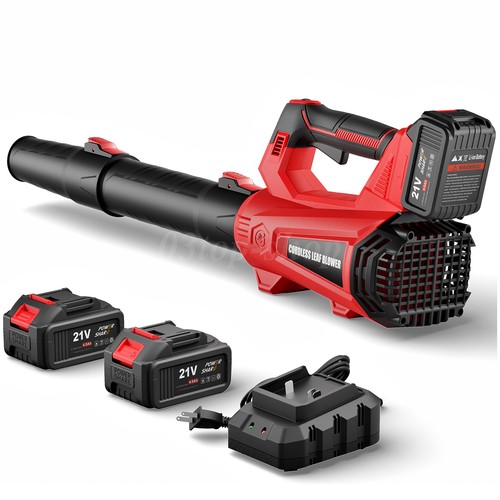 Cordless leaf blower
Filter by voltage. Compare rated CFM at the tube, not impeller, for accurate comparison.
Cordless leaf blower
Filter by voltage. Compare rated CFM at the tube, not impeller, for accurate comparison.
 Backpack leaf blower
Better weight distribution for extended sessions. Gas dominates this category for run time.
Backpack leaf blower
Better weight distribution for extended sessions. Gas dominates this category for run time.
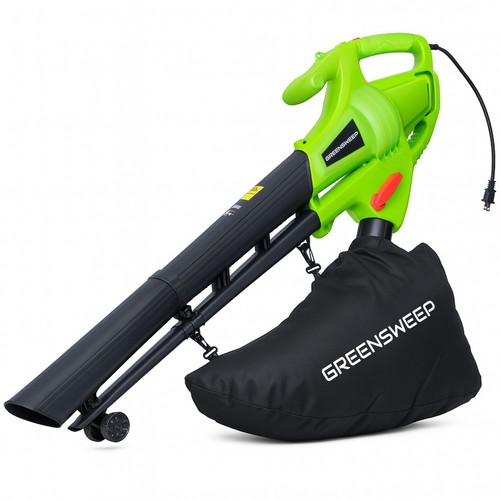 Leaf blower vacuum
3-in-1 for small yards. Check mulching ratio and bag capacity before buying.
Leaf blower vacuum
3-in-1 for small yards. Check mulching ratio and bag capacity before buying.