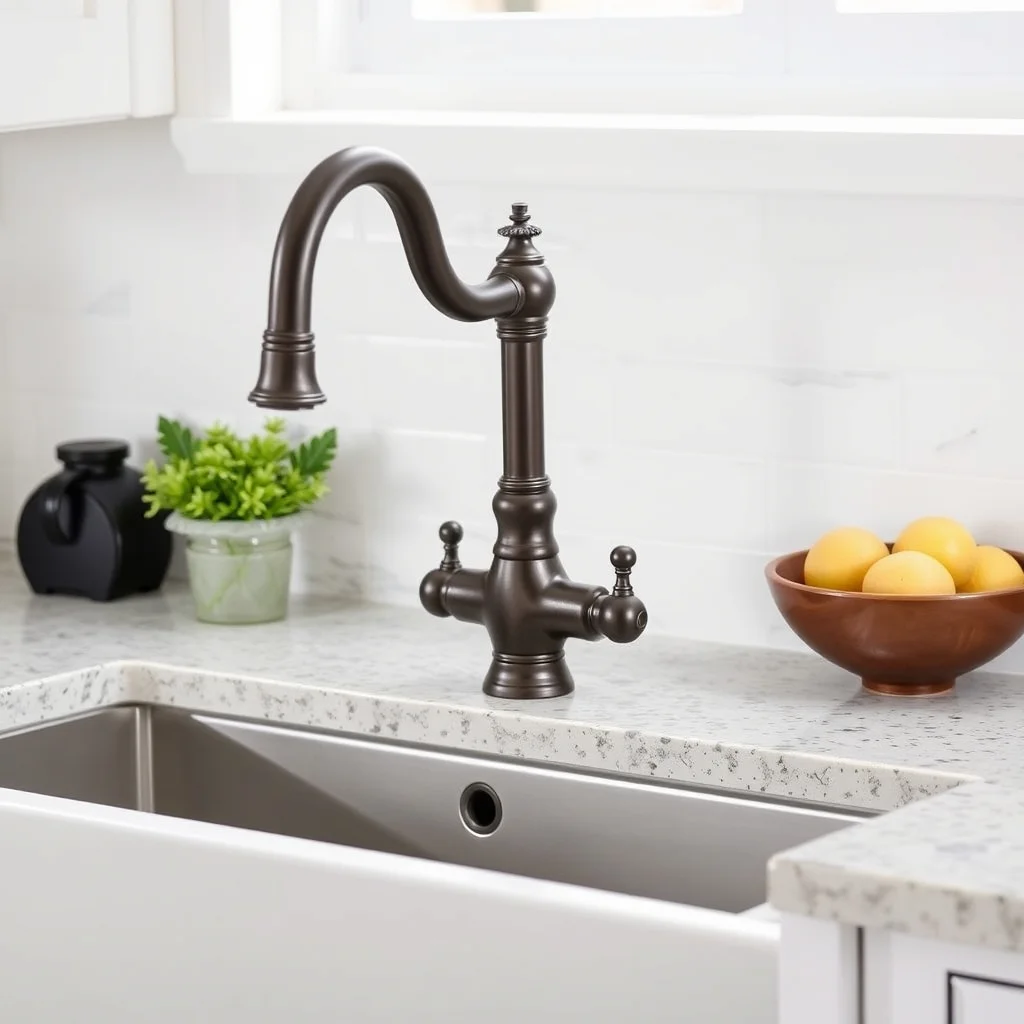
Step one: count your sink's deck holes
Before looking at any faucet, count how many holes your sink has. In North America, kitchen sinks typically have 1, 3, or 4 pre-drilled deck holes (occasionally 2). The hole count constrains your faucet choices:
- 1 hole: Single-handle faucets with the handle and spout in one body. Pull-down and pull-out designs typically install in a single hole. Touchless faucets are usually single-hole as well.
- 3 holes (8" center spacing): Two-handle faucets with separate hot/cold handles flanking the spout. Bridge faucets. Many single-handle faucets come with a deck plate to cover the unused outer holes.
- 4 holes: Same as 3-hole, plus a fourth hole for a side sprayer or soap dispenser. If your sink has a fourth hole and you want a pull-down faucet (which doesn't use a side sprayer), you can plug the 4th hole with a hole cover or install a soap dispenser.
If your sink has no holes (undermount sinks often come undrilled), you can have a plumber or fabricator drill holes, or specify the count when ordering a custom stone top.
Spout geometry: height and reach
Two measurements define whether a faucet will work in your kitchen:
Spout height is measured from the deck (sink rim) to the highest point of the spout arc. For filling tall stock pots, you need clearance. A 10" tall pot plus lid needs at minimum a spout height of about 11–12" to fill comfortably under it. High-arc faucets typically range from 15" to 22" in spout height; standard-arc faucets run 8" to 12".
Spout reach is the horizontal distance from the faucet body to where water exits. It needs to land in the center of the basin, not at the edge. Measure from the center of your faucet hole to the center of your sink basin. If the reach is too short, water hits the near side of the basin and splashes; if too long, it hits the back. Typical reach is 8"–10" for standard sinks; deep or wide professional-style sinks may need 10"–12".
| Spec | Typical standard range | What to measure against |
|---|---|---|
| Spout height | 8"–22" | Height of your tallest pot + 1–2" clearance |
| Spout reach | 8"–12" | Distance from hole center to basin center |
| Hole size (diameter) | 1-3/8" standard | Measure your existing hole or order to spec |
| Deck plate width (3-hole) | 6"–8" (covers to 8" center spacing) | Measure hole-to-hole spacing on your sink |
Pull-down vs pull-out: which spray design fits your use
Pull-down faucets have a high-arc spout and the spray head pulls down vertically into the basin. The hose runs inside the spout and down through the faucet body. This design works best for large sinks and filling pots. The head is easy to direct at a fixed basin; it doesn't reach outside the sink area well.
Pull-out faucets have a lower arc and the spray head pulls forward and outward. The hose is typically longer, so you can fill a pot sitting on the counter next to the sink. Better for kitchens where counter-top filling or rinsing of items outside the basin is common. The lower profile can look better in kitchens with low upper cabinets above the sink.
Both designs use a weighted counterbalance or a magnet dock to retract the head when not in use. The weight system is generally more reliable long-term than magnetic docking. Check the hose material — braided stainless is more durable than flexible plastic, which can become stiff or develop kinks over years of use.
Touchless faucets: real-world reliability
Touchless faucets use infrared proximity sensors to activate flow when a hand or object is detected. They add genuine utility — hands-free operation when hands are full or messy — but introduce reliability considerations worth knowing.
- Sensor placement: Under-spout sensors (detect motion below the spout) have fewer false triggers than side-body sensors. Side-body sensors are triggered by passing motion and can activate when you walk by the sink.
- Power source: Most residential touchless faucets run on batteries (typically 6 AA cells in a battery pack under the sink). Battery life varies — 1 to 2 years is typical with moderate use. AC-powered models are available and eliminate battery replacement but require an outlet under the sink.
- Manual override: All good touchless faucets retain a manual handle as backup. In any scenario where the sensor malfunctions or batteries die, the manual handle must still work.
- False trigger rate: This is the most common complaint in user reviews. Check reviews specifically for false activation frequency with the particular model you're considering.
Shopping for kitchen faucets? Browse current eBay listings → (we earn a small commission; your price is unchanged).
Finish durability: what holds up in a kitchen
Kitchen faucets live in a harsh environment — water, soap, grease, heat, and physical contact many times per day. Finish durability matters more in a kitchen than in a bathroom.
Brushed nickel
The most practical finish for most kitchens. The brushed texture hides water spots and minor scratches far better than polished finishes. Durable PVD (physical vapor deposition) coating on quality models. Avoid "brushed nickel" on budget models that use paint over plastic — it chips and yellows.
Stainless steel
Similar appearance to brushed nickel but typically an actual stainless steel body rather than a brass body with a finish coat. Genuinely resistant to corrosion. Common in commercial-style faucets. Heavy — the weight is real, which affects the feel of the spout and handle.
Matte black
Popular in contemporary kitchens. Shows water mineral deposits (white limescale) and soap scum more visibly than lighter finishes. Requires more frequent wiping in hard-water areas. Quality matte black is PVD over brass; budget matte black is powder-coated over zinc alloy and chips.
Oil-rubbed bronze
A living finish — intentionally patinas over time. The "rubbed" spots (areas of use that become lighter and brighter over time) are considered part of the aesthetic. If you don't want patina variation, this finish is a poor choice. Actual oil-rubbed bronze is a surface treatment, not a material, and requires periodic application of wax or oil to maintain.
Polished chrome / polished nickel
Shows every water spot. Beautiful when newly polished; frustrating to maintain in active kitchens. Better suited to bathrooms where it sees less wear.
Valve type: ceramic disc vs ball valve
The internal valve determines long-term leak resistance. Most quality faucets today use ceramic disc cartridges — two ceramic discs that rotate against each other to control flow and temperature. Ceramic-on-ceramic is extremely durable and virtually leak-free for decades of normal use. The Sedal and Kerox brands (used by many OEM manufacturers) are common quality benchmarks.
Older or budget faucets may use ball valves (a rotating ball with ports) or compression valves (rubber washer against a seat). Ball valves are mechanically complex and have more wear points; compression valves need periodic washer replacement. For a kitchen faucet you'll use 20+ times per day, ceramic disc is the specification worth verifying.
Under-sink clearance: the forgotten check
Kitchen faucets with hot/cold supply connections route hoses and valve bodies under the sink. Tall valve bodies (common on commercial-style faucets) or long hose loops can conflict with the under-sink cabinet interior. Before ordering any faucet, check:
- Clearance from the underside of the sink deck to the top of the cabinet shelf or any plumbing already present
- Whether the valve body mounting nut can be tightened by hand or requires a basin wrench (a basin wrench is essential for any tight under-sink space)
- Whether the supply lines included with the faucet will reach your shutoff valves — or whether you'll need longer braided supply lines
 Pull-Down Kitchen Faucet
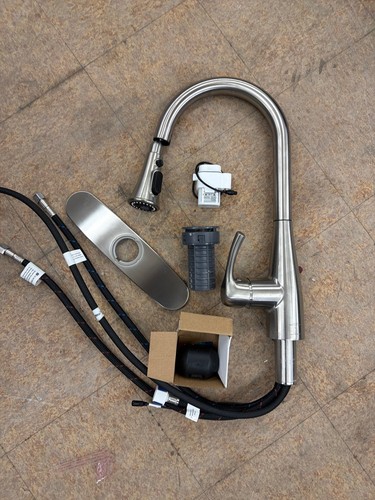 Touchless Kitchen Faucet
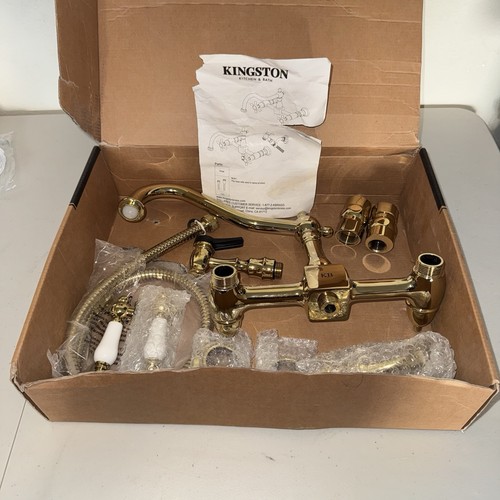 Bridge Kitchen Faucet