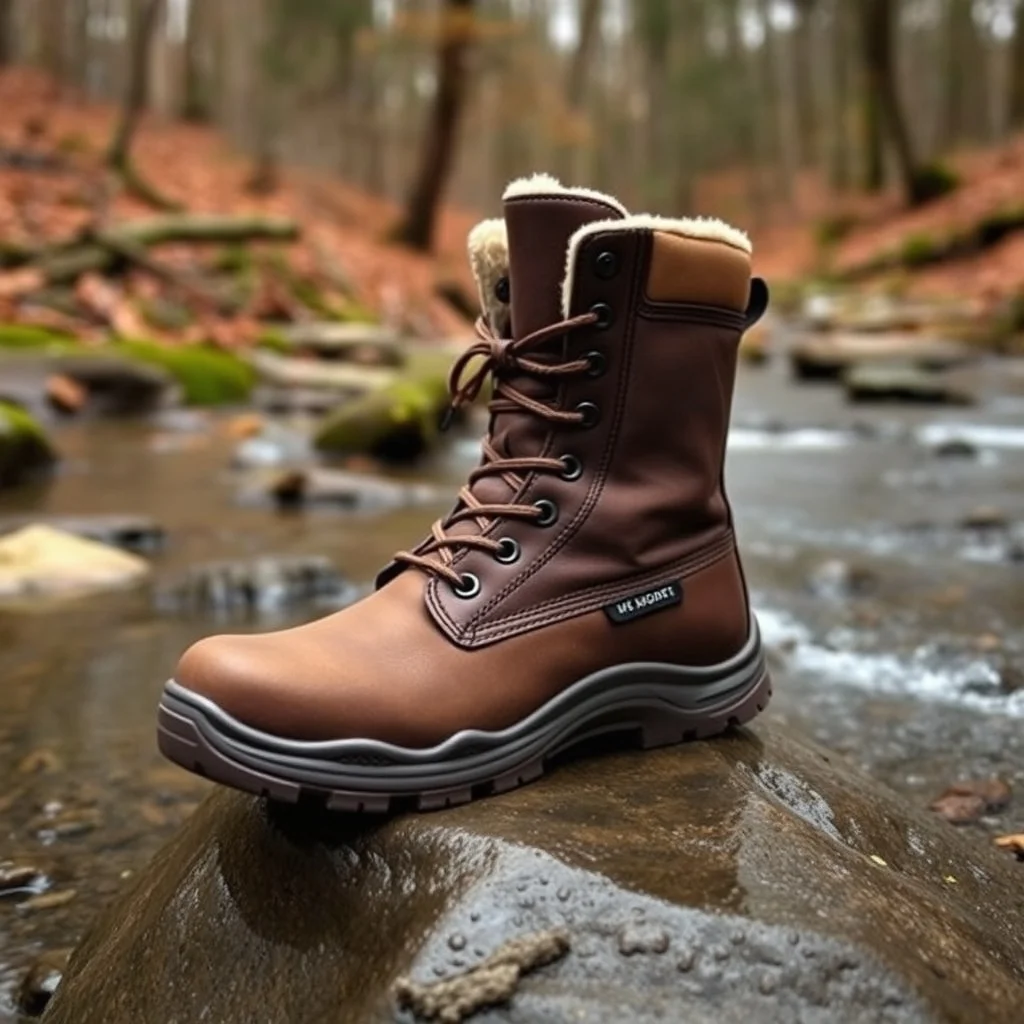
Insulation gram rating: what it actually means
Thinsulate and similar synthetic insulations are rated in grams per square meter (g/m²). A 400g boot has 400 grams of Thinsulate lining per square meter of material. This is a density measurement, not a temperature measurement — manufacturers do not guarantee comfort at specific temperatures because activity level, sock weight, individual circulation, and moisture management all affect perceived warmth significantly.
The useful way to think about insulation grams is by activity category:
| Insulation level | Activity match | Typical season |
|---|---|---|
| Uninsulated (0g) | Active hiking in warm weather | Early season, 40°F+ |
| 200g | Moderate activity, cool temps | Early-to-mid season, 30–50°F |
| 400g | Moderate-to-active hunting | October–November, 20–40°F |
| 600–800g | Still-stand, treestand, blind hunting | Mid-to-late season, 0–25°F |
| 1000–1200g | Cold stand hunting, low activity | Cold climates, below 0°F |
| 1600–2000g | Extreme cold, near-zero movement | Arctic, ice fishing, extreme stands |
Rubber vs waterproof-membrane construction
The two main waterproof construction types for hunting boots — full rubber and fabric-upper with waterproof membrane — are not competing versions of the same product. They're designed for different conditions and different use cases.
Full rubber boots
Rubber is 100% waterproof and does not absorb scent the way leather and synthetic fabric uppers do. The scent advantage is real: human body odor molecules do not penetrate rubber the way they absorb into textile uppers. This matters for deer and other game with acute smell. For early-season bowhunters, swamp hunters, and waterfowl hunters, rubber boots are the standard choice.
The trade-offs: rubber is heavier than leather or synthetic uppers, less breathable (feet sweat more), and provides less ankle support and heel stability for rough terrain. Rubber boots typically require sizing up 1–2 sizes to accommodate wool socks and to allow air circulation.
Neoprene-rubber hybrids add insulation and some flex while maintaining waterproof protection — the standard for waterfowl hunting. Common neoprene thicknesses: 3.5mm (moderate cold, 40–50°F water temps), 5mm (cold conditions, 30–40°F), 7mm (extreme cold duck hunting).
Waterproof-membrane boots (Gore-Tex and equivalents)
Leather or synthetic upper construction with a waterproof-breathable membrane liner (Gore-Tex, KEEN.Dry, Dryshod, or proprietary equivalents) provides waterproofing against rain, morning dew, and shallow creek crossings while maintaining breathability. These boots are lighter and more supportive than rubber alternatives, making them better for active hunting, hill country, and western applications.
The limitation: waterproof-membrane boots are not submersion-proof. Water entering over the top of the boot (step into water deeper than the boot height) defeats the waterproofing entirely. For hunting in ankle-deep or deeper water, rubber is the only fully reliable option.
Shopping for hunting boots? Browse current eBay listings → (we earn a small commission; your price is unchanged).
Fit: the failure mode most hunters ignore
Hunting boot fit differs from athletic shoe fit in important ways. Getting fit wrong is the leading cause of blister, ankle rolling, and cold-foot problems that show up on the second day of a multi-day hunt.
Sizing for thick socks
Try hunting boots with the actual sock weight you plan to hunt in — typically a heavy wool sock (medium weight for active, heavyweight for cold stand hunting). Most hunters need 0.5–1 full size larger than their everyday shoe size when wearing heavy hunting socks. Buying hunting boots in your street size and then squeezing thick socks in causes toe compression on downhills and restricts circulation (accelerating cold feet).
Heel lock and ankle fit
The heel should lock into the heel cup with minimal slippage — 1/8 to 1/4 inch of vertical heel lift maximum when walking. Heel slippage is the primary cause of heel blisters on multi-day hunts. Lace-up construction allows you to lock the heel independently of toe room; choose boots with enough lace rows to achieve a heel-lock lace pattern if heel slip is a problem.
Toe box room
Your toes should not contact the boot end when descending a slope. On a downhill test, slide your foot forward — toes touching the front of the boot means you need a longer boot or a lower-volume last. On steep mountain terrain, toe box compression on long descents causes black toenails and significant pain.
Break-in time
Leather hunting boots require meaningful break-in time — typically 20–40 hours of wear before full flexibility and conformity to your foot shape. Wearing new leather boots for the first time on an opening day backcountry hunt is a reliable way to develop blisters by day two. Synthetic-upper boots generally break in faster but still benefit from 10–15 hours of pre-hunt use.
Terrain-specific recommendations
Eastern woodland deer hunting (flat to rolling)
400–600g insulated waterproof-membrane boot is the versatile choice for most treestand and ground blind hunting in the East. Rubber boots for wet creek bottoms and early season when scent matters most. 8–10-inch height for ankle support in leaf litter and uneven ground.
Western elk and mule deer (steep terrain)
A stiff-shanked mountain boot with aggressive lugs and a supportive midsole is the priority over insulation. Most western elk hunting involves 5–10+ miles of hiking at altitude. Boot stiffness protects your ankles on scree and talus. Insulation typically 200–400g — active exertion at altitude generates substantial body heat. Weight matters significantly for long-distance approaches.
Swamp and wetland hunting (waterfowl, hogs, early-season)
Full rubber with neoprene liner is the standard. Height matters: 16-inch rubber boots handle most swamp hunting; waders are needed for deeper water. Snake protection is relevant in southern states during warm months.
Late-season stand hunting (cold climates)
800–1200g insulation for motionless stand hunting in sub-20°F temperatures. Many hunters in extreme cold use pac boots (rubber lower with removable insulated liner) or battery-heated boot insoles for extreme cold situations. The removable liner allows drying the insulation between uses, which maintains loft and insulation value over a multi-day hunt.
Sole construction: the grip variable
Lug pattern depth and rubber compound determine traction on different surfaces:
- Deep aggressive lugs (6–8mm): Best for mud, soft ground, and loose terrain. Packs less efficiently on hard surfaces but provides excellent grip in typical eastern hunting terrain.
- Moderate lugs (4–6mm): The all-around choice for mixed terrain. Less grip in deep mud than aggressive, better grip on hard surfaces.
- Vibram or equivalent premium rubber: Better cold-weather flexibility (standard rubber stiffens below freezing) and more durable wear life than economy rubber soles.
- Flat/minimal tread: Appropriate for tree-climbing stands where a flat sole contacts climbing steps safely. Deep lugs can catch awkwardly on treestand steps.
Hunting boots worth looking at on eBay
We earn a small commission on qualifying sales; your price is unchanged. Full disclosure.
 Insulated hunting boots200g–1200g ratings — match to activity level and expected temperature.View on eBay →
 Rubber hunting bootsFull rubber waterproofing + reduced scent transfer. Wetland standard.View on eBay →
 Waterproof hunting bootsMembrane-lined leather or synthetic for active hunting in rain and dew.View on eBay →
 Mountain hunting bootsStiff shank, aggressive lugs for elk, mule deer, and sheep terrain.View on eBay →