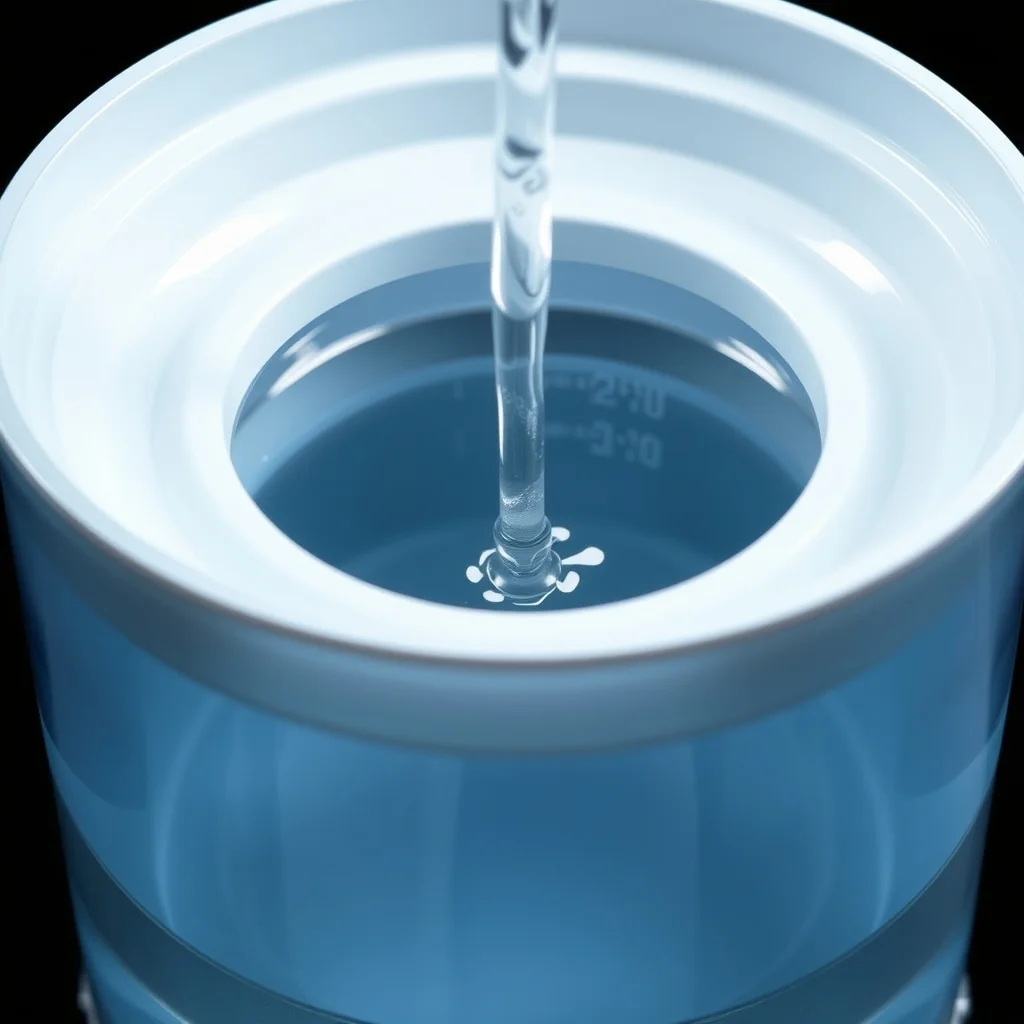
Three technologies, three different trade-offs
Evaporative cool mist
An evaporative humidifier draws air through a wet wick filter; water evaporates naturally into the airstream. It is self-regulating — at high ambient humidity, the evaporation rate slows. You cannot over-humidify a room with an evaporative unit running correctly. The wick filter captures minerals from tap water rather than dispersing them as white dust. Fan noise is present, typically 35–50 dB. Wick filters need replacement every 4–8 weeks depending on water hardness and run time.
Ultrasonic
A vibrating ceramic plate oscillates at ultrasonic frequency, producing a fine mist that disperses into the air. No heating element, nearly silent operation, no filter to replace. The downside: the same plate that disperses water droplets disperses dissolved minerals from tap water — you will see a white powder accumulate on nearby surfaces. Using distilled or demineralized water solves the white dust problem but adds ongoing cost. Bacteria in the water tank are dispersed along with the mist, making the 3-day cleaning schedule non-negotiable.
Warm mist (steam vaporizer)
Water is heated to boiling and steam is released. Boiling kills bacteria and mold in the water before they reach the air — this is a genuine hygiene advantage. The heating chamber accumulates mineral scale from tap water (limescale) and requires periodic descaling with white vinegar. The heating element draws more electricity than cool mist alternatives, adding modestly to operating costs. Not recommended for bedrooms with children due to the burn risk from hot steam output.
| Technology | Noise | Minerals | Cleaning Interval | Safety |
|---|---|---|---|---|
| Evaporative cool mist | Fan noise | Trapped in wick | Weekly + filter change | No hot surfaces |
| Ultrasonic | Near silent | White dust if tap water | Every 3 days | No hot surfaces |
| Warm mist | Near silent | Limescale in chamber | Weekly descaling | Hot steam output |
Sizing by output and room square footage
Humidifier output is typically rated in gallons per day. Matching output to your space requires knowing both the room size and how dry your air currently is. A 1-gallon/day unit handles roughly 250–400 sq ft in a moderately dry environment. A 1.5–2 gallon/day unit is more appropriate for 500–800 sq ft or for very dry climates.
The EPA recommends indoor relative humidity between 30–50% for comfort and health. Below 30% RH, respiratory membranes dry out; above 60% RH, mold growth risk increases significantly. A hygrometer (inexpensive, $10–20) is worth having to verify your target is being reached and maintained.
Tank size determines how long the unit runs between refills. A 1-gallon tank running at 0.5 gallons/day output runs for about 48 hours between fills. A 1.5-gallon tank at 1.5 gallons/day output runs less than 24 hours. If overnight continuous operation is a requirement, calculate runtime before buying.
Shopping for humidifiers? Browse current eBay listings → (we earn a small commission; your price is unchanged).
Cleaning: the spec that determines whether you keep using it
The CDC recommends cleaning humidifiers every three days. This is not excessive caution — it reflects the real bacterial growth rate in standing water at room temperature. Bacteria that colonize the water tank of an ultrasonic humidifier are dispersed into the air as an aerosol with every mist cycle. This has been documented to cause hypersensitivity pneumonitis in sensitive individuals, particularly infants and people with respiratory conditions.
What cleaning actually involves:
- Every 3 days (ultrasonic and evaporative): Empty and rinse the tank, wipe with a diluted bleach solution (1 tsp bleach per gallon of water), rinse thoroughly, allow to dry before refilling.
- Weekly: Full disassembly and cleaning of all water-contact parts. Soak in white vinegar to break down mineral deposits. Rinse thoroughly.
- Filter replacement (evaporative): Every 4–8 weeks, or when output drops noticeably or the filter develops visible discoloration or odor.
- Descaling (warm mist): Monthly or more frequently in hard-water areas. White vinegar soak in the heating chamber dissolves limescale accumulation.
Water quality and white dust
Tap water hardness varies significantly by region. In areas with hard water (above 120 mg/L dissolved minerals), ultrasonic humidifiers produce visible white mineral dust on furniture and electronics. This is not harmful in small quantities for most people, but it is annoying and coats electronics with conductive mineral deposits over time.
Solutions in order of cost: use distilled water (most effective, ongoing cost), use a demineralization cartridge filter insert if available for your unit (partially effective, moderate cost), or switch to an evaporative humidifier that traps minerals in the wick (adds filter cost).
Features worth evaluating
Built-in humidistat
A unit with an accurate built-in hygrometer and humidistat cycles off when your target RH is reached and back on when it drops. This prevents over-humidification and is the only way to maintain a consistent target automatically. Budget units with manual output settings require guesswork.
Auto mode and smart controls
Useful for overnight bedroom use where you want the unit to respond to RH changes without manual adjustment. Less useful if you will run the unit on a fixed schedule. Smart home integration is a convenience feature, not a performance feature.
Tank design
Wide-mouth tanks fill from a sink without removing a lid. Tanks with narrow fill openings require carrying the unit to the sink or using a pitcher. Smaller matters for cleaning access. Transparent tanks let you see the water level without lifting the unit.
Choosing by use case
Infant room: Avoid warm mist entirely (burn risk). Evaporative cool mist is the standard recommendation from pediatricians — cool, no burn risk, self-limiting humidity. Clean aggressively on schedule.
Bedroom (adult, overnight): Ultrasonic is popular for silence. If you will use tap water, plan for white dust management and commit to the 3-day cleaning schedule. Evaporative is the lower-maintenance alternative at the cost of fan noise.
Whole-home or large living area: Console or whole-home bypass humidifiers (integrated with HVAC) are more efficient than stacking multiple portable units. If portability or renting prevents HVAC integration, a large console evaporative unit (1.5–3 gallons/day) is more manageable than multiple small units to maintain.
Humidifiers on eBay
We earn a small commission on qualifying sales; your price is unchanged. Full disclosure.
 Cool Mist Humidifier
 Ultrasonic Humidifier
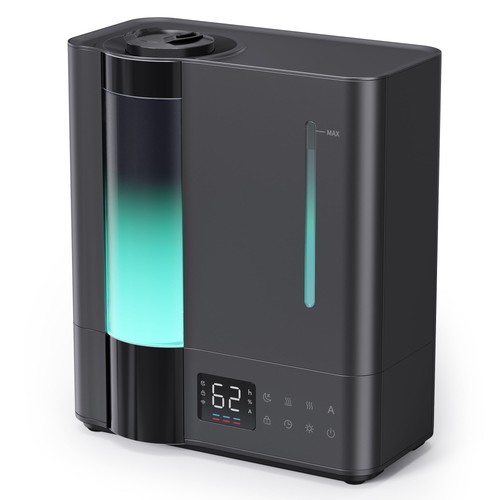 Warm Mist Humidifier