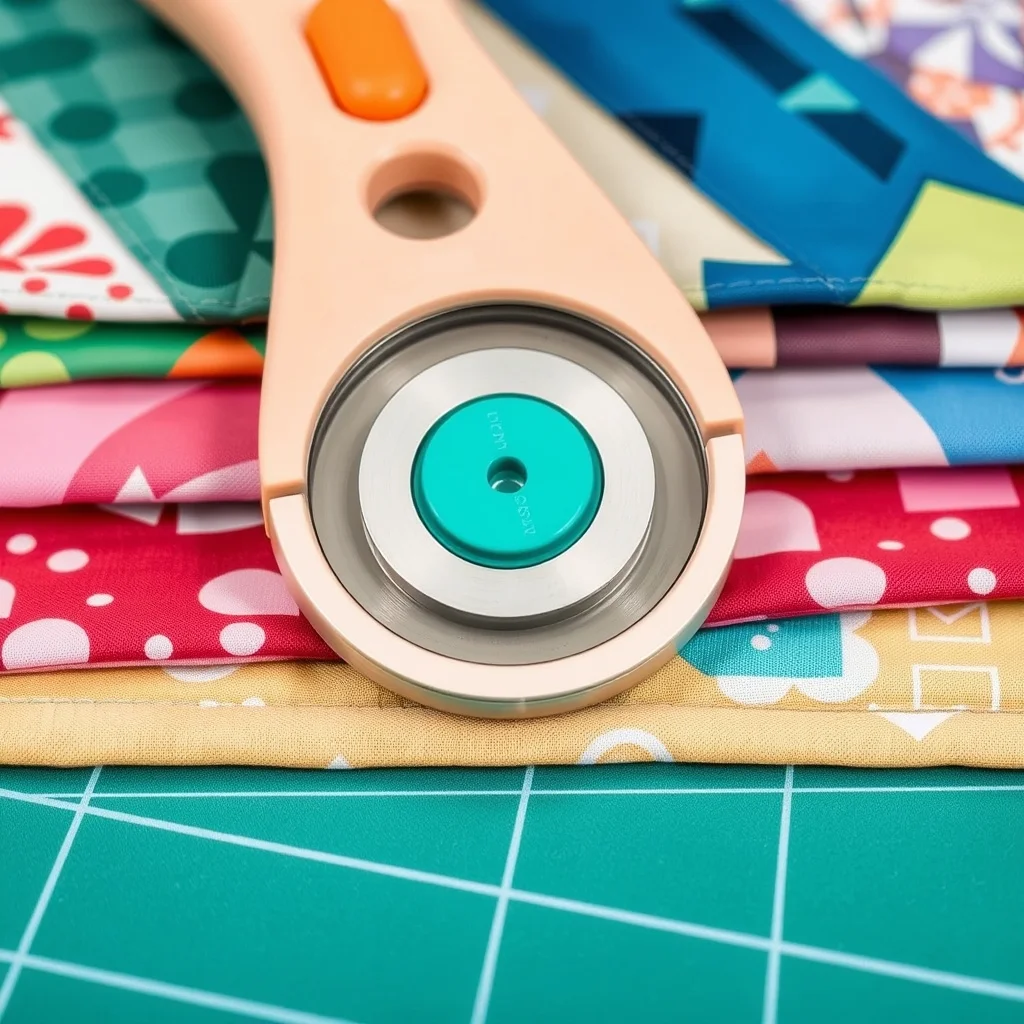
Rotary cutters: the versatile hand tool for sewists and quilters
A rotary cutter is a circular blade mounted on a handle, rolled along a straight edge (typically an acrylic quilting ruler) against a self-healing mat. The blade cuts through fabric cleanly in a single pass, much faster than scissors for straight cuts and more accurate for cutting multiple layers simultaneously.
Rotary cutters are the standard tool for quilting because they allow precise cutting of geometric pieces across multiple fabric layers in a single pass. A skilled quilter can cut a 6-inch square from 6 layers of folded fabric with one smooth pass of a rotary cutter against a ruled edge — the same task would require individual cuts with scissors and produce less consistent sizing.
Blade diameter and what it changes
| Blade size | Best for | Limitations |
|---|---|---|
| 28mm | Tight curves, small pieces, precision appliqué cutting | Less cutting force; struggles with multiple thick layers |
| 45mm | Standard quilting, garment cutting, general fabric work | Some curve difficulty compared to 28mm; the balanced default |
| 60mm | Multiple layers, long straight cuts, heavy fabrics, batting | Clumsy on curves; more blade drag; heavier handle |
The 45mm blade is the default for most sewists and quilters. The 28mm and 60mm sizes serve specific jobs better than the 45mm, but they're supplements rather than replacements. If you buy one rotary cutter, buy the 45mm.
Blade quality and replacement frequency
Rotary blades dull with use. A dull blade drags instead of cutting cleanly, skips across fabric, and requires more pressure — which introduces inaccuracy and hand strain. How quickly blades dull depends on what you cut: cotton quilting fabric is gentle on blades; canvas, denim, and batting dull blades faster.
Plan to replace blades regularly. Skimping on blade replacement is the most common mistake in rotary cutting — a sharp blade is the entire value of the tool. Quality replacement blades are available from most major brands (Olfa, Fiskars, Rotary Cutter) and are genuinely interchangeable across some handle designs, though verify compatibility before assuming.
Self-healing cutting mats: construction and size
A self-healing mat is not optional with a rotary cutter — rolling a rotary blade across an unprotected table damages both the blade and the surface. The "self-healing" property refers to the mat's ability to close blade cuts in its surface rather than leaving permanent grooves that deflect future cuts.
Mat construction: layers and material
Quality cutting mats use multiple layers of PVC or composite material bonded together. Better mats have 5 or more layers; budget mats use 3 layers or a single thick slab. The layered construction creates the healing mechanism — the slit in the top layer isn't supported by a matching groove in subsequent layers, so the surface closes rather than tracks. On single-layer mats, grooves accumulate and eventually guide the blade off your intended cut line.
Mat hardness matters too. A mat that's too hard transmits the blade impact to the cutting surface rather than absorbing it, dulling blades faster. A mat that's too soft lets the blade sink in, reducing cutting precision. Quality name-brand mats (Olfa, Fiskars, Omnigrid) are calibrated to work with rotary blades. Budget mats from less-known suppliers can be either too hard or too soft.
Mat size for practical use
- 12×18 inches: Minimum practical size. Small for quilting but usable for garment seams and small pieces.
- 18×24 inches: The standard working size for most quilters. Fits a folded half-yard of quilting cotton comfortably.
- 24×36 inches: Large format for cutting full-width fabric. Takes significant table space; typically a dedicated cutting table is needed.
The grid printed on most mats is useful as a reference but should not be relied on for precision measurement. Grid lines are printed, not precision-calibrated, and mat age can cause slight distortion. Use a quilting ruler for precise measurements and use the mat grid only for approximate positioning.
Electric fabric cutters: when manual cutting creates fatigue
Electric fabric cutters use a motorized rotary or reciprocating blade in a pistol-grip or handlebar housing. The motor drives the blade, eliminating the hand pressure required with a manual rotary cutter. This matters specifically for high-volume cutting sessions where accumulated hand pressure creates fatigue and reduced cutting accuracy.
Shopping for fabric cutting tools? Browse current eBay listings → (we earn a small commission; your price is unchanged).
The honest use case for an electric cutter is sustained high-volume cutting — quilters cutting fabric for large projects, small-batch production of garments, or anyone who regularly cuts yardage for multiple hours in a session. For occasional cutting, the manual rotary cutter remains faster to set up and easier to store.
Electric cutter types
There are two main mechanism types in home/semi-pro electric cutters:
- Motorized rotary: Spins a standard-size circular blade. Works similarly to a manual rotary against a ruler, but the motor eliminates hand pressure. Olfa and similar brands make these. Compatible with existing self-healing mats.
- Reciprocating/vibrating blade: A blade that moves back and forth rapidly, similar to an electric knife. Can cut curves freehand more easily than a rotary. Less precise against a ruler than a spinning rotary blade. More common in apparel industry applications.
Most home sewists who purchase electric cutters are quilters who do large-volume projects. Verify before purchasing that the electric cutter accepts standard replacement blades — a machine that requires proprietary blades creates ongoing cost and supply dependency.
Die-cutting machines: precision shape cutting at volume
A die-cutting machine uses mechanical pressure to press a steel-rule die (a shaped metal cutting edge) through fabric, cutting the exact shape of the die. The AccuQuilt GO! and Studio brands are the dominant home quilting die-cutters; Sizzix makes dies used in both paper crafting and fabric.
Die-cutting is the right tool when you cut the same shape repeatedly in significant quantity. A quilter making a quilt that requires 500 identical 3-inch hexagons or 200 identical half-square triangles will spend hours cutting these with a rotary cutter. A die-cutter can cut stacks of the shape in minutes, with consistent accuracy that eliminates the slight variation inherent in repeated template-and-rotary cutting.
Die system compatibility and cost
Die-cutting machines use proprietary die systems that aren't cross-compatible. An AccuQuilt GO! die doesn't work in an AccuQuilt Studio, and neither works in a Sizzix Big Shot. Before investing in a die-cutter, verify that the die library for the specific machine covers the shapes and sizes you actually need for your projects. The machine cost is secondary to the die collection cost, which accumulates over time.
Computerized cutting plotters for fabric
Cricut Maker and Silhouette Cameo with a fabric blade are computerized cutting plotters that use a small drag knife to cut shapes from digital designs. Unlike die-cutters, they can cut any shape you can design on screen — no proprietary die required. Trade-offs: they cut one layer at a time (no stacking), they require a sticky cutting mat to hold fabric during cutting, and cutting speed is slow relative to die-cutters for high-volume identical shapes.
Computerized cutting plotters make the most sense for sewists who want varied shapes without accumulating a die library, or who work with appliqué where the shape variety is too high for a die library to be practical.
Blades, replacement, and safety
All rotary cutting tools — manual and electric — have exposed blades. Rotary blades are extremely sharp and cause significant cuts if the safety guard fails or is left open. Buy a cutter with a positive-action safety guard (requires deliberate action to open rather than default-open). Develop the habit of closing the guard every time you set the cutter down — this is the single most important safety practice with rotary tools.
Blade disposal: used rotary blades are still sharp. Wrap them in cardboard or paper before disposing, or use a dedicated blade disposal container (some replacement blade packages include a slot for this). Do not drop loose used blades in the trash.
The honest buying sequence
Start with a 45mm rotary cutter and an 18×24-inch 5-layer self-healing mat. This combination handles 90% of what most sewists and quilters need for straight-line cutting on standard fabrics. It's inexpensive relative to the alternatives, the blade is replaceable, and the mat lasts years with proper care.
Step up to an electric cutter only if extended cutting sessions create fatigue that affects your work quality — not just inconvenience, but actual degradation of cut accuracy. Step up to a die-cutter only after you've identified specific shapes you cut in high repetition, verified the die library covers those shapes, and done the math on whether the time savings justify the machine and die investment.
Computerized plotters fill a specific gap — varied appliqué shapes or design-driven cutting — and aren't substitutes for rotary or die-cutting tools for volume work.
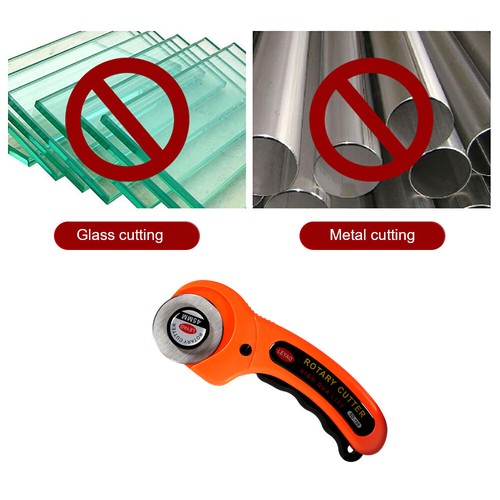 Rotary cutter
 Self-healing cutting mat
 Fabric cutting machine