Identify the coat type first
Dog coats fall into four practical categories for grooming tool selection purposes. Many breeds have characteristic coat types, but individual variation and mixed-breed dogs mean you need to assess the actual coat, not just look up the breed.
- Smooth / short: Lies flat, single layer, minimal shedding infrastructure. Boxers, Beagles, Dalmatians, most short-haired Labradors.
- Double coat: Dense undercoat beneath a longer guard coat. Significant seasonal shedding. German Shepherds, Huskies, Golden Retrievers, Corgis, most Collies.
- Curly / wavy: Non-shedding or low-shedding, continuous growth. Poodles, Bichons, Doodle mixes, Portuguese Water Dogs, Cockers.
- Wiry / rough: Coarse, textured outer coat with a softer undercoat. Terrier breeds (Schnauzers, Westies, Airedales), some Dachshund varieties.
Clippers: motor type is the primary decision
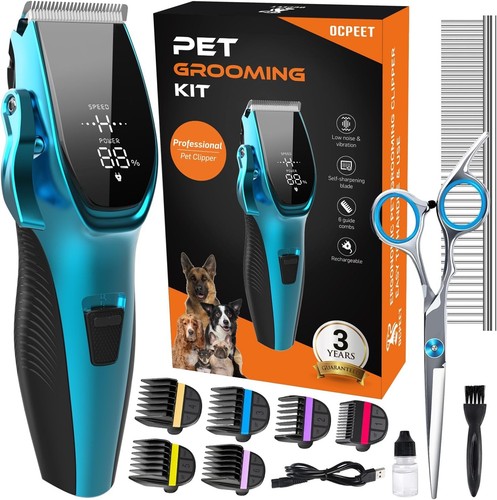
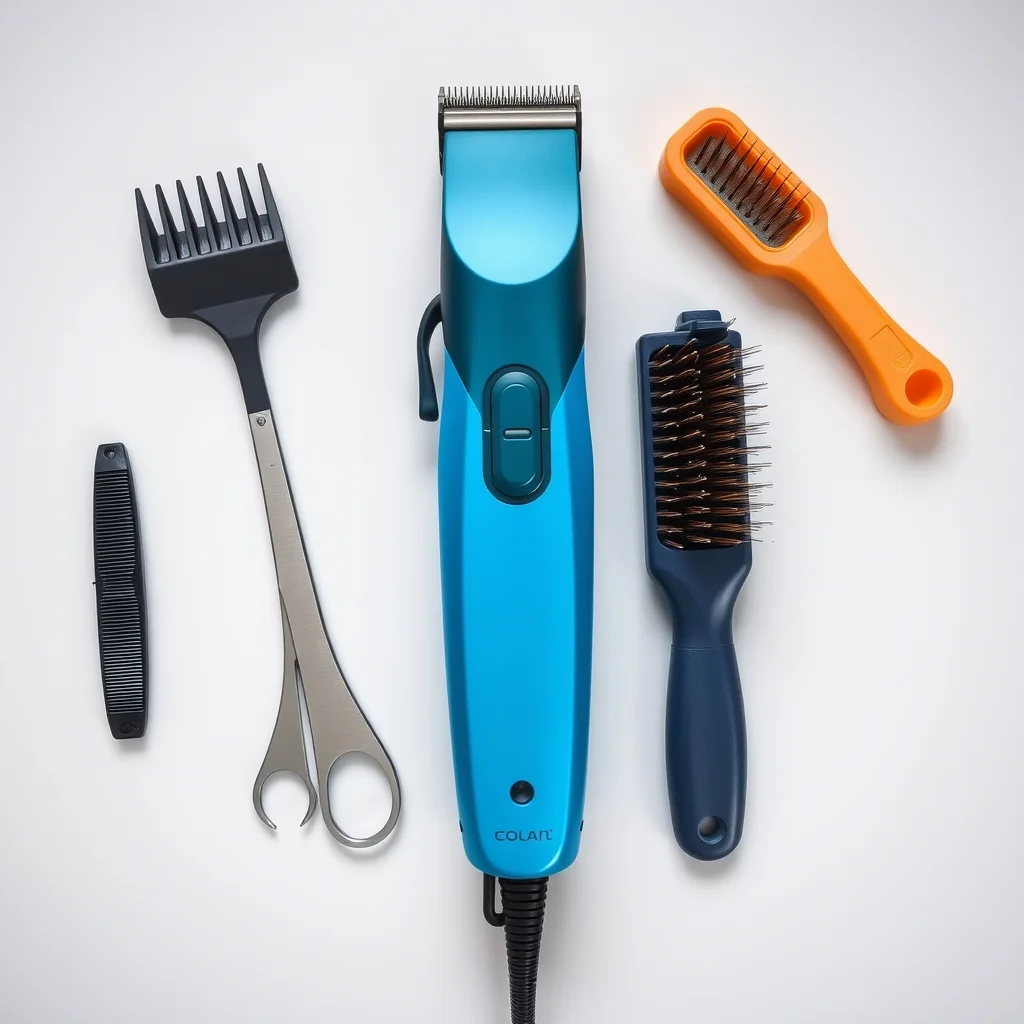
Dog clipper motors come in two types that matter for home grooming: rotary (also called "universal") and pivot. This distinction determines what kinds of coats the clipper can handle without bogging down or overheating.
Rotary motor clippers
Rotary motors maintain consistent speed and torque even under resistance — dense coats, matted sections, or extended groom sessions. They run cooler, last longer, and handle heavy coats that would overheat or stall a pivot motor. Wahl's professional rotary line, Andis Ultraedge models, and Oster A5 variants use rotary motors. These are the clipper category that professional groomers use for most dogs, and they're the right choice for double-coated breeds and dense curly coats.
Pivot motor clippers
Pivot motors (also called magnetic drive motors) are lighter, quieter, and typically less expensive. They work well for light finishing work, touch-ups around the face and paws, and smooth/short coats that offer minimal resistance. They're also well-suited for cats and small dogs. The limitation: they lose torque under resistance, which causes the blade to slow, heat up, and potentially pull hair rather than cut cleanly. For a double-coated dog's body clip, they're the wrong tool.
Blade numbers decoded
The number on a clipper blade runs counterintuitively: higher blade numbers cut shorter. A #40 blade leaves 1/100" — essentially a surgical shave. A #10 leaves 1/16". A #5 leaves 1/4". A #3F (the "F" means finish or coarse) leaves 1/2" and is a common all-body length for many trim styles.
Most home groomers start with a #10 for sanitary areas, a #5 or #7F for body work, and the included plastic attachment combs for longer finish lengths. Attachment combs attach over a bare #30 or #40 blade and provide longer cutting lengths (typically 1/4" through 1" depending on the comb).
| Blade # | Leaves hair at | Common use |
|---|---|---|
| #40 | 1/100" (near-bare) | Surgical, show cuts on skin areas |
| #10 | 1/16" | Sanitary trim, paw pads |
| #7F | 1/8" | Short body trim, Schnauzers |
| #5F | 1/4" | Short-medium body work |
| #3F | 1/2" | Medium body length, most sporting trims |
| #1 (or combs) | 3/4"–1"+ | Longer puppy cuts, fluffy finishes |
Brushes: matching to coat type
Slicker brushes (curly, wavy, medium-length coats)
Fine wire pins set in a flexible rubber pad. The primary brush for curly and wavy non-shedding coats (Poodles, Doodles, Bichons, Spaniels). Used before clipping to straighten and separate the coat, and for finishing after drying to fluff and define the cut. A slicker brush does relatively little for a double coat's undercoat because the pins don't reach through the guard coat effectively.
Slicker pin firmness matters: soft/flexible pins for sensitive-skinned dogs, stiffer pins for denser coats. The "self-cleaning" designs where pins retract with a button press are useful for clearing accumulated hair quickly during a session.
Deshedding tools (double coats)
Stainless steel fine-toothed tools designed to reach and remove loose undercoat without cutting the guard coat. The Furminator is the best-known brand, but generic designs with the same mechanism work similarly. These tools are highly effective during active shedding seasons (spring and fall for most double-coated breeds); used year-round, they significantly reduce ambient shedding.
Important: deshedding tools are not for daily use. Used too frequently or with excessive pressure, they can thin the coat and irritate the skin. Once a week during shedding season, less frequently otherwise.
Pin brushes and bristle brushes (medium and long coats)
Pin brushes with widely-spaced smooth-tipped pins are gentler than slickers and work well for medium-length silky coats (Setters, Spaniels, many terriers). Bristle brushes work for smooth coats, distributing oils and removing loose surface hair without the wire-pin contact of a slicker.
Shopping for dog grooming tools? Browse current eBay listings → (we earn a small commission; your price is unchanged).
Nail care: clippers vs grinders
Overgrown nails cause postural problems, discomfort, and eventually nail-bed infections. Most dogs need nail trimming every 3–6 weeks depending on substrate contact (dogs that walk on pavement wear nails faster than yard-only dogs).
Guillotine and scissor clippers
Fast and familiar to most dog owners, but the risk of cutting the quick (the blood vessel inside the nail) is real — especially for dogs with dark nails where the quick is invisible. When cutting, take thin slices from the tip rather than trying to guess the quick location and take one large cut. You're looking for a light-colored oval to appear in the nail cross-section; that's the layer immediately before the quick.
Rotary grinders
Rotary grinders remove nail material gradually, allowing more precise control than clippers. They're the better choice for dogs with dark nails, thick nails (many large breeds), or dogs that have had negative clipper experiences. The friction generates heat — pause every few seconds on thick nails to avoid overheating the nail.
Noise is the main behavioral obstacle with grinders. Introduce them slowly: turn the grinder on near the dog without contact, reward calmly, progress to brief contact with the nail before grinding, extend time gradually. Acclimation takes multiple sessions; don't rush it or you'll create a lasting negative association.
Dryers: force dryers vs regular dryers for home grooming
Dogs should be thoroughly dried after bathing — staying damp for extended periods leads to skin irritation and "wet dog smell" that persists even after drying. A regular human hair dryer on low or no-heat can work for small dogs and smooth coats but is slow and awkward for medium and large dogs.
High-velocity / force dryers
Force dryers blow high-volume air (not necessarily heated) that physically separates and straightens the coat while drying. They're dramatically faster than standard hair dryers and work on all coat types. They're the standard in professional grooming for good reason: a Golden Retriever that takes 45 minutes to dry with a hair dryer dries in 10–15 minutes with a force dryer.
The main considerations: force dryers are loud (hearing protection for regular use is genuinely recommended), and they blow loose hair into the surrounding area aggressively. Outdoor or garage use during the blow-out phase of a double-coat groom significantly reduces interior cleanup. For many double-coated breeds, the force dryer acts as a deshedding tool itself — the air pressure removes quantities of loose undercoat that brushing alone doesn't reach.
Budget handheld force dryers start around $40–$60 and are adequate for occasional home grooming. Floor-standing double-motor units used in professional salons are significantly more powerful and much more expensive. For most home groomers, a mid-range handheld unit is the right purchase.
| Coat type | Primary brush | Clipper motor | Dryer |
|---|---|---|---|
| Smooth / short | Bristle or rubber curry | Pivot adequate | Towel + low-heat hair dryer |
| Double coat | Deshedding tool + pin brush | Rotary (high torque) | Force dryer essential |
| Curly / wavy | Slicker brush | Rotary recommended | Force dryer + stretch dry |
| Wiry / rough | Slicker + stripping comb | Rotary recommended | Force dryer |