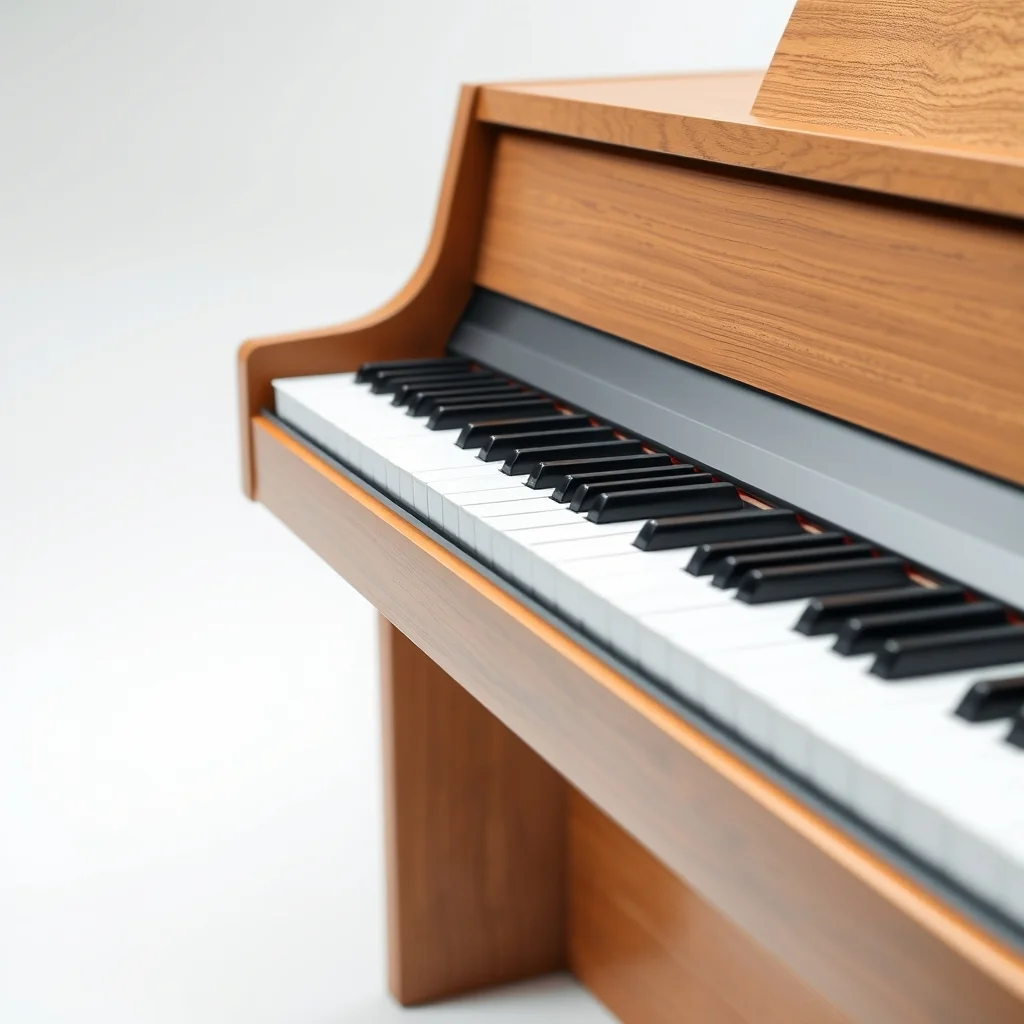
Guides
Practical buying advice — hammer action grades, polyphony counts, and connectivity specs explained without hype.
Why this page exists
Most digital piano content online falls into one of two traps: vague beginner overviews that say "feel matters" without explaining what to feel for, or brand comparison articles that flip buying recommendations every year. Neither tells you which specs actually predict how a piano plays and records.
Key action is the one variable you cannot fix after buying. A 64-note polyphony ceiling can make full-pedal chords cut out on complex passages. A piano without MIDI over USB limits your DAW and recording options permanently. These are the things worth understanding before you spend.
Digital pianos worth searching on eBay
88-key instruments with genuine weighted action. We earn a small commission on qualifying sales; your price is unchanged. Full disclosure.
 Digital piano 88 weighted
Full 88-key weighted action — the non-negotiable for serious practice. Look for graded hammer action (heavier bass, lighter treble) and at least dual-sensor detection per key.
Digital piano 88 weighted
Full 88-key weighted action — the non-negotiable for serious practice. Look for graded hammer action (heavier bass, lighter treble) and at least dual-sensor detection per key.
 Yamaha digital piano
Yamaha's GH3X (Graded Hammer 3X) and GHC (Grand Hammer Compact) actions are widely used benchmarks. Their CFX and Bösendorfer sound samples set the standard at higher price points.
Yamaha digital piano
Yamaha's GH3X (Graded Hammer 3X) and GHC (Grand Hammer Compact) actions are widely used benchmarks. Their CFX and Bösendorfer sound samples set the standard at higher price points.
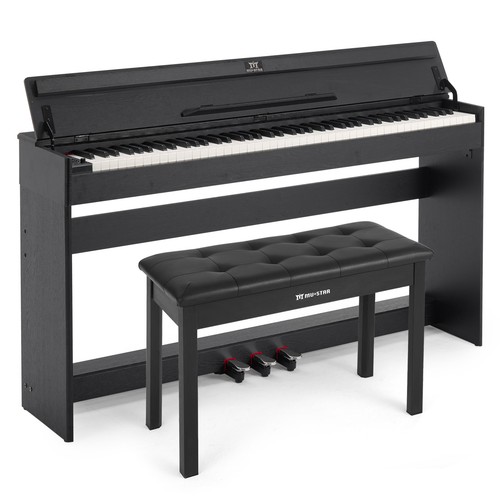 Digital piano hammer action
Hammer-action mechanisms use a physical counterweight under each key. The result is a return speed and resistance that lets repetition technique (trills, fast runs) develop correctly.
Digital piano hammer action
Hammer-action mechanisms use a physical counterweight under each key. The result is a return speed and resistance that lets repetition technique (trills, fast runs) develop correctly.
 Digital piano stand
X-style and Z-style stands for slab digital pianos. Z-style is more stable for heavy 88-key instruments. Check weight rating and width range before buying for your specific model.
Digital piano bench
Adjustable-height bench is worth the small upgrade over a fixed stool. Correct seat height (elbow at key level) prevents wrist fatigue and is especially important for students who are still growing.
Digital piano stand
X-style and Z-style stands for slab digital pianos. Z-style is more stable for heavy 88-key instruments. Check weight rating and width range before buying for your specific model.
Digital piano bench
Adjustable-height bench is worth the small upgrade over a fixed stool. Correct seat height (elbow at key level) prevents wrist fatigue and is especially important for students who are still growing.