Facts checked: August 2026
Quick answers
Will a 20-pint dehumidifier handle a 1,000 sq ft basement?
A 20-pint unit sits near the top of the range for a moderately damp 1,000 sq ft space but falls short if that basement is very damp or has had standing water, where the 20-26 pint/day class is the right size. Under post-2019 ratings a moderately damp 1,000 sq ft room needs about 14-20 pint/day and a very-damp-to-wet one 20-26; cold basements below 60F also cut a refrigerant unit’s real output by 30-50%, so size up when in doubt.
What changed with dehumidifier pint ratings in 2019?
In June 2019 the Department of Energy moved capacity testing from 80F to 65F, so a unit formerly rated 70 pints/day became roughly a 50-pint unit under the new standard even though the hardware never changed. Current large residential units typically rate 35-50 pints/day; a post-2019 unit still advertising 70+ pints is almost certainly quoting pre-2019 test conditions.
Do I need a dehumidifier with a built-in pump?
A built-in condensate pump is worth it when your floor drain is far away or higher than the unit, because it can push water upward (typically up to about 15 feet) instead of relying on a downhill gravity drain. Pump models usually cost $30-80 more than comparable non-pump units, and for unattended basement operation that convenience is usually worth it.
Why does my dehumidifier work worse in a cold basement?
Refrigerant-cycle dehumidifiers extract 30-50% less than their rated capacity at basement temperatures around 55-60F and can stop working below 41F, so genuinely cold spaces need a low-temperature-rated or desiccant unit. If your basement stays consistently below 60F, prioritize a documented low-temperature rating or a desiccant model that holds its extraction rate in the cold.
How much does it cost to run a dehumidifier?
A typical 50-pint unit draws 500-700 watts, and running it 12-16 hours a day adds up quickly, which is why an Energy Star model’s efficiency premium usually pays back within one to two seasons of continuous basement use. Energy Star units must meet a minimum Integrated Energy Factor, meaning they extract more moisture per kilowatt-hour than non-certified models.
Prices, deals, and availability change constantly: for the current price and the right dehumidifier for your situation, see the live listings via the retailer links on this page.
The 2019 DOE standard change: why pint ratings are confusing
Before June 2019, dehumidifier capacity was tested at 80°F and 60% relative humidity. The Department of Energy updated the test conditions to 65°F and 60% RH — a temperature much more representative of the cool basements and crawl spaces where most units actually run. At lower temperatures, refrigerant-cycle dehumidifiers extract significantly less moisture per hour.
The result: a unit formerly rated at 70 pints/day at 80°F became roughly a 50-pint unit at 65°F. The unit did not change. The test conditions did. Units manufactured and tested under the new standard list their post-2019 capacity. But some older stock, resale units, and overseas listings still use pre-2019 numbers — making side-by-side comparisons misleading without knowing which standard applies.
Sizing by square footage and moisture severity
The right capacity depends on both your space size and how damp it actually is. The Energy Star sizing guide uses two variables: square footage and condition severity (moderately damp, very damp, wet, extremely wet). A 1,000 sq ft space that feels "moderately damp" typically needs a 25–30 pint unit; the same space with standing water history needs 40–45 pints.
| Space Size | Moderately Damp | Very Damp / Wet |
|---|---|---|
| 500 sq ft | 10–14 pint/day | 14–20 pint/day |
| 1,000 sq ft | 14–20 pint/day | 20–26 pint/day |
| 1,500 sq ft | 18–26 pint/day | 26–32 pint/day |
| 2,000 sq ft | 22–30 pint/day | 30–40 pint/day |
| 2,500 sq ft | 25–35 pint/day | 35–50 pint/day |
These are rough baselines under post-2019 ratings. Actual extraction varies with ambient temperature. At basement temperatures around 55–60°F, a refrigerant-cycle unit may extract 30–50% less than its rated capacity at 65°F. If your basement is consistently below 60°F, look for units with low-temperature ratings or consider a desiccant dehumidifier, which maintains extraction capacity at lower temperatures.
Continuous drain vs built-in pump: the most important feature decision
Every dehumidifier has a removable water collection tank. For small rooms where you can empty it daily, the tank may be sufficient. For basements, continuous operation is typical — and emptying a 1.5-gallon tank twice a day quickly becomes a chore or a flood risk if you forget.
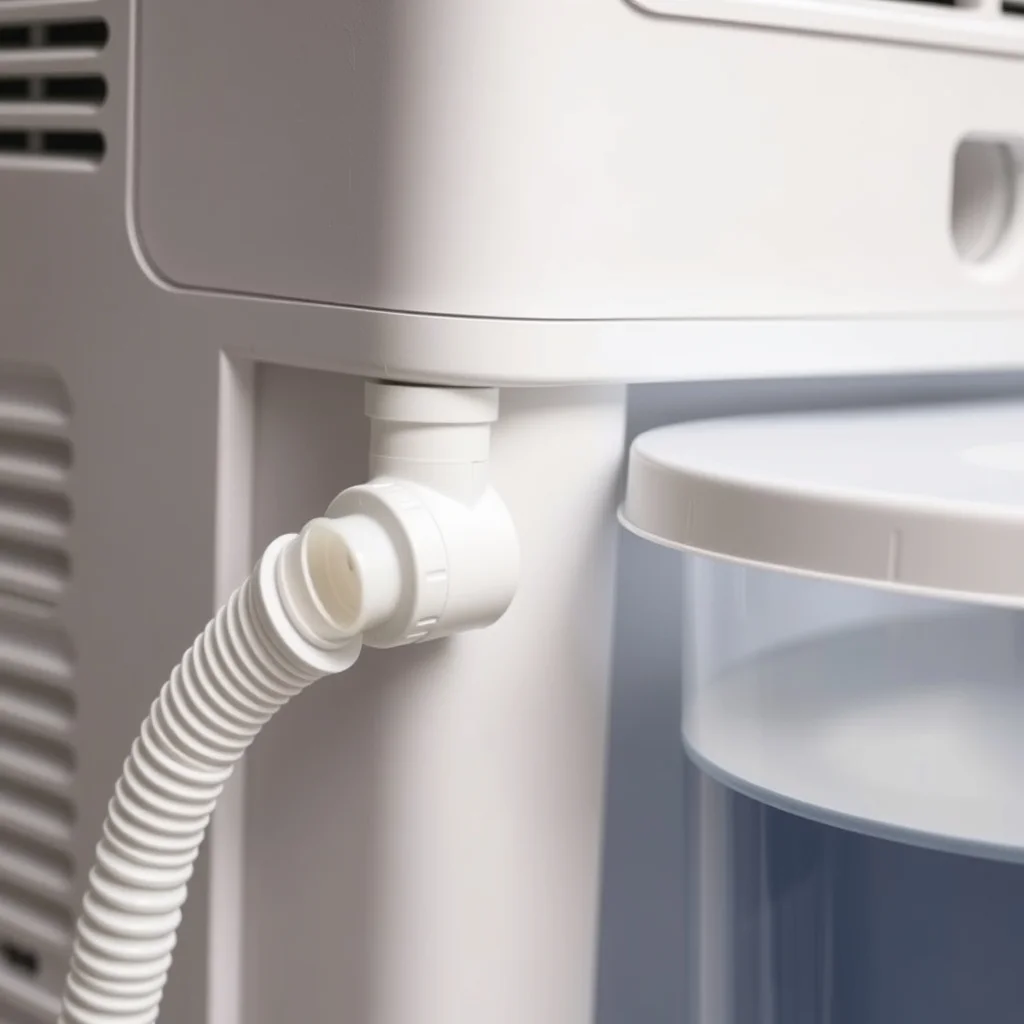
Nearly all mid-to-large units include a continuous drain port (a threaded or barbed fitting, typically 3/4 inch) that accepts a standard garden hose. Gravity drains require a floor drain or sump pit accessible from the unit's location.
Shopping for dehumidifiers? Browse current eBay listings → (we earn a small commission; your price is unchanged).
A built-in condensate pump allows draining upward — typically up to 15 feet of vertical lift, though varies by model. This matters if your basement floor drain is at the far end of the room, or if you want to drain to a utility sink above the unit. Units with pumps typically cost $30–80 more than comparable non-pump units; the convenience is usually worth it for unattended basement operation.
Drain hose considerations
Garden hose threads are standard on drain ports, but most units ship without a hose — plan to buy a standard garden hose or a condensate hose cut to length. Keep the hose run as short as possible with a downward slope toward the drain. Hose kinks and uphill runs cause backup issues that damage the unit or flood the floor.
Energy efficiency and operating cost
Dehumidifiers are relatively high-draw appliances — a typical 50-pint unit draws 500–700 watts. Running 12–16 hours per day adds up quickly. Energy Star certified units are required to meet minimum Integrated Energy Factor (IEF) standards, meaning they extract more moisture per kilowatt-hour of electricity consumed.
The efficiency gap between Energy Star certified and non-certified units has grown significantly since the 2019 standard update. If you are running a unit continuously in a basement, the Energy Star label is worth prioritizing — the electricity savings typically offset any price premium within one to two seasons.
Basement-specific performance considerations
Basements create several performance challenges beyond simple square footage and pint capacity:
- Low temperatures: Standard refrigerant-cycle units slow significantly below 60°F and may not function at all below 41°F. Check the minimum operating temperature in the spec sheet if your basement stays cool.
- Frost formation: When coil temperatures drop below freezing, ice can form on the evaporator coils, blocking airflow and stopping extraction. Better units include auto-defrost; cheaper ones require manual defrost cycles.
- Airflow obstructions: Basements with storage, partition walls, and low ceilings can create dead zones. Positioning matters — a unit in a central location performs better than one in a corner, and opening interior doors helps circulation.
- Humidity sources: If moisture is entering through concrete walls or a dirt crawl space, a dehumidifier alone cannot solve the problem — it will run continuously trying to offset a constant inflow. Address waterproofing or vapor barrier issues before relying purely on a dehumidifier.
Humidistat and auto-operation
A built-in humidistat lets you set a target relative humidity (typically 45–50% for most basements) and have the unit cycle on and off automatically to maintain it. This is essential for any unattended installation — without a humidistat, the unit runs continuously and over-dries the space, which can cause wood flooring above to crack and shrink.
Most full-size units include a humidistat. Small room units sometimes omit it, requiring manual operation. If a listing does not explicitly mention a humidistat or auto mode, assume it does not have one.
Common buying mistakes
Undersizing is the most common mistake. Buyers see a 50-pint unit and assume it handles a 2,500 sq ft basement — it can, under moderate conditions and at 65°F. In a cool, wet basement running at 58°F with active moisture infiltration, the same unit may struggle to keep up. When in doubt, size up by one class and run on auto mode rather than buying minimum capacity and running continuously at maximum.
The second mistake is not planning drainage before purchasing. A dehumidifier positioned 40 feet from the nearest drain and without a built-in pump requires manual emptying or a separate condensate pump accessory — both add friction that leads to the unit being turned off.
Dehumidifiers on eBay
We earn a small commission on qualifying sales; your price is unchanged. Full disclosure.
 50-Pint Dehumidifier
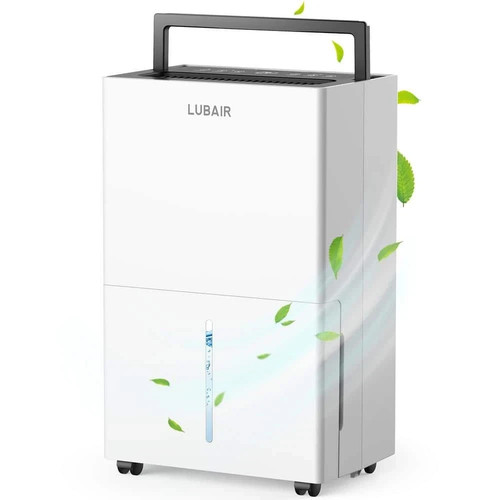 Dehumidifier with Pump
 Crawl Space Unit