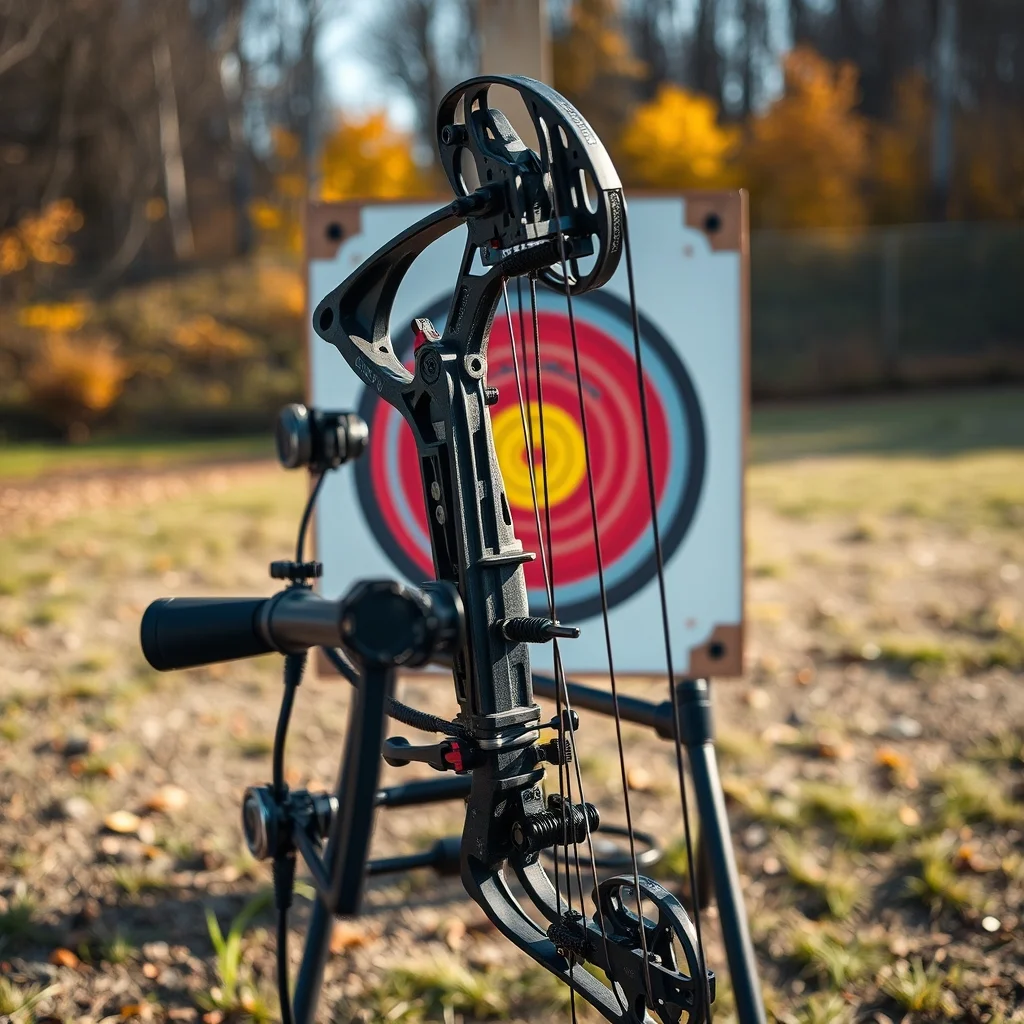
Draw weight: what it means and how to choose it
Draw weight is the peak force required to draw the bow to full draw, measured in pounds. On a compound bow, the let-off system — the cam geometry — reduces holding weight at full draw to a fraction of peak draw weight. A bow rated 70 lbs draw weight with 80% let-off holds approximately 14 lbs at full draw.
The common draw weight range for hunting is 50–70 lbs. Most states have minimum draw weight requirements for big game hunting, typically 35–40 lbs; verify your specific state's regulations before selecting a hunting setup. For target archery, draw weight is not regulated but typically runs 40–60 lbs for recurve crossover and 50–70 lbs for compound.
Choosing draw weight involves a tradeoff most beginners get wrong: higher draw weight means flatter trajectory and higher kinetic energy on impact, but it also demands better form and physical conditioning. A 70 lb bow shot with poor form or fatigue produces worse accuracy than a 55 lb bow shot consistently well. For new shooters, starting at 50–55 lbs and building to 60–65 lbs as form solidifies is a more practical path than starting at maximum weight and developing compensating habits.
Draw length: measuring yours and matching it to a bow
Draw length is the distance from the bow grip's pivot point to the nocking point at full draw. It is specific to your body geometry — arm length, shoulder width, and anchor point — and must match the bow's cam configuration or your form will be compromised regardless of the bow's quality.
Measuring your draw length
The standard method: stand relaxed with arms extended at shoulder height (like a T). Have someone measure your wingspan — fingertip to fingertip — in inches. Divide that number by 2.5. The result is your approximate draw length in inches. A 6-foot archer with a 72-inch wingspan has an approximate draw length of 28.8 inches, typically rounded to 29 inches. This is a starting point; a certified archery coach can measure draw length more precisely using a draw check arrow.
Draw length adjustment range
Compound bow draw length is set by the cam configuration. Different bows offer different adjustment ranges and different adjustment mechanisms. Some bows require a bow press to change draw length modules; others use rotating modules that adjust without a press. The PSE Drive NXT, for example, typically offers a wider adjustment range (around 6 inches) in a single module, making it accommodating for multiple users or a shooter still determining their ideal draw length. Higher-end bows like Hoyt RX and Mathews V3 series typically have narrower module ranges per module but finer adjustment increments.
Brace height: the forgiveness-speed tradeoff
Brace height is the distance from the deepest point of the grip to the bowstring at rest. It is one of the most impactful and least understood specifications in compound bow selection.
A shorter brace height (5"–6") means the arrow stays on the string longer during the power stroke. More time on string equals more time for any hand torque, grip pressure variation, or release imperfection to affect the arrow's flight. Short brace-height bows are faster but less forgiving. They are used by experienced shooters who have refined their grip and release to the point where the forgiveness tradeoff is acceptable in exchange for speed.
A longer brace height (7"+) gives the arrow less time on string. Grip torque and release variation have less time to influence the arrow. The bow is more forgiving of imperfect form. The cost is reduced power stroke length, which reduces arrow speed — typically by 5–10 fps per inch of additional brace height.
For hunting applications, most shooters are better served by a 6"–7" brace height. The speed penalty is real but manageable at typical hunting distances (40 yards and under for most ethical shots). For 3D archery or target shooting where form is highly refined and flatter trajectory is valued, shorter brace heights make more sense.
Cam systems: single-cam, binary, and hybrid
The cam system determines how the limbs load and unload during the draw cycle. Three types are common in current production bows:
A single-cam (as on Mathews bows) uses one elliptical cam on the lower limb and an idler wheel on the upper. The idler wheel tracks without engaging the power stroke. Single-cam advantages: simpler synchronization (one cam to time instead of two), easier to tune, typically quieter. Disadvantage: slightly less cam efficiency than twin-cam designs, though modern single-cam bows have narrowed this gap significantly.
A binary cam system (as on some Bowtech designs) connects both cams with a slave cable that synchronizes them mechanically regardless of cable stretch. This self-correcting synchronization is the design's main selling point: the cams stay synchronized without manual tuning as cables stretch during break-in.
A hybrid cam uses two asymmetrical cams, each with a control cable and a power cable, designed to provide smooth draw feel while maintaining twin-cam efficiency. Hoyt uses hybrid cam designs in the RX series. The tradeoff is that synchronization between the two cams requires periodic checking, particularly during the cable break-in period.
Hoyt RX series: carbon riser, hybrid cam
Hoyt's RX series (currently the RX-7 and RX-7 Ultra) uses Hoyt's PCII (Proven Carbon Integrated Into) carbon riser construction. Carbon risers are stiffer per unit weight than aluminum risers, and the carbon damping characteristics affect vibration behavior after the shot — typically less limb vibration transmitted to the shooter's hand.
The RX-7 uses Hoyt's SVX cam system, a hybrid design with a specific draw cycle feel: a smooth draw curve with a moderate wall at full draw. Brace height on the RX-7 is 6 inches, placing it in the moderate-speed, moderate-forgiveness zone. IBO speed ratings for the RX-7 are typically in the 335–340 fps range (verify with Hoyt's current published specs; ratings vary by draw length and weight configuration).
Draw length adjustment on Hoyt RX bows typically requires a bow press and module swap. This limits field adjustment but is standard practice at pro shops. Adjust draw weight via limb bolts within the published range only.
Mathews V3: single-cam, AVS, quiet shot
Mathews has used single-cam designs since the late 1990s and built a significant following around the resulting draw cycle smoothness. The V3 series (V3X and V3 31) uses the Engage Grip — a wider grip design intended to reduce side-to-side grip torque by providing a more stable hand contact surface. Mathews' marketing emphasizes the smooth, consistent back-wall feel.
The AVS (Adjustable Valley System) on V3 bows allows the shooter to adjust the length of the valley — the flat spot at full draw before hitting the back wall — without changing draw length. A longer valley gives more time to settle the sight picture; a shorter valley creates a harder, more defined back wall. This is a genuine tuning option, not marketing language.
The V3X at 6" brace height (there is also a 29" axle-to-axle variant and a 33" option for 3D) delivers similar IBO speed to the RX-7 in the 335–340 fps range. Shot cycle is notably quiet, which matters for hunting applications where elk or deer within 30 yards can react to bow noise.
PSE Drive NXT: accessible price, wide adjustment range
PSE's Drive NXT is a different category from the RX-7 and V3: a value-tier hunting bow aimed at shooters who prioritize budget and adjustment flexibility over maximum performance. The Drive NXT typically adjusts from approximately 24.5" to 30" draw length without a bow press — a wide range that makes it a practical first bow or a shared-family bow setup.
Draw weight adjusts to 70 lbs; speed is lower than flagship options, typically in the 310–325 fps range (verify with PSE's published IBO rating for the specific configuration). Weight is higher than flagship carbon risers. These are honest tradeoffs for the price point: if your hunting shots are under 40 yards and you're prioritizing an accessible bow that fits multiple draw lengths, the Drive NXT accomplishes the hunting function without the premium cost.
Model comparison
| Model | Cam type | Brace height | IBO speed (approx) | Draw length adj. | Best for |
|---|---|---|---|---|---|
| Hoyt RX-7 | Hybrid (SVX) | 6" | ~335–340 fps | Module swap (press req.) | Hunting, experienced shooters, carbon riser preference |
| Mathews V3X 29 | Single-cam | 6" | ~336 fps | Module swap (press req.) | Hunting, smooth draw preference, quiet shot |
| PSE Drive NXT | Binary (C4 EVO) | Varies by config | ~320 fps | Wide range, no press | Value-tier hunting, beginners, flexible draw range |
| Bowtech Solution | Binary (Deadlock) | 6.5" | ~330 fps | Module swap | Hunting, forgiveness-prioritized shooters |
| Elite Ritual | Single (E-Cam HD) | 7" | ~332 fps | Module swap | Target archery crossover, maximum forgiveness |
Buying used: what to check
Compound bows on the used market are generally safe to purchase if the limbs and cams are inspected. The critical check points:
- Limb condition: Inspect both limbs for cracks or delamination, particularly at the limb pocket interfaces and near the cam attachment points. A hairline crack in a limb is a safety issue, not a cosmetic one.
- Cam timing: At full draw (use a draw board or have a pro shop check), both cams should reach their stops simultaneously. Mismatched cam timing produces erratic arrow flight and uneven string wear.
- String and cable condition: Look for fraying, string serving separation, and worn spots at the cam crossover points. Budget for new strings and cables on any used bow more than a few years old — this is normal maintenance, not a red flag.
- Riser cracks: Aluminum risers show stress cracks most commonly at the limb pockets and sight window cutout. Carbon risers can delaminate; check for soft spots by pressing lightly on all riser surfaces.
- Draw length module: Confirm the current module installed matches the draw length you need, or that the correct module is available for purchase from the manufacturer.
Search these bows on eBay
 Hoyt RX-7 compound bow
Carbon riser, hybrid cam, flagship hunting
Hoyt RX-7 compound bow
Carbon riser, hybrid cam, flagship hunting
 Mathews V3X compound bow
Single-cam, AVS, quiet shot cycle
Mathews V3X compound bow
Single-cam, AVS, quiet shot cycle
 PSE Drive NXT
Value-tier, wide draw length range
PSE Drive NXT
Value-tier, wide draw length range
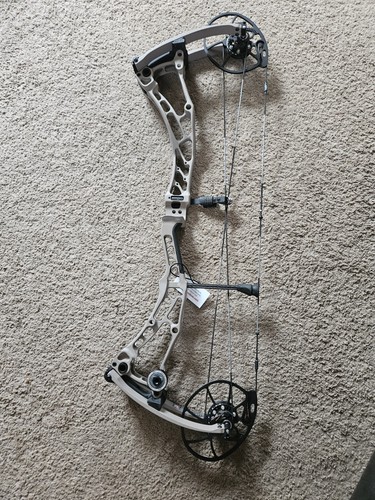 Bowtech Solution compound
Deadlock cam, forgiveness-oriented design
Bowtech Solution compound
Deadlock cam, forgiveness-oriented design
 Elite Ritual compound bow
7" brace height, maximum forgiveness
Elite Ritual compound bow
7" brace height, maximum forgiveness