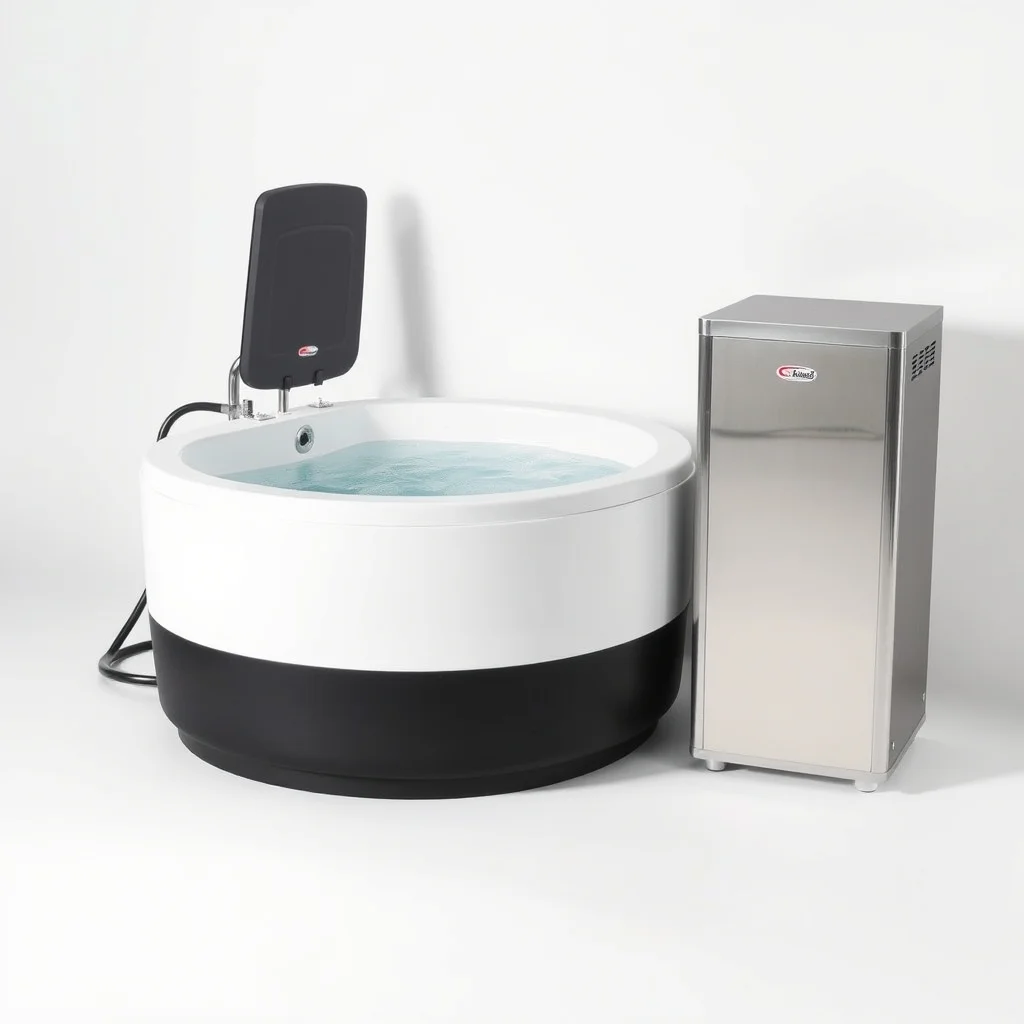
The core decision: ice vs chiller
Before choosing a tub type, decide whether you are using ice or a mechanical chiller. This determines almost everything about your setup, cost, and maintenance routine.
Ice-based cold plunge: Fill any watertight container with water and add ice to reach temperature. Stock tanks (galvanized steel agricultural tanks, typically 100–150 gallons), chest freezer conversions, and dedicated ice bath tubs all work. The advantage is low upfront cost. The disadvantage is that temperature rises after you enter — a person in a 50°F plunge will warm the water 3–5°F in 5–10 minutes. Ongoing ice cost at daily use can reach $60–$150/month depending on your area and how much ice you need.
Chiller-based cold plunge: A mechanical chiller maintains consistent temperature regardless of ambient air or body heat. It typically connects to a recirculation pump and a filter. The water stays at your set point throughout the plunge and between sessions without ice replenishment. Higher upfront cost; significantly lower long-term operating cost if you use it daily.
Tub types: inflatable vs rigid
Cold plunge tubs come in two broad construction types:
Inflatable tubs (also called collapsible or portable ice baths) are made from multi-layer insulated materials — typically PVC or TPU with an insulating layer. They hold 70–100 gallons, fold for storage, and are compatible with most external chillers. The main trade-off: insulation R-value is lower than rigid tubs, meaning ambient heat gain is faster. In hot climates, a chiller has to work harder to maintain temperature. Durability varies significantly by product; PVC seams are a common failure point under freeze/thaw cycling.
Rigid tubs are acrylic, fiberglass, or rotationally molded polyethylene. They have better structural integrity, typically better insulation (some have foam-core walls), and more compatible surfaces for chiller inlet/outlet fittings. They are not portable and require a permanent installation location. Most rigid tubs designed for cold plunge use hold 90–150 gallons for single-person use.
| Feature | Inflatable | Rigid |
|---|---|---|
| Portability | Yes — folds flat | No — fixed location |
| Insulation | Lower R-value | Higher R-value |
| Chiller compatible | Most, with adapters | Yes — often has fittings |
| Durability | Variable — seam quality matters | Higher |
| Price range | $200–$800 | $500–$3,000+ |
| Water volume | 70–100 gal typically | 90–150 gal typically |
Chiller sizing: matching capacity to tub volume and climate
Cold plunge chillers are rated in horsepower (HP) or BTU/hour. Common sizes for home use are 1/4 HP, 1/3 HP, and 1/2 HP. The capacity needed depends on:
- Tub water volume in gallons
- Ambient air temperature where the tub is installed
- Target water temperature (50°F vs 39°F requires meaningfully more chiller work)
- Tub insulation — poorly insulated tubs require more continuous cooling work
As a rough guideline: a 1/4 HP chiller is typically adequate for 80–120 gallons in a shaded outdoor installation in moderate climates (ambient under 85°F). In direct sun, hot climates (90°F+), or for larger tub volumes, a 1/3 HP or 1/2 HP unit provides more reliable temperature maintenance.
Shopping for cold plunge equipment? Browse current eBay listings → (we earn a small commission; your price is unchanged).
Temperature range: what actually matters
Cold immersion research typically uses temperature ranges of 50–59°F (10–15°C) for standard protocol work. Some practitioners prefer colder — down to 39–45°F (4–7°C). Not all chillers can reach the lower end of this range, and achieving very low temperatures requires more chiller capacity and better tub insulation.
Most consumer cold plunge chillers are rated to cool water to a minimum of 39–45°F (4–7°C) under ideal conditions. In practice, in a hot ambient environment, the achievable minimum temperature is higher. Check the manufacturer's minimum temperature specification alongside the ambient temperature range that specification was tested at. A chiller rated to 40°F at 70°F ambient may only reach 50°F in 95°F ambient.
Filtration: the hygiene factor
Without filtration, a cold plunge tub needs a water change every 1–7 days depending on use frequency, number of users, and whether the tub is covered between sessions. That is a significant ongoing task and water cost.
Most chiller systems include a filtration loop — typically a pump, filter (often an inline sediment and carbon filter), and sometimes an ozone or UV sanitizer. A filtered system with UV or ozone sanitation can keep water clean for weeks to months between full changes with regular chemical maintenance (typically bromine or low-dose chlorine, not the higher concentrations used in pools).
When evaluating any all-in-one system, confirm:
- Whether filtration is included or an add-on
- Filter replacement cost and frequency
- Whether a sanitization system (UV/ozone) is included
- The recommended water change interval for the specific system
Installation considerations
A few practical factors that affect cold plunge installation:
Electrical: Most chillers run on standard 120V 15–20A circuits. Some larger units (1/2 HP+) require 240V or a dedicated 20A circuit. Confirm the electrical spec before choosing an installation location.
Drainage: You need a way to drain 100+ gallons of water when changing it. A floor drain nearby, or a submersible pump, is standard. Gravity-draining through a hose to an outdoor area works if the installation allows for it.
Sun exposure: Direct sun dramatically increases the chiller's workload. A shaded location — or a tub cover — reduces operating cost and improves achievable minimum temperature in warm climates.
Weight: 120 gallons of water weighs roughly 1,000 pounds. Verify that your deck, floor, or installation surface can support the combined weight of the filled tub and chiller unit before finalizing placement.
 Cold plunge tub
 Cold plunge chiller
 Ice bath tub
 Cold plunge with chiller
 Portable ice bath