Guides
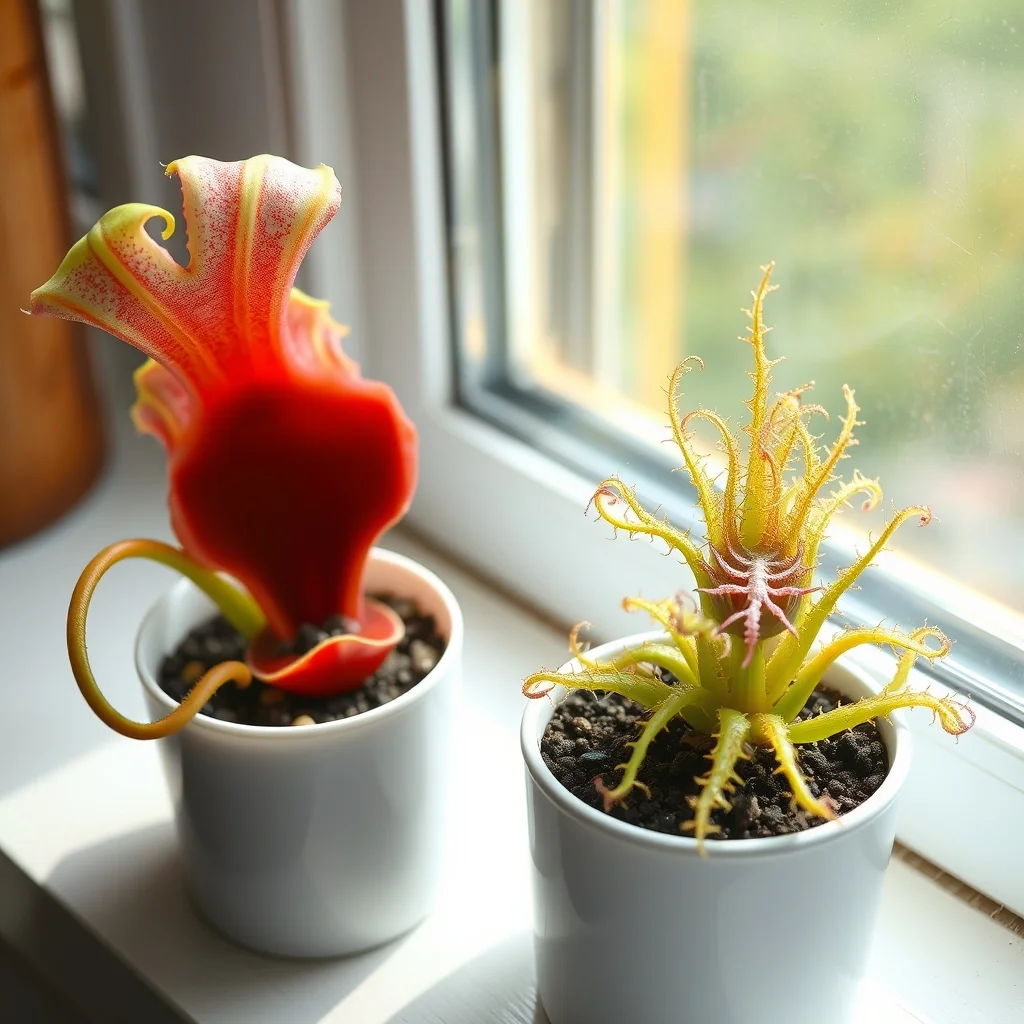
Carnivorous plant care focused on the specifics that matter: soil composition, water purity, light intensity, and dormancy requirements.
Why this page exists
Carnivorous plants are sold in grocery stores and big-box retailers in peat pots with generic houseplant care tags. Most die within months because buyers water them from the tap and place them in indirect light. These plants are not difficult — they simply require conditions opposite to most houseplants.
Understanding that flytraps evolved in the nutrient-poor, highly acidic bogs of the Carolinas explains why tap water (mineral-heavy) and standard potting mix (nutritionally rich) are both immediately harmful. The guide on this page covers every practical requirement from that starting point.
Carnivorous plant gear worth searching on eBay
Live plants, specialist soil, and supplies. We earn a small commission on qualifying sales; your price is unchanged. Full disclosure.
 Venus flytrap (live)
Dionaea muscipula — buy from specialist carnivorous plant sellers rather than big-box garden centers. Look for actively growing plants with multiple healthy traps.
View on eBay →
Venus flytrap (live)
Dionaea muscipula — buy from specialist carnivorous plant sellers rather than big-box garden centers. Look for actively growing plants with multiple healthy traps.
View on eBay →
 Carnivorous plant (variety)
Broad search covering flytraps, sundews, pitcher plants, and butterworts. Good for starter collections or comparing species before specializing.
View on eBay →
Carnivorous plant (variety)
Broad search covering flytraps, sundews, pitcher plants, and butterworts. Good for starter collections or comparing species before specializing.
View on eBay →
 Sundew (Drosera)
Sticky tentacle-based carnivore. Drosera capensis (Cape sundew) is the most beginner-friendly — fast-growing, forgiving, and easy to propagate from leaf cuttings.
View on eBay →
Pitcher plant (live)
North American Sarracenia are cold-hardy and easy to grow outdoors. Tropical Nepenthes are more demanding but develop dramatic pitchers. Specify which genus you want.
View on eBay →
Sundew (Drosera)
Sticky tentacle-based carnivore. Drosera capensis (Cape sundew) is the most beginner-friendly — fast-growing, forgiving, and easy to propagate from leaf cuttings.
View on eBay →
Pitcher plant (live)
North American Sarracenia are cold-hardy and easy to grow outdoors. Tropical Nepenthes are more demanding but develop dramatic pitchers. Specify which genus you want.
View on eBay →
 Carnivorous plant soil mix
Pre-mixed nutrient-free substrate (typically peat + perlite or peat + silica sand). Avoids the common mistake of using standard potting mix, which will kill these plants.
View on eBay →
Carnivorous plant soil mix
Pre-mixed nutrient-free substrate (typically peat + perlite or peat + silica sand). Avoids the common mistake of using standard potting mix, which will kill these plants.
View on eBay →