Wick sizing: container diameter, fragrance load, and the mushrooming problem

Wick sizing is the variable candle makers get wrong most often and for the longest time. Diameter gives you the starting point, fragrance load shifts it up, wax type shifts it again, and mushrooming is the sign that something in that chain is off.
Every candle problem that isn't a scent throw problem is usually a wick problem. Tunneling (a narrow melt pool that digs straight down), sooting (black marks on the jar), mushrooming (carbon buildup on the wick tip), excessive flame height, drowning wicks — these are all different symptoms of the same underlying issue: the wick is sized wrong for this specific combination of container diameter, wax, and fragrance load.
This guide walks through the variables in order, gives you starting-point tables, and then explains how to use test burns to dial in a specific combination that charts alone can't predict perfectly.
Why there's no single correct wick
Wick manufacturers publish sizing charts. Those charts show diameter ranges mapped to wick series (CD, ECO, LX, cotton core, wood wick, etc.). The charts are useful starting points, but they are calculated for a standard condition: clean wax with no fragrance, no dye, and no additives.
In practice, every time you add fragrance oil, you change the fuel composition. Fragrance oil burns differently than wax alone — most fragrance oils have lower flash points and contribute additional fuel to the melt pool. Higher fragrance loads increase the fuel available to the wick, which effectively means the wick needs to move the heat outward faster or it will overheat. A wick that's perfect for 6% fragrance load may mushroom significantly at 10%.
Dyes also matter slightly — some colorants affect burn behavior marginally. Additives like vybar, coconut oil blends, or mica powder all change viscosity and melt characteristics. And different wax types have fundamentally different burn profiles.
Container diameter: the primary variable
Diameter is the first input because it determines the size of the melt pool the wick needs to sustain. A candle burns correctly when the melt pool reaches edge to edge (full melt pool) within the first burn of 2–4 hours. Too small a wick produces a partial melt pool and causes tunneling. Too large a wick produces an oversized flame, excessive heat, and soot.
Wick sizing tables work in diameter increments, typically every half inch or 10mm. Here is a general starting-point reference for soy container candles using popular wick series:
| Container diameter | CD series start | ECO series start | LX series start |
|---|---|---|---|
| 2 in / 50mm | CD-10 to CD-12 | ECO-1 to ECO-2 | LX-10 to LX-12 |
| 2.5 in / 64mm | CD-14 to CD-16 | ECO-4 to ECO-6 | LX-14 to LX-16 |
| 3 in / 76mm | CD-18 to CD-20 | ECO-8 to ECO-10 | LX-18 to LX-20 |
| 3.5 in / 89mm | CD-22 to CD-24 | ECO-12 to ECO-14 | LX-22 to LX-24 |
| 4 in / 102mm | CD-26 to CD-28 | ECO-14 to ECO-16 | LX-26 to LX-28 |
These are starting ranges for unfragranced soy wax. Add fragrance and you almost always move up one or two positions within that range — sometimes to the size above the range.
How fragrance load shifts wick selection
Fragrance oil is liquid that carries heat differently than solidified wax. When it's in the melt pool, it lowers the melt pool's viscosity slightly and contributes to combustion at the wick base. At low fragrance loads (6–8%), the effect on wick selection is minor — you might stay within the same wick size range. At high fragrance loads (10–12%), the effect is significant enough that the wick needs to be one full size or even a series size larger.
The practical rule: for every 2% increase in fragrance load above 6%, consider moving up one wick size. This is a rough heuristic, not a precise formula, because different fragrance oils behave differently depending on their chemical composition.
- 6% fragrance load: use the lower end of the diameter-based starting range
- 8% fragrance load: use the middle of the diameter-based starting range
- 10% fragrance load: use the upper end of the starting range
- 12% fragrance load: consider the next size or series above the starting range
Wax type: soy burns cooler than paraffin
Soy wax has a lower melt point (around 120–125°F for most container soy) and a lower flash point than paraffin. It burns cooler and holds fragrance differently. Soy candles generally need a larger wick than paraffin candles of the same diameter, because more wick surface area is needed to generate the heat for a full melt pool in a cooler-burning wax.
Paraffin burns hotter and more cleanly. It requires smaller wicks for the same diameter and often produces better hot throw for the same fragrance load. The tradeoff is that paraffin is petroleum-derived, which matters to the significant segment of candle buyers who want soy or natural wax for positioning reasons.
Coconut wax blends sit between soy and paraffin in burn temperature. They require intermediate wick sizing. If you're using a blend, test against the same starting ranges as soy, but be prepared for the wick to behave more like paraffin.
Beeswax burns hotter than either soy or paraffin and is significantly denser. It requires smaller wick sizes for the same diameter. A CD-14 that suits a 2.5-inch soy container may be far too large for a 2.5-inch beeswax pillar.
The mushrooming problem explained
Mushrooming is what happens when a wick doesn't fully combust the carbon residue that accumulates on the wick tip during burning. That residue builds up into a carbon ball — the "mushroom" — that grows during the burn. Left untrimmed, a mushroom:
- Increases the effective flame size significantly
- Causes sooting (black deposits on the inside of the jar and in the air)
- Creates uneven burning as the enlarged carbon mass redistributes heat
- Can cause a secondary flame from the carbon cluster itself
Some mushrooming after long burns is normal in any cotton wick candle. What's abnormal — and diagnostic — is heavy mushrooming within the first hour of a burn, or mushrooming that grows to significant size every burn.
Causes of excessive mushrooming
Fragrance oil overload: the most common cause. High fragrance loads — particularly aromatic oils with complex molecules — don't fully combust at the wick. The incomplete combustion produces more carbon residue, which accumulates faster than the wick can burn it off. The fix is to reduce fragrance load or increase wick size so the burn temperature is higher and combustion is more complete.
Wick undersizing relative to formula: a wick that's burning at the low end of its capacity isn't generating enough heat to fully combust the residue. Going up one wick size often eliminates mushrooming entirely by raising the burn temperature slightly.
Wax additives: some additives (certain vybar formulations, some coco-additives) affect combustion completeness. If you changed your wax formula and mushrooming appeared, the additive is likely the cause.
The test burn process
No chart substitutes for a test burn in your actual formula. A proper test burn follows this protocol:
Prepare test candles
Make identical candles in your target formula — same wax, same fragrance at your target load, same jar — with each of your 2–3 candidate wick sizes. Label them clearly. Cure for the recommended time for your wax (typically 24–48 hours for paraffin, 5–7 days for soy to allow fragrance binding).
First burn: the melt pool test
Burn for the candle's diameter in hours, minimum. A 3-inch candle burns for 3 hours minimum on the first test burn. After that time, check:
- Has the melt pool reached the edges of the jar? (Full melt pool = good.)
- Is the flame height appropriate — roughly ½ to ¾ inch for most container sizes? (Taller = wick too big.)
- Is there mushrooming? How large?
- Is there sooting on the jar?
Read the wick after extinguishing
Let the candle cool completely. Examine the wick:
- Mushroom present but small (under 5mm): within acceptable range for this formula. Consider going up half a size if you want cleaner performance.
- Mushroom large or present from early in the burn: wick too large, or fragrance load creating combustion issues.
- No mushroom at all but also tunneling: wick too small.
- Wick has curled over into the wax: wick too small — it drowned instead of maintaining a clear burn zone.
Multiple burns
Good wick sizing should produce consistent results across 3–5 burns. The first burn is often different from subsequent burns as the jar warms. Test all your candidates through multiple burns before making a final selection.
Wood wicks: different rules
Wood wicks size differently than cotton. They produce a horizontal flame rather than a vertical one and rely on capillary action through the wood grain to draw wax upward. For wood wicks, the key variable is width (the wick's horizontal measurement) rather than a numerical series. Wider wood wicks generate more heat; thinner wicks generate less.
Wood wicks are more sensitive to fragrance load than cotton wicks. They require proper cure time — often 2 weeks minimum for soy — before test burning, because the wood grain needs to absorb the wax fully. A wood wick tested too early may perform completely differently than one tested after full cure.
For wood wicks, the mushrooming analog is "drowning" — the flame self-extinguishes because the wick can't sustain capillary flow. This usually means the fragrance load is too high for the wood grain, or the wick width is too narrow for the diameter. Wood wick troubleshooting follows the same logic but with different symptoms.
Trimming is not optional
Wick trim length before each burn should be ¼ inch (6mm) for cotton wicks and ⅛ inch (3mm) for wood wicks. Not trimming is the single most common reason candles that were tested and sized correctly behave badly in customer hands.
A wick that starts a burn at ½ inch is effectively oversized from the first light. It produces a larger flame than the wick was selected for, generates more heat, and produces more mushrooming. Every burn-performance complaint that candle makers get is, some portion of the time, a customer who never trimmed the wick.
Including a wick trimmer with candles, or explicit trimming instructions on the label, eliminates this failure mode. It's also a legitimate product upsell.
Gear actually worth buying
Smart eBay searches we'd start with ourselves. We earn a small commission on qualifying sales through these links; the price you pay is the same whether you use them or go direct to eBay. Full disclosure.
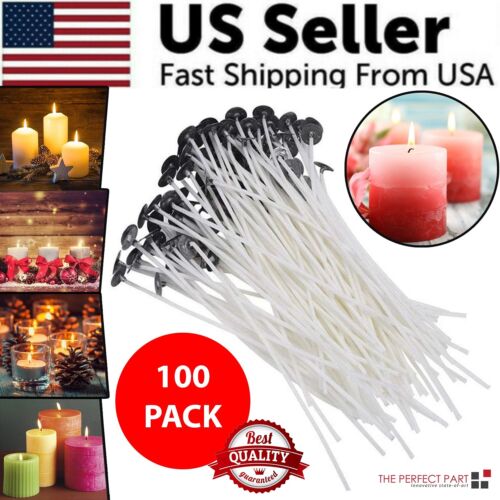 Wick assortment sampler (CD, ECO, LX)Buying a mixed assortment lets you test burn multiple series side by side before committing to a bulk purchase. Knowing which series works for your formula matters more than which specific size — different series have different curl behaviors and burn profiles.
 Wood wicks (crackle variety)Wood wicks produce an audible crackle that's a real selling point in the premium candle market. They require longer cure time and are more sensitive to fragrance load — but for the right formula they significantly elevate the customer experience.
 Wick trimmer (angled blade)A dedicated wick trimmer cuts at the correct ¼" height reliably and keeps the trimmed carbon out of the wax pool. The angled blade reaches into deep jars without knuckle contact. A legitimate add-on sale for any candle business.
Clear glass test jars (small batch)Testing 3 wick candidates simultaneously requires 3 identical vessels. Small-batch clear glass jars let you observe melt pool edge progress clearly without visual distortion. Match the diameter exactly to your production jar.
Wick trimmer (angled blade)A dedicated wick trimmer cuts at the correct ¼" height reliably and keeps the trimmed carbon out of the wax pool. The angled blade reaches into deep jars without knuckle contact. A legitimate add-on sale for any candle business.
Clear glass test jars (small batch)Testing 3 wick candidates simultaneously requires 3 identical vessels. Small-batch clear glass jars let you observe melt pool edge progress clearly without visual distortion. Match the diameter exactly to your production jar.
 Digital kitchen scale (gram precision)Fragrance load calculations require weighing fragrance oil to the gram, not measuring by volume. Candle making at scale demands repeatable formulas. A 0.1g-precision kitchen scale ($15–25) removes the main source of batch-to-batch variation in fragrance load.