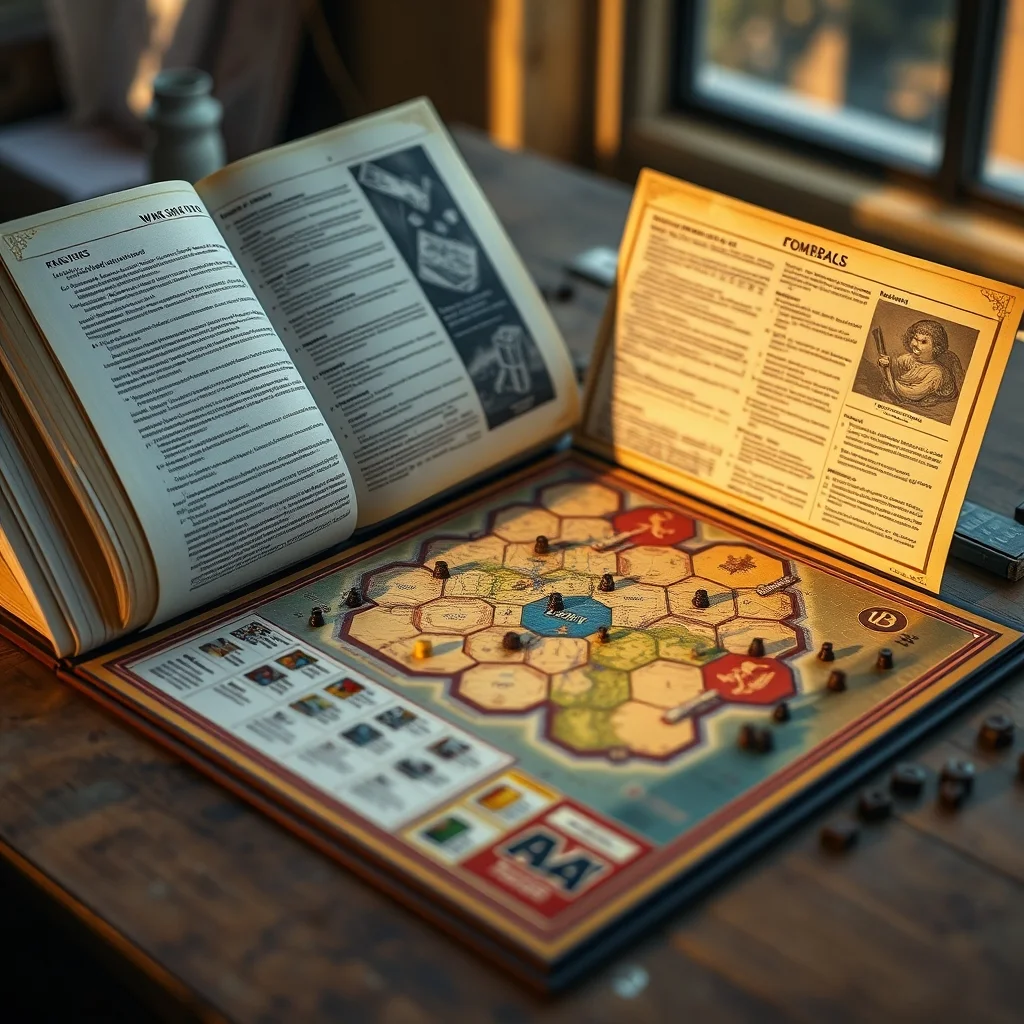
Why vintage board games require different evaluation criteria
A vintage board game is not like a coin or a card where condition can be assessed from a distance and graded on a standard scale. Games are systems — they require all components to play, and many components (rule booklets, scenario sheets, small cardboard counters) are prone to loss, damage, or water staining in ways that a box photo won't reveal. The first question with any vintage game purchase should be component completeness, not box condition.
The second complication is edition proliferation. Many classic games were printed across decades with rule changes, map revisions, and component substitutions that affect both playability and collector value. Avalon Hill reprinted most of their war game catalog multiple times; Cosmic Encounter existed across at least four distinct publisher versions before its most recent Fantasy Flight Games edition. Knowing which edition you're looking at is prerequisite to evaluating value.
Avalon Hill war games: the key titles and their print runs
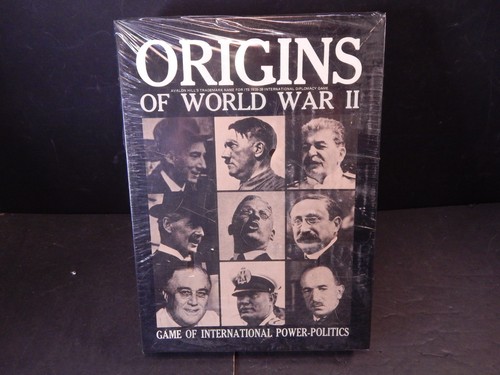
Avalon Hill (founded 1952, Baltimore) is the founding publisher of the modern board war game genre. Their output from the 1950s through their acquisition by Hasbro in 1998 constitutes the core of the vintage wargame collecting market. Key titles:
Gettysburg (1958 original, revised 1961, 1964, 1977)
The 1958 original Gettysburg is the first commercially published board wargame. It used area-movement (not hexagonal), which was changed to hex-movement in the 1961 revision. The 1958 edition is a historical artifact; the 1961 edition is the first to have the hex map that became the wargame standard. The 1964 edition added additional scenarios. For collectors: the 1958 box uses a different blue/gray color scheme and "Avalon Game Co." rather than "Avalon Hill Game Co." on the box. The 1961 box has the correct Avalon Hill branding but still uses the earlier printing style. Later editions (1977) are common and relatively inexpensive.
Tactics II (1961)
Tactics II (the revised version of the 1954 original Tactics) was Avalon Hill's first successful mass-market wargame. Collector interest is primarily in pre-1964 editions. Component completeness check: the rule booklet, order of battle sheet, and full set of unit counters (verify by counter count in the rules).
PanzerBlitz (1970) and Squad Leader (1977)
These represent the peak of Avalon Hill's tactical wargame period. PanzerBlitz introduced mobile armor combat at the platoon level; Squad Leader later became the template for the massively expanded Advanced Squad Leader system. For PanzerBlitz: the 1970 first edition has a distinctive dark blue box and mounted mapboards. Map edition matters — later printings revised some terrain hexes. Squad Leader: the 1977 first printing is identified by the box art (different from the 1978 reprint) and the original scenario cards (not booklet format). Advanced Squad Leader is a separate, later product and is not the same as Squad Leader.
The AH magazine and Annual
Avalon Hill published The General magazine from 1964 to 1998. Many issues included variant rules, scenarios, and complete mini-games as inserts. Complete runs of The General are collectible separately from the games; specific issues that include sought-after game inserts command individual premiums.
| Title | First edition year | Key ID marker | Completeness check |
|---|---|---|---|
| Gettysburg | 1958 | "Avalon Game Co." on box | Rule book + all unit counters |
| Tactics II | 1961 | Black/white box graphic | Rules + order of battle + counters |
| PanzerBlitz | 1970 | Dark blue box; mounted maps | 3 mapboards + scenario book + counters |
| Squad Leader | 1977 | Original box art; scenario cards (not booklet) | 4 mapboards + all counter sheets |
| Diplomacy | 1959 (Calhamer); 1961 (AH) | 1961 AH box; 1971 revised | Map + 34 supply centers marked + unit sets |
Cosmic Encounter: publisher editions and what they mean
Cosmic Encounter is an asymmetric alien-powers negotiation game designed by Bill Eberle, Jack Kittredge, Bill Norton, and Peter Olotka. It was first published in 1977 by Eon Products and has been reprinted across multiple publisher editions, each with significant differences:
Eon Products edition (1977–1982)
The original. Eon produced several printings between 1977 and 1982, with incremental changes to the alien deck and card art. The Eon edition is most collectible because it includes aliens that were later removed from subsequent editions for various design reasons, and because the physical card stock and component quality reflect the small-publisher craft production of the era. Identifying Eon production: the box has a distinctive cosmic-rays illustration with "Eon Products" on the lid. The alien power cards use a hand-lettered style. The plastic ships are the original design.
Eon also produced expansions (More Cosmic Encounter, Cosmic Encounter Expansion Kit, etc.) that added aliens and rules. A complete Eon collection including all expansions is genuinely rare. Confirm specific alien deck composition when buying — seller statements about "complete" are unreliable without a count against the relevant printing's component list.
Mayfair Games edition (1991–2000)
Mayfair licensed Cosmic Encounter and produced a version with updated card art and revised alien lineup. The Mayfair edition is more common than Eon but still out of print. Key difference: several Eon aliens were modified or replaced. Mayfair also changed the ship colors and produced expansion sets (More, Duel, etc.) that are separately collectible. Mayfair box is notably different graphic design — modern for its era, color-heavy, with the Mayfair logo prominently.
Avalon Hill edition (1992)
Avalon Hill briefly produced their own version, largely similar to Mayfair in alien selection. Less common than the other editions; smaller collector following.
Fantasy Flight Games edition (2008–present)
FFG produced the most recent major edition with substantially revised production values, new alien powers, and a different component format. This edition is widely available and not a collectible in the vintage sense. If you want to play the game, the FFG edition is the practical choice; if you want a specific historical version, specify which publisher when searching.
Vintage Monopoly identification
Pre-war and early postwar Monopoly variants are the other major area of vintage board game collecting. Key identification points:
Pre-war editions (1935–1941)
Parker Brothers began publishing Monopoly in 1935. Pre-war editions (before 1942, when wartime material restrictions changed production) used wooden houses and hotels, and metal tokens with a specific set of early designs. The pre-war "Long Box" editions (named for the long, narrow box format before Parker Brothers shifted to the square format) are most sought by collectors. Board printing quality and property card typography differ from postwar production. Verify by checking the copyright date on the board — typically printed in small text on the board edge or corner.
Early postwar (1946–1960s)
Plastic houses replaced wood in the postwar era. Metal tokens remained but the token lineup changed — some early tokens were retired. The "No. 9" and other numbered editions correlate to specific postwar printings; collector reference guides (specifically "The Monopoly Companion" and specialized online databases) detail the differences.
Variant editions
Parker Brothers and later Hasbro licensed or produced regional variants throughout the 20th century — city editions, luxury editions, and tie-in editions. The Atlantic City-themed original, regional city editions from the 1970s, and department-store exclusives are the most collectible variants. Identify by reading the box completely — city variants name the sponsoring city prominently.
Condition grading for board games
Unlike cards or coins, board games don't have a universal third-party grading system. The following framework is what experienced collectors and dedicated online marketplaces (like BoardGameGeek's GeekMarket) typically use:
- New in Shrink (NiS): Factory sealed with original shrink wrap intact. The highest condition; verifies all components are present by implication (though shrink can be reapplied, which is why sealed alone doesn't guarantee authenticity for very valuable games).
- Like New (LN): Opened but unpunched (counters/tokens still on the punch sheet) or played once. Minimal wear on box corners; no writing in rulebook.
- Very Good (VG): Played several times, all components present, box shows normal wear (corner wear, possible shelf wear to lid). No missing components, no water damage, no tears to game board.
- Good (G): Played many times. Box may show significant wear; components are complete or near-complete (1–2 minor pieces missing is typically acceptable if disclosed). Rulebook may show wear or highlighting.
- Fair (F): Box damaged or missing, significant component wear or losses. Still playable with the remaining components.
- Poor (P): Major component losses, damaged map, or incomplete rulebook. Value only for parts or display.
Acquire (3M edition): a brief note on the 3M Bookshelf series
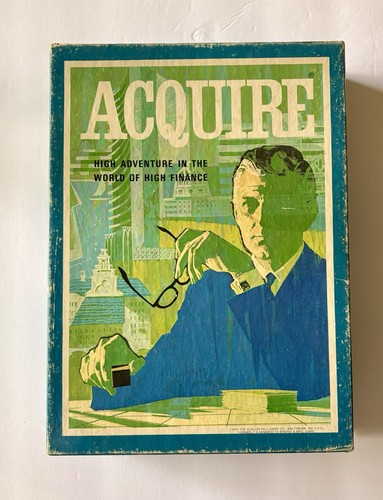
3M's Bookshelf Game series (1962–1975, produced in the classic library-spine box format) is collectible in its own right. Acquire (1964 first 3M edition; originally published by Sid Sackson/3M) uses pentomino-shaped tiles for hotel chains. The original 3M edition used plastic tiles; later editions changed the tile shape and design. The Avalon Hill edition (post-3M acquisition) changed the graphic design. For collecting, the original 3M plastic tile edition is the most sought. Confirm tile count (108 tiles in standard 3M editions) and hotel set completeness (6 hotel chains × 12 hotels each) when evaluating any listing.
Search eBay for vintage board games
 Avalon Hill war games
Filter by year range; older production is usually pre-1980. Ask about counter punch state and rule booklet condition.
Avalon Hill war games
Filter by year range; older production is usually pre-1980. Ask about counter punch state and rule booklet condition.
 Cosmic Encounter
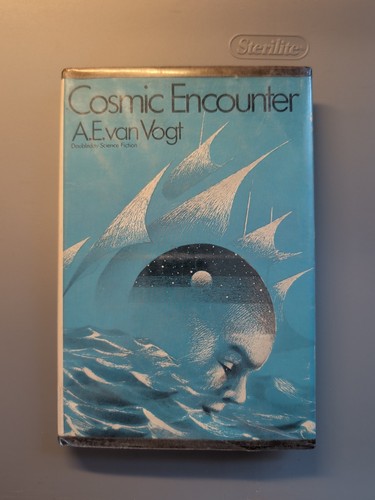
Specify "Eon" for original; confirm alien deck count and ship colors match the edition you want.
Cosmic Encounter
Specify "Eon" for original; confirm alien deck count and ship colors match the edition you want.
 Acquire 3M edition
Look for the tall library spine box with plastic tiles. Confirm 108 tiles and 6-chain hotel set complete.
Acquire 3M edition
Look for the tall library spine box with plastic tiles. Confirm 108 tiles and 6-chain hotel set complete.
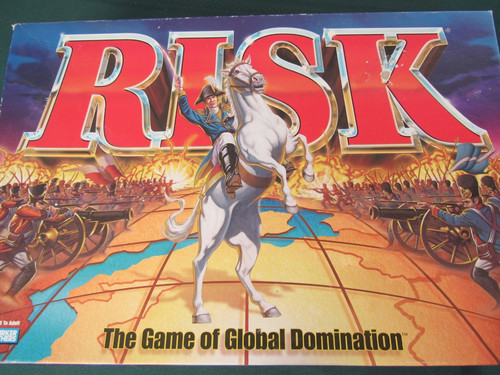 Vintage Risk
Pre-1980 wooden armies vs plastic. Copyright dates on the board confirm edition; box art changed several times.
Vintage Risk
Pre-1980 wooden armies vs plastic. Copyright dates on the board confirm edition; box art changed several times.
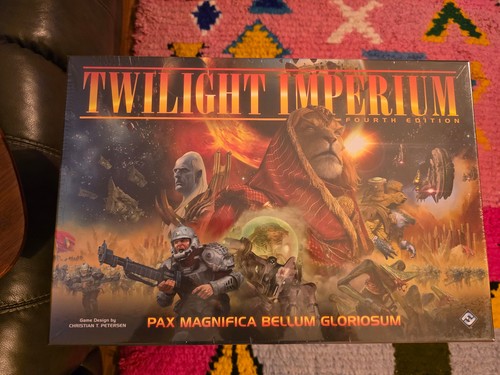 Twilight Imperium 1st ed
FFG 1997. Substantially different from later editions. Faction sheets and technology cards are the fragile completeness items.
Twilight Imperium 1st ed
FFG 1997. Substantially different from later editions. Faction sheets and technology cards are the fragile completeness items.