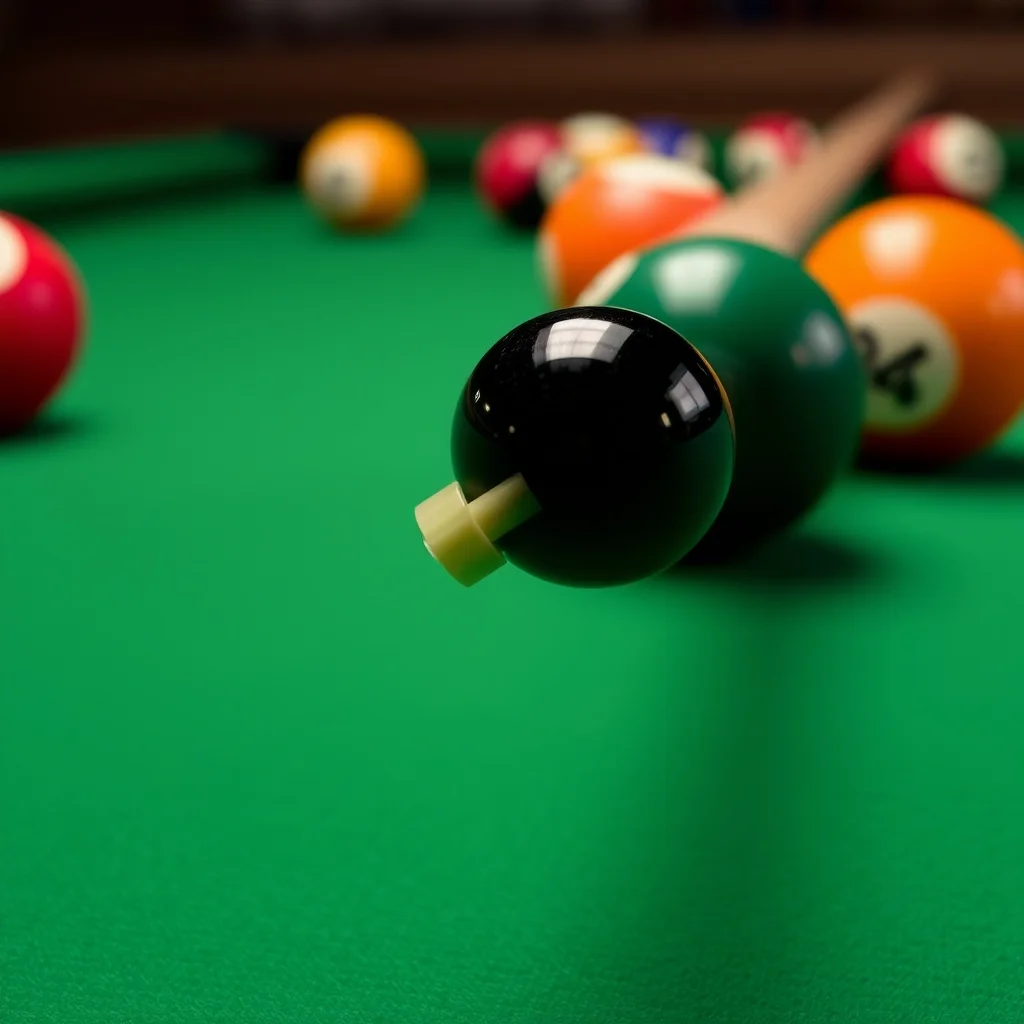
Slate vs non-slate: the decision that matters most
Pool table playing surfaces come in two types: slate (quarried stone) and MDF or particleboard (wood-based composites). This is the single most important spec in any pool table purchase.
Slate beds are dimensionally stable — they do not warp, swell, or shift with temperature and humidity changes. A well-leveled slate table will remain level for decades. Tournament, bar, and league tables are universally slate. Slate adds significant weight (a 3/4 inch 3-piece slate for an 8-foot table weighs roughly 450–500 lbs), which requires professional installation and a floor capable of supporting the load.
Non-slate (MDF/particleboard) beds are lighter and less expensive. They are level when installed, but wood-based composites respond to humidity and temperature. In environments with seasonal humidity variation, a non-slate table can develop warp over 2–5 years. This is not a hypothetical risk — it is the most common complaint about budget pool tables in online reviews. If you purchase a non-slate table, maintain the room at consistent humidity (40–60% RH) to extend its level life.
Slate thickness: 3/4 inch vs 1 inch
Slate comes in 3/4 inch (19mm) and 1 inch (25mm) thicknesses, and in 1-piece vs 3-piece configurations. One-piece slate tables are harder to move and install but have no seams. Three-piece slate is the standard for larger tables and allows the table to be moved through doorways in sections.
The 1-inch thickness is the tournament standard (BCA and APA specification for professional play). The 3/4-inch thickness is fine for home use and is the most common configuration in home slate tables. The difference in play feel is minimal; the difference in table weight and cost is meaningful.
Table size: matching the table to the room
Pool table size is measured by the playing surface, not the overall table dimensions. The most common sizes:
| Table size | Playing surface | Minimum room size (58" cue) |
|---|---|---|
| 7 foot | 39 × 78 inches | 12 × 15.5 feet |
| 8 foot | 44 × 88 inches | 13.5 × 17 feet |
| 8.5 foot (oversize) | 46 × 92 inches | 14 × 17.5 feet |
| 9 foot | 50 × 100 inches | 14.5 × 18.5 feet |
The room size requirements above assume a standard 58-inch house cue. If the room is tight, players will use a shorter bridge cue or mechanical bridge for shots near the wall — this works but interrupts the flow of casual play. If your room is borderline, a 7-foot or 8-foot table will play better in practice than a 9-foot table that requires a mechanical bridge on every other shot.
The 8-foot table is the most popular home size for good reason: it provides a challenging enough play area for improving players without requiring a dedicated billiards room with 18+ feet of length.
Cloth: worsted vs woolen (standard felt)
Pool table cloth comes in two constructions: worsted and woolen. The terminology is often confused in marketing materials, so the practical distinction:
Woolen cloth (often called "felt" colloquially) has a nap — a directional surface texture created by the fiber construction. The nap affects how the ball rolls: rolling with the nap vs against it creates slightly different ball paths. Standard woolen cloth is what most budget tables ship with. It wears faster, pills over time, and plays slower (more friction). Replacement cost is lower.
Worsted cloth (also called speed cloth or billiard cloth) is woven without a nap. The surface is smoother, balls roll truer and faster, and the cloth lasts significantly longer under heavy use. Tournament and bar tables use worsted cloth. Simonis is the benchmark brand; Championship and Iwan Simonis cloth are widely specified. Worsted cloth typically costs more to purchase and install, but lasts 2–4× as long under equivalent use.
Shopping for billiards equipment? Browse current eBay listings → (we earn a small commission; your price is unchanged).
Rails and cushions
Pool table rails hold the cushion rubber that balls rebound off. Cushion rubber compound determines rail response — how predictably balls bounce and how consistent the response is at different ball speeds.
The industry standard specifications are K-55 and K-66 cushion profiles, named for their cross-sectional shape. K-55 is the most common profile for standard pool tables. K-66 is the specification used for carom billiards and some bar tables. Most buyers will not need to research cushion profiles beyond verifying that the table uses a named profile and that the rails are diamond (or multiple-diamond) rather than plain — rail diamond pattern indicates proper cushion geometry for standard pool.
Cushion rubber degrades over time (typically 20–30 years, but faster in extreme temperature environments) and becomes less responsive. Old "dead" cushions are the most common reason used tables play poorly. Cushion replacement is a professional job and costs roughly $200–$400 for a full set on an 8-foot table.
Cues: weight, tip, and what to buy for a home room
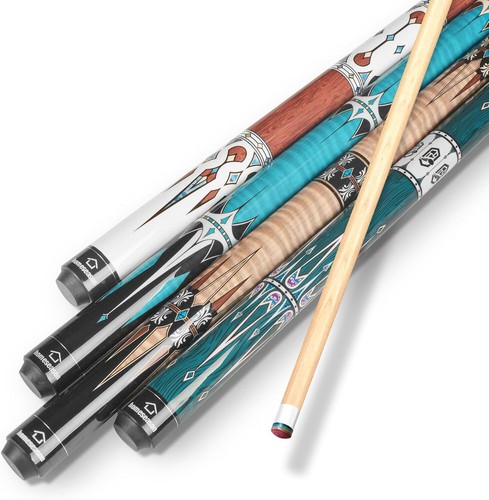
Pool cue weight is measured in ounces. The standard range for pool is 18–21 oz. Most beginners and recreational players do well in the 19–21 oz range — heavier cues provide more momentum transfer with less finesse required. Advanced players often prefer lighter cues (18–19 oz) for more precise control on speed shots.
Tip diameter for pool is typically 12–13mm. The tip hardness (soft, medium, hard) affects how much spin (english) transfers to the cue ball. Softer tips grab the ball and transfer english more easily; harder tips are more durable but require more precise technique. Medium tips are the standard recommendation for home room use.
For a home room, a wall-mounted rack of 4–6 two-piece house cues in the 19–20 oz range is practical. Two-piece cues can be stored more compactly than one-piece cues and are easier to carry if players bring their own. Avoid the cheapest house cue sets (under $50 for the set) — the tips warp and the wood construction is typically poor. A mid-range set in the $80–$150 range provides cues that play reasonably and last years of regular use.
Balls: phenolic vs polyester
Pool balls come in two materials: phenolic resin and polyester. The difference compounds over time:
Phenolic resin balls (Aramith is the benchmark) maintain their spherical tolerance — weight uniformity and roundness — significantly longer than polyester. Pool balls hit the table slate thousands of times per game; over time, polyester balls develop flat spots and uneven weight distribution that affect roll predictability. Aramith balls also resist burning from miscued shots (friction creates surface marking on softer polyester balls). The investment in phenolic balls typically pays back in longevity.
Polyester balls are less expensive upfront. They are entirely adequate for casual home use with moderate play frequency. For a table that sees daily use by multiple players, phenolic balls are the better long-term purchase.
Used pool tables: what to inspect
Used slate tables often represent the best value in billiards — a quality slate table from a reputable manufacturer can play well for 30–50 years with re-felting. When inspecting a used table:
- Roll test: Roll a ball the full length of the table from both directions. Consistent drift in one direction indicates the table is out of level or the slate has shifted.
- Cushion response: Hit a ball into each cushion at moderate speed. Dead spots (no rebound) indicate degraded rubber that needs replacement.
- Slate seams: On 3-piece slate, run your finger across the seam between sections. Any ridge indicates the slate was not properly leveled after the last move.
- Frame and legs: Check for warped rails, loose leg bolts, and frame integrity. A wobbly table that cannot be re-leveled is not worth moving.
 Pool table slate
 Pool table 8ft
 Pool cue set
 Billiard balls
 Pool table felt