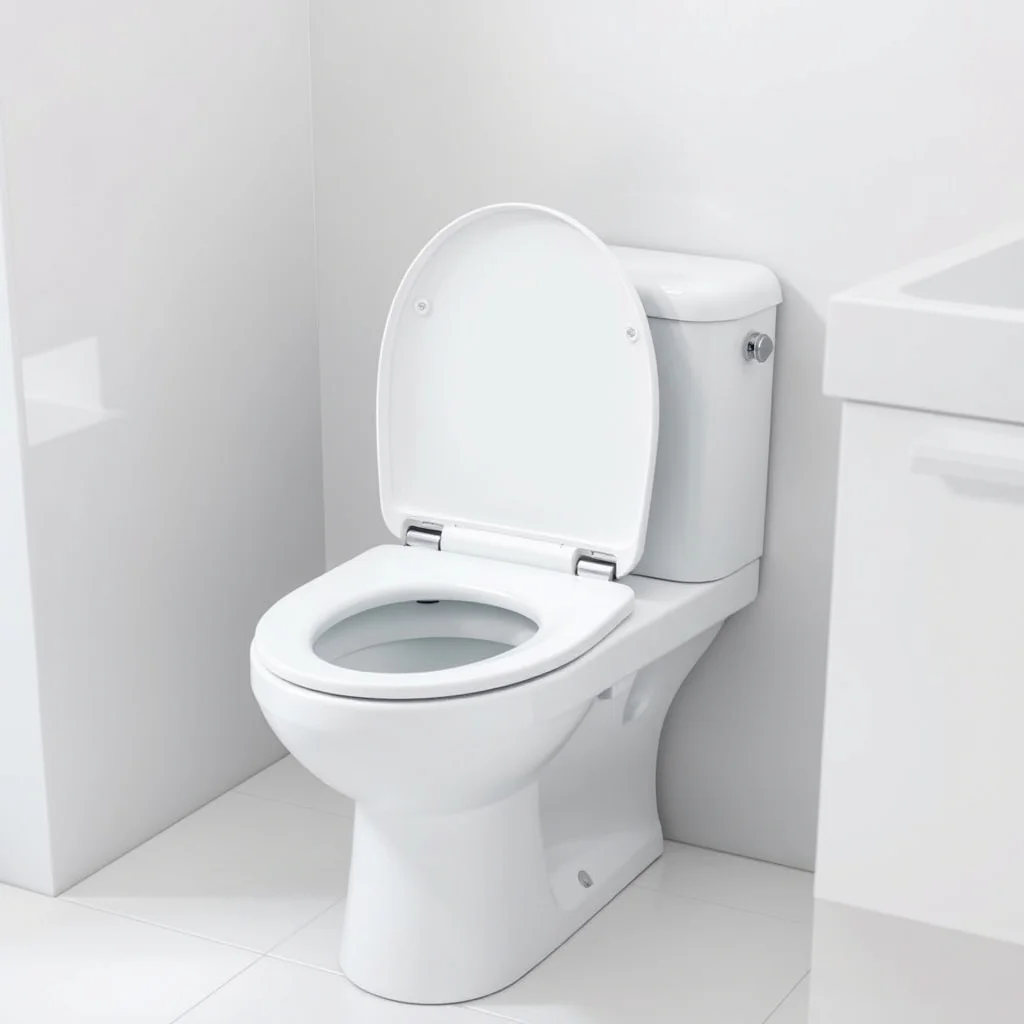
The core decision: non-electric attachment vs electric seat
Bidet products divide into two fundamentally different categories. Understanding the difference before looking at any specific product saves a lot of confusion.
Non-electric bidet attachments mount between your existing toilet seat and the bowl using the existing seat bolts. They tap the cold-water supply line with a T-valve. No electricity, no installation skill required beyond a basic wrench. Water pressure is controlled mechanically, either by a dial or lever on the side of the attachment. These typically cost $25–$80 and deliver cold water only (unless you add a warm-water T-connection to your bathroom sink's hot supply line, which some models support).
Electric bidet seats replace your toilet seat entirely. They require a GFCI electrical outlet within approximately 4 feet of the toilet — this is a hard requirement. The seat plugs in, heats water internally (either via a reservoir tank or an instant tankless heater), and typically adds a heated seat surface, warm air dryer, and adjustable spray settings via remote or side-panel controls. These range from about $200 for entry-level tank models to $600+ for premium tankless units from brands like Toto or Brondell.
| Feature | Non-electric attachment | Electric seat |
|---|---|---|
| Water temperature | Cold only (warm-water tee available on some) | Adjustable warm water |
| Electricity required | No | Yes — GFCI outlet within reach |
| Heated seat | No | Yes (on most models) |
| Air dryer | No | Yes (on most models) |
| Typical price range | $25–$80 | $200–$700+ |
| Installation complexity | Very low — 10–20 minutes | Low–moderate — 30–60 minutes |
| Keeps existing toilet seat | Yes | No — seat is replaced |
Warm water: tank vs tankless vs sink tee
Warm water is the feature that causes the most buyer confusion. There are three ways to get it:
Tank reservoir (most electric seats under $400)
A small internal tank — typically 0.8 to 1.2 liters — heats and stores water at a set temperature. The advantage is immediate warm water on the first wash. The limitation is tank depletion: if the wash runs longer than about 30–45 seconds, the supply transitions to cold water as hot water runs out. Tank models also keep water heated continuously, which uses a small amount of electricity even when idle (typically 5–20W standby, varies by model).
Tankless (instant) heating (higher-end electric seats)
A ceramic heating element warms water on demand, like a tankless water heater. No tank to deplete, so the water temperature stays consistent through a long wash. The tradeoff is that instant heaters require a higher electrical draw at peak (some models draw 1,200–1,400W during heating) and the temperature is typically slightly lower than a tank model at its set maximum — around 38°C rather than 40°C, though these figures vary by manufacturer and should be verified in the specific model's spec sheet.
Warm-water tee connection (non-electric attachments)
Some non-electric attachments include a Y-connector or dual-inlet design that accepts both cold (toilet supply) and warm water (from the bathroom sink's hot supply line). This requires running a flexible braided line from the sink's hot shutoff to the bidet's warm-water inlet — plausible but adds complexity and depends on your sink being within a workable distance from the toilet. The water temperature is whatever the sink hot line delivers, which isn't adjustable at the bidet itself.
Spray controls: what the settings actually do
Most bidet products advertise spray settings with marketing language. Here is what the actual controls mean:
- Pressure control — how hard the water sprays. On non-electric models this is a dial or lever; on electric seats it's a stepped digital control (typically 5 levels). Lower pressure is more comfortable for sensitive use; higher pressure is more effective for thorough cleaning.
- Nozzle position — front vs rear nozzle, and position adjustment along a front-back axis. Electric seats offer motorized position adjustment; non-electric models typically offer two fixed positions (front and rear).
- Oscillation/pulsation — an electric-seat feature where the nozzle moves back and forth along its axis during a spray cycle, covering a wider area without manual repositioning.
- Self-cleaning nozzle — the nozzle rinses itself briefly before and/or after each use. Standard on most electric seats and a common feature on mid-range non-electric attachments. This is a hygiene-relevant feature worth prioritizing.
Toilet fit: round vs elongated
This is where buyers make the most preventable mistakes. Toilets come in two standard bowl shapes in North America:
Round bowls measure approximately 16.5 inches (42 cm) from the seat bolt holes to the front of the bowl rim. Elongated bowls measure approximately 18.5 inches (47 cm) front to back. The measurement is from the center of the bolt holes — not the very back of the tank — to the front of the bowl.
Measure before you order. A seat designed for elongated bowls will overhang a round bowl and look awkward; a round-bowl seat will leave a gap at the front of an elongated bowl. Most electric seat manufacturers make both versions; verify before purchasing. Some non-electric attachments are listed as "universal fit" but confirm against your measurements — the attachment itself may fit but the seat you reinstall on top may not align correctly.
Shopping for bidet attachments? Browse current eBay listings → (we earn a small commission; your price is unchanged).
Water pressure requirements
Non-electric bidets rely entirely on your home's incoming water pressure to generate spray force. Typical residential supply runs 40–80 PSI; bidets generally work well within this range. If your home's pressure is on the lower end (under 40 PSI), you may find the spray force underwhelming even at the maximum dial setting. There is no fix for this other than addressing the underlying water pressure, or switching to an electric seat with a pressure pump (less common).
Electric seats with pump-assisted spray are less dependent on household pressure. This is worth knowing if you're in an older building with inconsistent line pressure.
Installation walkthrough: non-electric attachment
- Turn off the water supply valve behind the toilet and flush to empty the tank.
- Disconnect the existing supply line from the bottom of the fill valve (inside the tank). Note: the supply line connects at the tank bottom, not the bowl.
- Insert the bidet's T-valve: one end to the wall shutoff, one end to the fill valve, one end to the bidet's inlet hose.
- Remove the toilet seat. Install the bidet mounting plate over the bolt holes. Reinstall the seat on top of the mounting plate (the seat bolts go through both).
- Connect the bidet's hose to the T-valve outlet. Turn water on and check for leaks at both the T-valve connections.
The whole process typically takes 10–20 minutes and requires only an adjustable wrench.
Installation walkthrough: electric seat
- Confirm a GFCI outlet exists within cord reach of the toilet. Most seats ship with a 4-foot cord; some are 5 feet. If no outlet exists, you'll need an electrician — do not use an extension cord for a bathroom appliance.
- Turn off supply valve, flush, disconnect supply line as above.
- Install the T-valve and connect to the seat's water inlet hose.
- Remove the old seat. Mount the seat's mounting bracket to the toilet bolt holes.
- Slide the seat onto the bracket until it clicks. Connect the inlet hose. Plug in.
- Run a test cycle before first use to confirm water temperature, spray position, and nozzle self-clean function.
Common mistakes to avoid
- Buying an elongated seat for a round bowl — measure first.
- Ordering an electric seat without confirming GFCI outlet proximity — verify before purchasing, not after.
- Expecting a tank model to sustain warm water for more than ~45 seconds — it won't at low tank capacity; size up or go tankless if long wash duration matters.
- Installing a bidet without turning off the supply valve first — the T-valve connections need to be made with the supply off or water will spray everywhere.
- Ignoring the nozzle self-cleaning spec — non-self-cleaning nozzles require manual cleaning, which most buyers skip, creating hygiene issues over time.
 Bidet Attachment
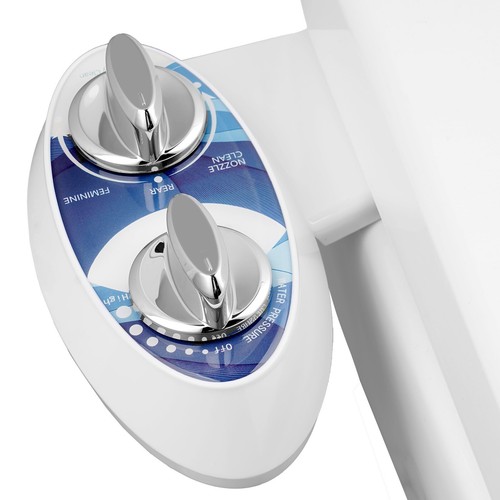 Electric Bidet Seat
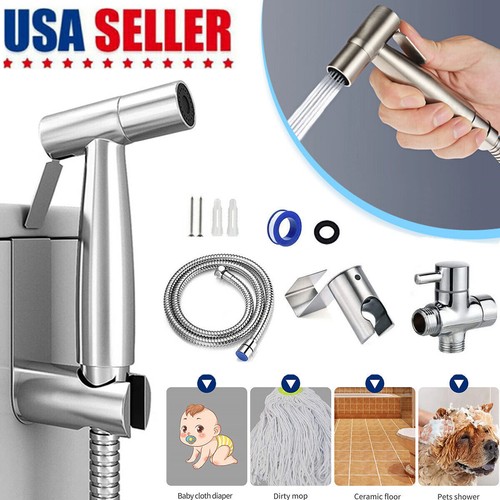 Handheld Bidet Sprayer