Season ratings: what they actually mean
Season ratings in the tent market are conventions, not certifications. No governing body sets the standard. That said, the terms are broadly consistent enough to be useful if you understand what each category is optimized for.
3-season tents
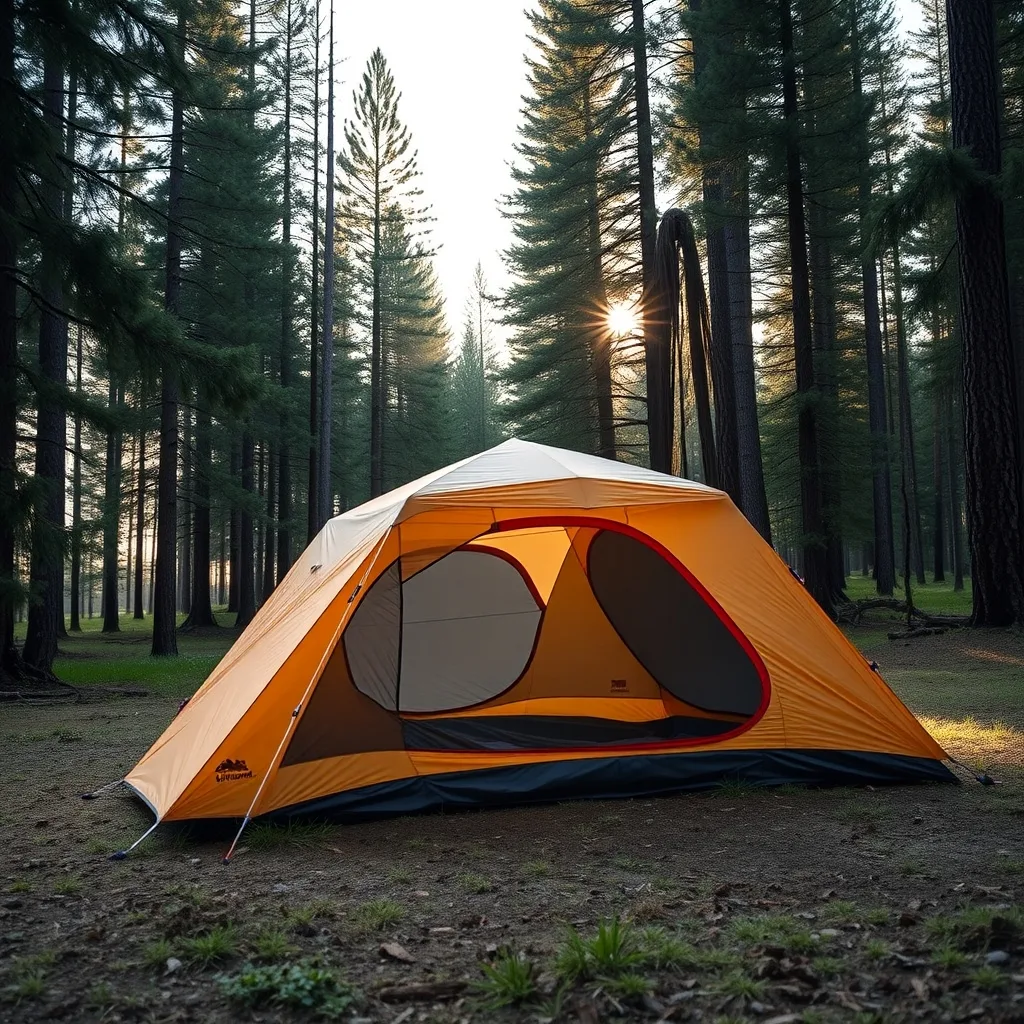
A 3-season tent is designed for spring, summer, and fall use in conditions ranging from calm and dry to moderate rain and wind. Most have substantial mesh panels — good for ventilation and reducing condensation in warm weather, but a liability in sustained cold or driving wind. The poles are typically aluminum (or occasionally fiberglass on entry-level models); the structure prioritizes light weight and ventilation over snow load handling.
A 3-season tent is appropriate for the vast majority of camping and backpacking trips in temperate climates. If your trips don't involve sustained snowfall, sub-freezing overnight temperatures, or alpine exposure, a 3-season shelter is almost always the better choice — you give up little protection and gain meaningful weight and packability advantages.
3-season+ / extended-season
Some manufacturers use "3-season+" or "extended-season" labeling for tents that add sturdier pole geometry, a more protective fly, or reduced mesh panels compared to a true 3-season. These are appropriate for early-season shoulder trips at altitude, or areas that see late-fall wind and light snowfall. They sit between the two main categories in weight and protection.
4-season tents
A 4-season tent is engineered for true winter and alpine use: sustained wind, snow accumulation on the fly, and sub-freezing conditions. The key structural differences are a geodesic or semi-geodesic pole configuration (which handles load from multiple directions), a full solid-panel fly with minimal mesh, and heavier fabric and pole stock. Most 4-season tents weigh noticeably more than comparable 3-season models — typically a pound or more — and they trap heat in summer, making them less comfortable in warm weather.
Buy a 4-season tent if you're doing winter camping, ski mountaineering, or expeditions where sustained severe weather is a genuine possibility, not just a remote risk.
Capacity numbers: rated vs livable
Tent capacity ratings from manufacturers are typically optimistic by one person for adults with gear. A "2-person" tent floor is often sized for two sleeping bags in contact with each other — no space between them, no room for packs inside, no margin for movement. A "3-person" tent often works comfortably for two adults who want elbow room.
To evaluate real capacity, look at two numbers: floor area in square feet and vestibule area. A 2-person backpacking tent typically offers 28–35 sq ft of floor space. A 3-person family tent might offer 50–60 sq ft. Vestibule area matters for gear storage — a vestibule of 10+ sq ft per person keeps boots, wet layers, and packs outside the sleeping area without leaving them exposed to rain.
| Rated capacity | Comfortable for | Min floor area (approx) |
|---|---|---|
| 1P (solo) | 1 person with small gear | 18–22 sq ft |
| 2P | 1 person with full gear, or 2 intimate sleepers | 28–35 sq ft |
| 3P | 2 adults with gear comfortably | 40–50 sq ft |
| 4P | 3 adults or family of 4 with minimal gear inside | 55–70 sq ft |
| 6P | Family of 4–5 with standing room | 80–100+ sq ft |
Peak height is the other number to check. Cabin-style car-camping tents often reach 6+ feet of peak height — you can stand upright and change clothes. Traditional A-frame designs peak at 3–4 feet; enough to sit up but not stand. For family camping, peak height dramatically affects comfort during bad-weather days when you're spending time inside.
Weight: which number to use
Manufacturers typically list two or three weight figures: minimum trail weight (or "trail weight"), packaged weight, and sometimes "fast and light" weight. Using the wrong one leads to surprises on the scale.
- Minimum trail weight — the tent body, fly, and poles only. No stakes, no stuff sacks. This is what you carry if you leave behind the extras and use trekking poles for pitching. Used to compare shelters on raw weight.
- Packed weight — everything in the box, including all stakes, storage bag, and repair kit. This is what you'll actually carry if you bring all the components. Typically 0.5–1.5 lbs more than trail weight.
For backpacking, aim to evaluate minimum trail weight. For car camping, it doesn't matter — packed weight is fine because you're not carrying it far.
Shopping for tents? Browse current eBay listings → (we earn a small commission; your price is unchanged).
Weight benchmarks for backpacking
- Ultralight (sub-2 lb trail weight): single-wall or hybrid designs; Dyneema (DCF) or sil-poly fabrics; meaningful strength trade-offs at this range
- Lightweight (2–3.5 lbs): most quality double-wall backpacking tents fall here; good balance of protection, condensation management, and weight
- Standard backpacking (3.5–5 lbs): durable, weather-capable, appropriate for most conditions; manageable on trips under a week
- Car-camping range (5–20+ lbs): weight is not a meaningful concern; prioritize livable space, setup ease, and weather protection
Weatherproofing: how to read the specs
Two specs control weatherproofing: hydrostatic head (HH) rating and seam tape.
Hydrostatic head rating
Hydrostatic head is measured in millimeters (mm) and indicates how much water pressure the fabric resists before leaking. A column of water 1,000mm tall sits on the fabric; if it doesn't leak, the fabric is rated 1,000mm HH. Most 3-season tents use fly fabrics rated 1,200–2,000mm HH for the fly and 1,500–3,000mm HH for the floor (floors need higher ratings because you apply body weight, compressing the fabric against moisture).
- 1,200–1,500mm: light rain; adequate for most fair-weather trips with passing showers
- 1,500–2,500mm: moderate to heavy rain; appropriate for typical 3-season backpacking
- 3,000mm+: sustained heavy rain, storm camping; often seen on 4-season and mountaineering tents
Seam sealing and taping
The hydrostatic head rating applies to the fabric, not the seams. Seams are where water actually enters most tents. Factory seam-taped tents have a bonded strip over every seam and are ready to use out of the box. Seam-sealed tents (typically sil-nylon designs) require the buyer to apply seam sealer manually before first use. Some budget tents ship with neither — check the spec sheet before buying.
Pole material and diameter
Aluminum poles (most commonly DAC Featherlight or Easton Syclone) are the standard for quality backpacking tents — lighter, stronger on a per-gram basis, and repairable in the field compared to fiberglass. Fiberglass poles are heavier and can shatter under load; they appear mostly on budget car-camping tents where weight doesn't matter. Carbon fiber poles appear on premium ultralight shelters — very light, but brittle if flexed aggressively. Pole diameter matters too: a 9mm pole handles more load than a 7.9mm pole; 4-season tents typically use 9mm+ diameter.
Double-wall vs single-wall
Double-wall construction — a separate inner tent and outer rainfly — is the standard for most 3-season and 4-season tents. The air gap between inner and fly reduces condensation inside the sleeping area and allows the fly to dry faster. Single-wall tents integrate the waterproof and breathable layers into one fabric, eliminating the inner tent for significant weight savings. The trade-off is condensation: in cold weather, moisture from your breath condenses on the cool single-wall and drips or runs down to the floor. Single-wall designs work best in cold-dry alpine conditions; they struggle in warm humid environments.
Common mistakes to avoid
- Buying the rated capacity number and expecting to fit that many adults with bags and gear
- Using packed weight instead of minimum trail weight to compare backpacking shelters
- Choosing a 4-season tent for occasional bad weather — you pay in weight and summer heat all season
- Ignoring floor HH rating — floors get compressed against wet ground and need higher ratings than the fly
- Skipping seam sealing on a tent that doesn't come factory-taped
- Neglecting vestibule area — a tight vestibule means wet gear inside or no gear at all
Find tents on eBay
We earn a small commission on qualifying sales; your price is unchanged. Full disclosure.
 Backpacking tent
Lightweight 2–3.5 lb shelters for trail use. Check minimum trail weight, not packed weight.
View on eBay →
Backpacking tent
Lightweight 2–3.5 lb shelters for trail use. Check minimum trail weight, not packed weight.
View on eBay →
 4 person camping tent
Comfortable for 2–3 adults with gear. Check floor sq ft and peak height.
View on eBay →
4 person camping tent
Comfortable for 2–3 adults with gear. Check floor sq ft and peak height.
View on eBay →
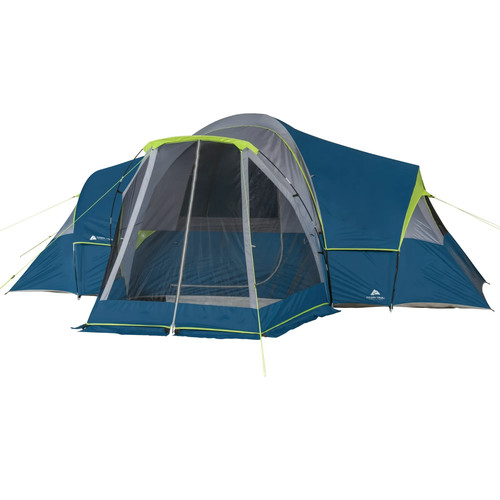 Family camping tent
Cabin-style for standing room; divider walls; car-camping weight is fine.
View on eBay →
Family camping tent
Cabin-style for standing room; divider walls; car-camping weight is fine.
View on eBay →
 Ultralight tent
Sub-2 lb shelters — DCF or sil-poly; higher cost per ounce; trade-offs in durability.
View on eBay →
Ultralight tent
Sub-2 lb shelters — DCF or sil-poly; higher cost per ounce; trade-offs in durability.
View on eBay →
 4 season tent
Geodesic structure, full fly, snow-load rated. Only necessary for true winter and alpine use.
View on eBay →
4 season tent
Geodesic structure, full fly, snow-load rated. Only necessary for true winter and alpine use.
View on eBay →