What tenkara actually is — and isn't
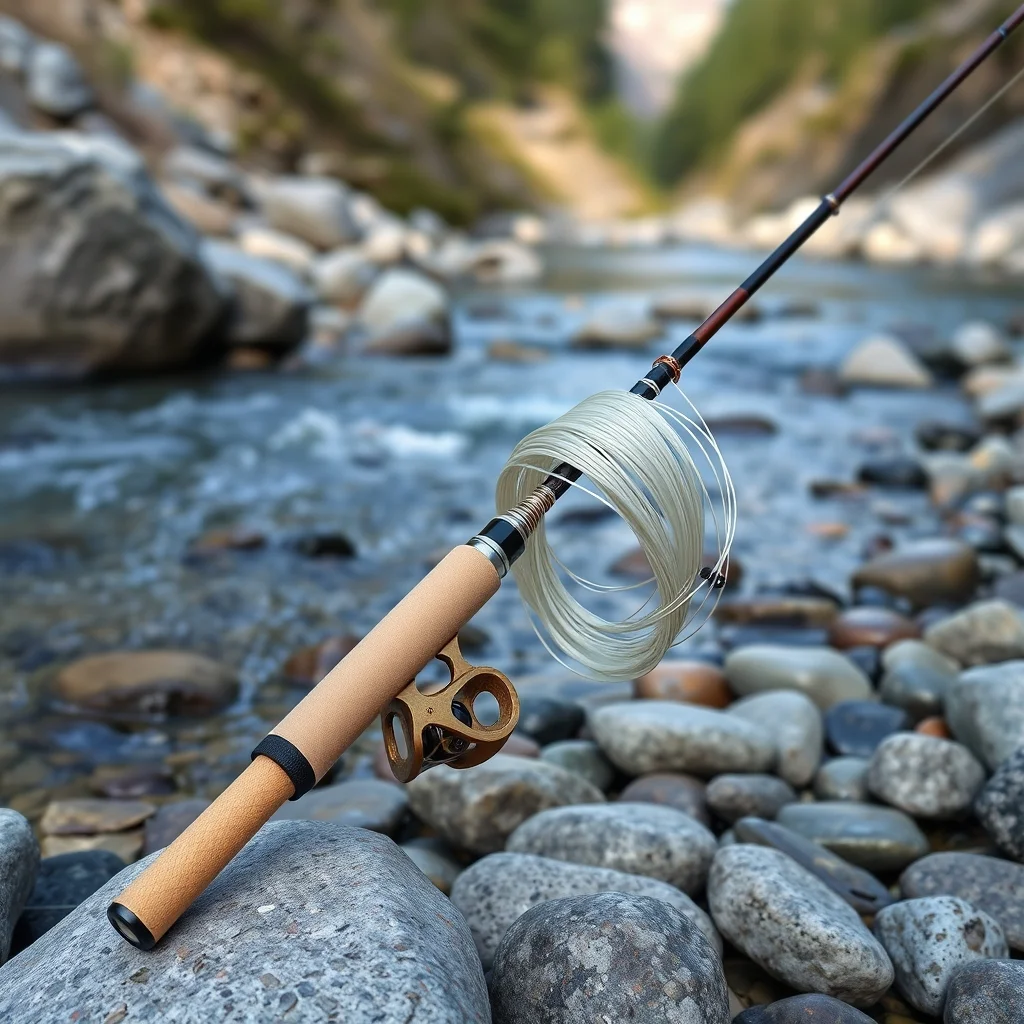
Tenkara is a Japanese fixed-line fishing method traditionally used on small mountain streams for trout and char. The system: a telescoping rod (collapsed to 50–60 cm, extended to 330–450 cm), a line tied to the rod tip (no reel), a short tippet, and a single fly. No casting reel, no running line management, no complex rigging.
The fixed-line constraint is not a limitation — it defines the technique. You work within the rod's reach, placing the fly precisely with a technique called kebari fishing that emphasizes fly presentation and manipulation over matching the hatch. It excels on narrow streams, overgrown banks, and technical pocketwater where a fly rod and reel would be clumsy to cast.
Tenkara is not a beginner's shortcut to fly fishing, nor is it only for beginners. It is a different system with different strengths. Understanding those strengths is how you decide whether it belongs in your kit.
Rod length: matching the stream
Tenkara rod length is measured extended, typically in feet or centimeters. Common lengths: 11 ft (330 cm), 12 ft (360 cm), 13 ft (390 cm), 14 ft (420 cm), 15 ft (450 cm). Some rods are zoom rods — adjustable by one or two sections to two or three lengths.
The length choice is driven by stream width and the casting clearance available above you. The general matching logic:
- 10–11 ft: Very small streams, tight brush, technical mountain pockets. Limited line length means working close.
- 12–13 ft: The versatile range for most mountain and small-to-medium streams. Most popular for general use. Enough reach to dead-drift a run while keeping line off the water.
- 14–15 ft: Wider streams, meadow sections, tailwaters. More reach but harder to cast under overhead cover.
The practical test: stand in your most common fishing spot. Can you hold the rod horizontally without the tip hitting a bank or branch behind you? Can you keep the line off the water while the fly drifts? Those answers determine useful length more reliably than any table.
Rod action: 6:4 vs 7:3
Tenkara rod action is expressed as a ratio describing where the rod bends. A 6:4 rod bends through 60% of its length from the tip — it is softer and bends deeper into the blank. A 7:3 rod bends through 30% — stiffer, bending mainly near the tip.
| Action | Bend point | Best for | Character |
|---|---|---|---|
| 6:4 | 60% from tip (deep flex) | Beginners, delicate presentation, small fish, soft water | Forgiving, load at slower speeds, more rod protection on hooksets |
| 7:3 | 30% from tip (tip flex) | Fast water, larger fish, experienced casters, precise placement | Responsive, direct line control, better hookset on long drifts |
| 8:2 | 20% from tip (very stiff) | Big water, large fish, competition casting | Very direct feel, minimal flex — rarely the right choice for stream trout |
For beginners or anglers fishing gentle freestone streams: 6:4 is more forgiving. The deeper flex absorbs hookset shock and is more tolerant of timing errors in casting. For experienced anglers fishing fast pocket water or tumbling runs where line control is paramount: 7:3 lets you hold line off fast currents and feel takes more directly.
Most manufacturers describe their rods as "medium" or "medium-fast" rather than giving explicit ratios. A medium rod is typically 6:4; medium-fast is closer to 7:3. If a ratio isn't specified, ask the seller or check product reviews.
Lines: level vs furled
The tenkara line is tied to the rod tip via a lilian (a short piece of bright cord or braid at the tip). There are two main line styles:
Level lines
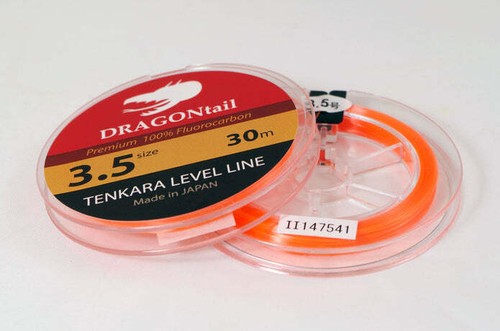
Level fluorocarbon or nylon monofilament, uniform diameter throughout, typically size #3–#4.5 (Japanese diameter system). Level lines are the traditional Japanese choice. They have less mass than furled lines, so they cast with less false casting energy — you're relying on the rod loading, not line weight. Level lines are easier to mend on the water and less affected by wind. The trade-off: harder to learn casting with, since they require more precise rod loading than furled lines.
Furled lines
Twisted or braided tapered lines made from thread. They have a tapered profile similar to a fly line leader, which turns over more naturally and is easier for beginners to cast. Furled lines are more visible in the air, which helps newer tenkara anglers time their presentation. The trade-off: they pick up water (especially nylon; fluorocarbon furled lines are better), tend to sag more in current, and don't mend as cleanly as level fluorocarbon.
Starting recommendation: begin with a furled line to learn casting, then transition to level fluorocarbon once you've built rod-load feel. Many experienced tenkara anglers fish level fluorocarbon exclusively for the control advantages.
Shopping for tenkara gear? Browse current eBay listings → (we earn a small commission; your price is unchanged).
Tippet selection
Tippet attaches to the end of the line and connects to the fly. Standard tenkara tippet is 5X or 6X fluorocarbon monofilament, typically 3–5 feet long. Fluorocarbon is preferred over nylon for tippet because it sinks (keeping the fly in the water column), is less visible underwater, and has better abrasion resistance against rocks.
Sizing: 5X (0.006 in / 0.152 mm) for most trout fishing with #10–#14 flies. 6X (0.005 in / 0.127 mm) for clear low water, spooky fish, or smaller flies. If you're regularly breaking off fish, go up in tippet diameter; if fish are refusing on clear water, go down.
Kebari flies: what they do differently
Traditional tenkara uses a wet fly called a kebari — a reverse-hackle fly where the soft fibers sweep forward toward the hook eye rather than backward toward the bend. This is the opposite of Western dry fly hackle orientation.
The forward-swept hackle creates a pulsing, breathing motion in current that imitates an emerging or drowned insect. When you twitch the rod tip slightly (the traditional sakasa kebari manipulation technique), the hackle opens and closes like a living thing. This action is what differentiates tenkara presentation from Western wet-fly techniques — the manipulation is built into the technique, not just the pattern.
Practical pattern choices:
- Sakasa kebari: The classic reverse-hackle soft-hackle wet fly. Sizes 12–16 in natural colors (brown, black, olive) cover most mountain stream conditions.
- Oki kebari: Forward-facing hackle like sakasa, but sparser. Better in low, clear water where a bulkier fly spooks fish.
- Bead-head kebari: Adds tungsten bead for weight to get the fly down in fast, deep runs. The hybrid approach — traditional hackle, modern weight.
Major brands and where to look
Tenkara USA was the first dedicated tenkara retailer in North America and remains the benchmark for quality at mid-range prices. Dragontail Tenkara offers budget-friendly entry rods with surprising quality. Japanese brands — Daiwa, Shimano, and specialty makers like Nissin and Ito — offer the broadest range of traditional rods but are less commonly available through retail in North America.
Used market: Tenkara rods rarely break from normal use (though tip sections are fragile — verify tip condition before buying used). A used Tenkara USA Iwana or Ito is a quality starting point. Check that all sections telescope smoothly and that the lilian is intact.
Search eBay for tenkara gear
 Tenkara Rod
Look for 12–13 ft for versatile stream use. Verify action rating if listed.
Tenkara Rod
Look for 12–13 ft for versatile stream use. Verify action rating if listed.
 Kebari Flies
Reverse-hackle wet flies in sizes 12–16. Buy a variety of colors rather than multiples of one pattern.
Kebari Flies
Reverse-hackle wet flies in sizes 12–16. Buy a variety of colors rather than multiples of one pattern.
 Level Lines
Fluorocarbon level line #3–#4. Better for experienced casters; furled lines for beginners.
Level Lines
Fluorocarbon level line #3–#4. Better for experienced casters; furled lines for beginners.