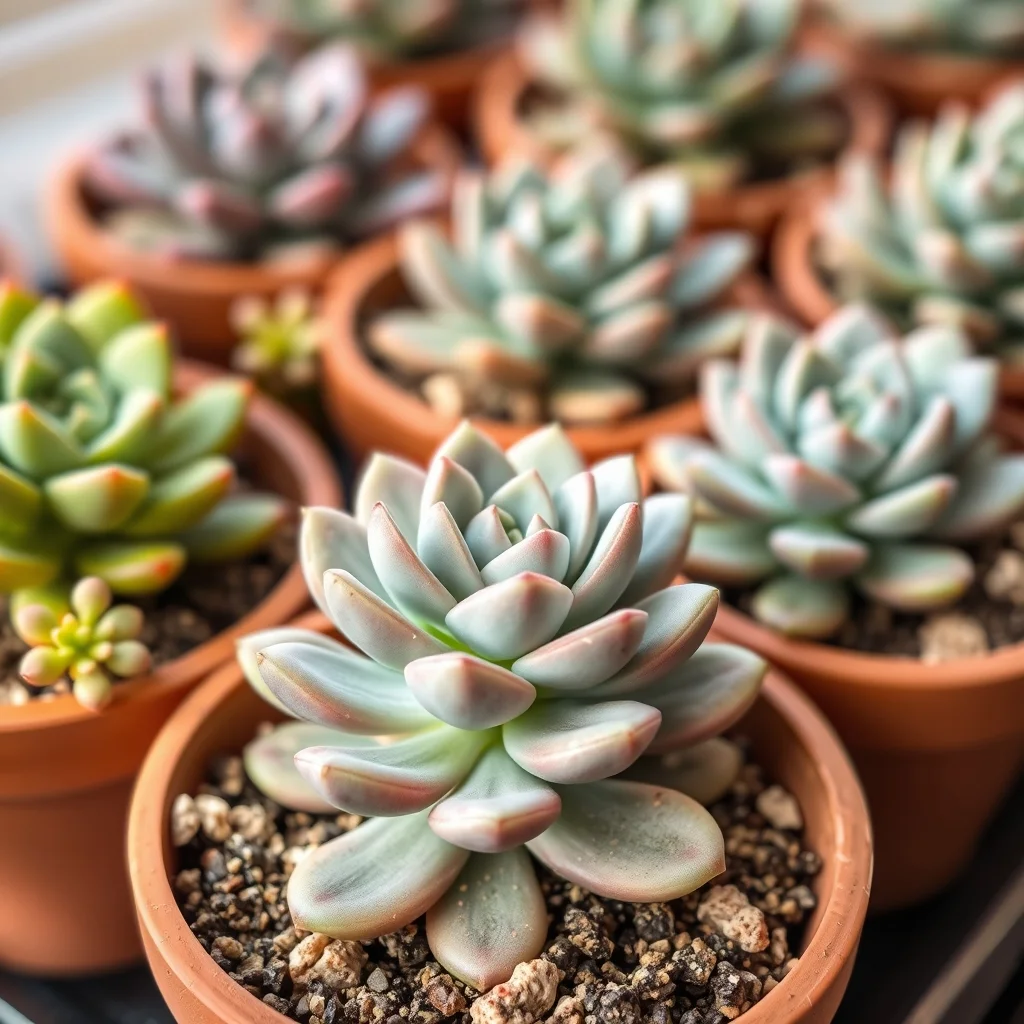
Why succulents work differently: the CAM mechanism
Succulents are adapted to environments where water is scarce and unpredictable. They store water in their leaves, stems, or roots, and most use a photosynthesis strategy called CAM (Crassulacean Acid Metabolism) that lets them keep their leaf pores (stomata) closed during the day to prevent moisture loss, opening them only at night to absorb CO₂.
This has a direct implication for care: succulents don't experience drought as a crisis the way most plants do. They're designed to cycle between thorough saturation and extended dryness. The pattern of "water thoroughly, then let the soil dry completely before watering again" isn't gardening folklore — it's matching the plant's native water rhythm. Keeping the soil consistently moist disrupts that rhythm and creates root rot conditions.
Light requirements: the spec most indoor growers underestimate
Succulents need significantly more light than typical indoor houseplants. Most species prefer 6+ hours of bright indirect or direct light per day. The brightest indoor positions — a south- or west-facing window in the northern hemisphere — are typically adequate for many species. Anything less than that tends to produce a condition called etiolation.
Recognizing etiolation
Etiolation is the plant's response to insufficient light: the stem stretches and elongates, reaching toward the light source, and the rosette or leaf spacing opens up dramatically. An etiolated plant looks like it's stretching itself thin — which it literally is. This is irreversible in the existing stem (the plant won't compact back once stretched), though new growth after improving light will return to normal proportions. If you see a compact Echeveria you bought starting to grow a tall, widely-spaced stem, it's not getting enough light.
Grow lights for indoor succulents
If your indoor light is genuinely insufficient (north-facing windows, interior rooms), a full-spectrum LED grow light compensates effectively. Succulents don't need specialist high-intensity grow lights — a decent 2000–4000 lumen LED panel on a 12–16 hour timer works well for maintaining compact growth. Position it 6–12 inches above the plants rather than using ambient room lighting, which is generally too diffuse.
Soil: why the standard mix usually fails
Standard potting soil is designed to retain moisture — which is exactly what you don't want for succulents. Even products labeled "cactus and succulent mix" at garden centers often contain peat or compost that holds moisture longer than succulents need. Many experienced growers amend commercial mixes before use.
What makes a good succulent mix
A fast-draining succulent mix should allow water to pass through quickly and the soil to dry out within a few days. The key ingredient is inorganic grit: perlite, pumice, coarse builder's sand (not fine play sand — fine sand actually increases water retention), or crushed granite. A workable ratio for most species is:
- 50% commercial potting mix (for organic nutrition and some water retention)
- 50% inorganic amendment: perlite, pumice, or coarse sand
Pumice is widely considered the best amendment — it's pH-neutral, extremely porous, and doesn't compact over time. Perlite is widely available and a good alternative. Coarse sand (not fine sand) works but is heavier. Avoid fine sand and vermiculite, which retain more moisture than ideal.
Shopping for succulents and supplies? Browse current eBay listings → (we earn a small commission; your price is unchanged).
Pots and drainage: non-negotiable
Every succulent container should have at least one drainage hole. This isn't a recommendation — it's a requirement. Without drainage, water accumulates at the pot's base, and the roots sit in saturated soil indefinitely. Root rot in those conditions is near-certain within weeks to months depending on how frequently you water.
Terracotta vs glazed ceramic vs plastic
Terracotta is the traditional choice for succulents, and for good reason: it's porous, which means moisture evaporates through the pot walls, reducing the risk of overwatering. The tradeoff is that terracotta dries out faster, which means more frequent watering is needed in hot weather or dry climates — a fine feature for experienced growers, but potentially tricky for beginners who forget to water.
Glazed ceramic looks similar to terracotta but is non-porous. It behaves like plastic for moisture retention — soil dries out only through the surface and drainage hole. This gives you more time between waterings but less margin for error if you water too frequently.
Plastic is the most water-retentive option. It's fine for succulents if you water infrequently — the risk is that it leaves almost no room for overwatering mistakes. Plastic is commonly used in commercial nursery production because it's cheap and light; it's not the best choice for beginners.
Pot size
Succulents do well slightly pot-bound. A pot that's only 1–2 cm larger than the plant's root ball dries out more quickly than an oversized pot (because there's less soil volume holding water). Resist the urge to pot into a large container for future growth — a generous pot stays wet too long between waterings.
Watering: the soak-and-dry method
The correct watering method for most succulents is soak-and-dry: water the soil thoroughly until water drains freely from the bottom, then wait until the soil is completely dry before watering again. "Damp" or "slightly moist" is not dry enough. The soil should feel powdery dry and pull slightly away from the pot walls.
The frequency varies dramatically by season, pot material, soil mix, and climate. In active summer growth, a terracotta pot with a gritty mix in a warm location might need watering every 7–10 days. The same plant in a plastic pot with standard potting mix might need watering every 3 weeks. There's no universal schedule — you check the soil, not the calendar.
Seasonal adjustment
Most succulents have a growth season and a dormant or slow-growth season. Many Echeverias, Sedums, and other common species are winter-growing or spring-active; Haworthias are often more tolerant of lower light and cooler conditions. During dormancy (often marked by slower growth and possible leaf loss), water significantly less — some growers stop watering almost entirely through winter months for outdoor-dormant species.
Buying live plants: what to look for
Whether buying from a local nursery or online, the same health indicators apply:
- Compact form: Tight, compact growth with evenly spaced leaves indicates adequate light history. Stretched, elongated growth signals prior light deprivation.
- Firm leaves: Healthy succulents have firm, plump leaves. Soft, translucent, or mushy leaves indicate overwatering. Shriveled, deflated leaves can indicate underwatering (a lighter problem) or root damage.
- No visible pests: Check for white cottony masses (mealybugs), sticky residue (scale or aphids), or tiny webs (spider mites), especially in the crevices between leaves.
- Root zone: If possible, check that the plant is rooted (not just a cutting placed in soil). Gently tug — a rooted plant resists. An unrooted cutting won't.
Buying online: what to expect
Online succulent orders typically ship bare-root (plants removed from soil for shipping). Upon arrival, let the roots air out for a few hours before potting. Don't water immediately — wait 3–5 days to let any damaged roots callous over before watering. This reduces the risk of rot at damaged root tips.
Shop succulents and supplies on eBay
Live plants, pots, and soil. We earn a small commission on qualifying sales; your price is unchanged. Full disclosure.
 Succulents live plants
Rooted individual plants and collections. Look for compact form and firm leaves in seller photos. Check packaging reviews.
View on eBay →
Succulents live plants
Rooted individual plants and collections. Look for compact form and firm leaves in seller photos. Check packaging reviews.
View on eBay →
 Succulent assortment lot
Mixed lots for variety. Verify whether plants are rooted or cuttings — the care protocol on arrival differs between the two.
View on eBay →
Succulent assortment lot
Mixed lots for variety. Verify whether plants are rooted or cuttings — the care protocol on arrival differs between the two.
View on eBay →
 Succulent pots drainage
Terracotta with drainage holes is ideal. Never plant succulents in pots without drainage. Confirm the listing shows drainage holes.
View on eBay →
Succulent pots drainage
Terracotta with drainage holes is ideal. Never plant succulents in pots without drainage. Confirm the listing shows drainage holes.
View on eBay →
 Succulent soil mix
Gritty fast-draining mixes with pumice or perlite. Amend standard mixes with 50% perlite if you can't source a dedicated gritty mix.
View on eBay →
Succulent soil mix
Gritty fast-draining mixes with pumice or perlite. Amend standard mixes with 50% perlite if you can't source a dedicated gritty mix.
View on eBay →
 Succulent cuttings live
Unrooted cuttings for propagation. Let the cut end callous 1–3 days before placing on dry gritty soil. Don't water until roots develop (2–4 weeks typically).
View on eBay →
Succulent cuttings live
Unrooted cuttings for propagation. Let the cut end callous 1–3 days before placing on dry gritty soil. Don't water until roots develop (2–4 weeks typically).
View on eBay →