A note on regulations before buying
Spearfishing regulations vary significantly by location, and the gear you choose should be legal where you dive. Most jurisdictions restrict spearfishing in freshwater, near swimming beaches, near marine reserves, and from SCUBA (many regions permit freediving but not scuba spearfishing). Some areas restrict certain species sizes or have seasonal closures. Check your state, provincial, or national fisheries authority before entering the water — fines are real and regulations change. This guide is about gear; you own the compliance step.
Spearguns vs pole spears: when each makes sense
The choice between a speargun and a pole spear is primarily about hunting style, target species, and environment rather than experience level. A pole spear is not inherently a beginner tool; experienced hunters use them in specific shallow-reef situations where their advantages outweigh the shorter range.
Spearguns
Spearguns fire a shaft (typically 6–8 mm stainless steel) via rubber bands stretched along the body. Most recreational guns are band-powered (sometimes called sling or rubber-powered). The shaft is retained by a reel, breakaway float, or attached shooting line. Range varies from 3–4 meters for a 60 cm gun to 7+ meters for a 130 cm gun, depending on bands and shaft weight.
Advantages: greater effective range, ability to take larger fish at distance, and the shaft can be shot from concealment without moving your body close to a wary fish. In water with moderate visibility (3–8 m), the range advantage matters significantly.
Pole spears
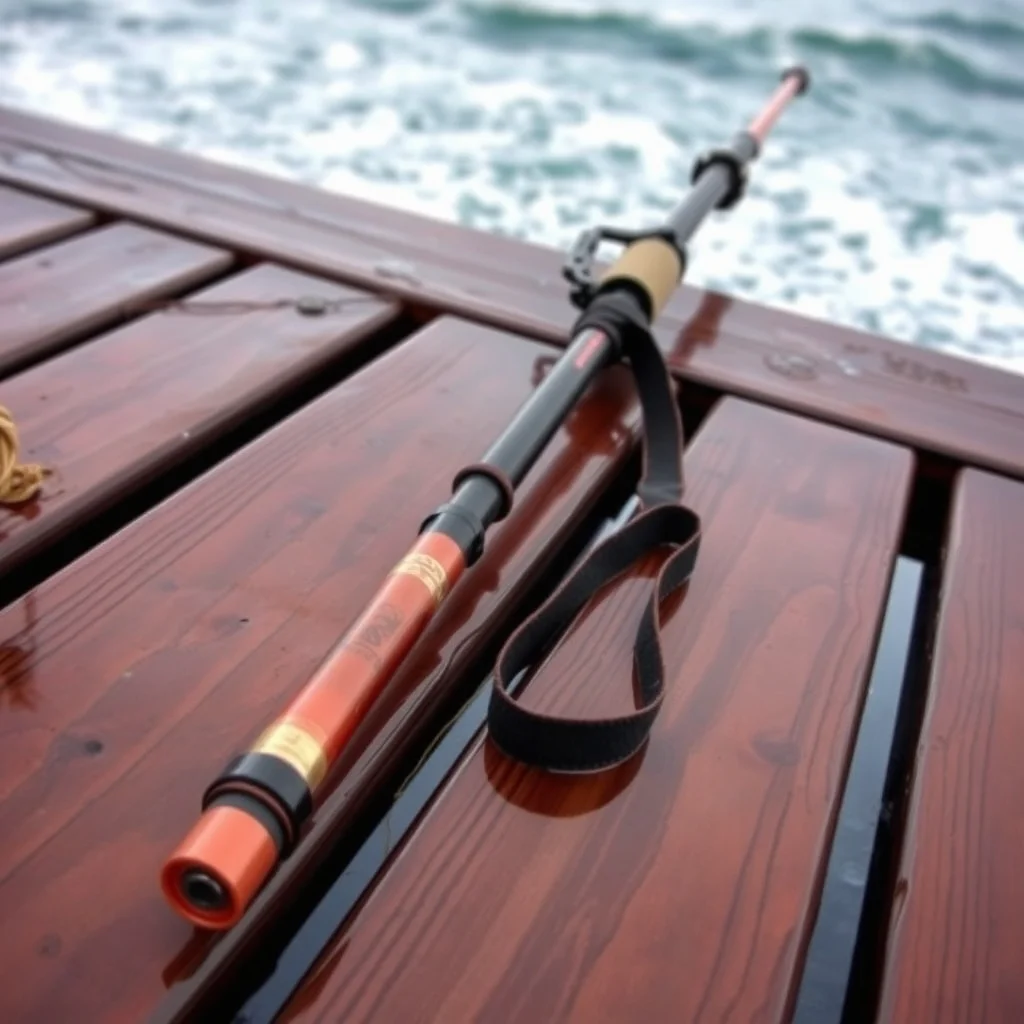
A pole spear is a fiberglass, carbon, or aluminum rod (typically 90–180 cm in three sections) with a rubber sling at the rear and a tip at the front. You pull the sling back, aim, and release. Effective range is 1–2 meters at most. Carbon pole spears are significantly faster and quieter in the water than fiberglass.
Advantages: simpler maintenance, no bands to replace or mechanisms to fail, and the low-tech approach develops patience and close-approach skills that transfer to everything else in spearfishing. Good for small-to-medium reef fish in shallow water where you're hunting by ambush from a coral head or rock ledge.
| Factor | Speargun (band-powered) | Pole Spear |
|---|---|---|
| Effective range | 3–7+ m depending on length | 1–2 m |
| Target size | Small to large | Small to medium |
| Visibility required | Less (range compensates) | More (must approach close) |
| Maintenance | Regular band replacement, shaft inspection | Minimal — tip replacement only |
| Cost range | $80–$600+ | $40–$200 |
| Best environment | Open reef, kelp, bluewater | Shallow reef, coral, rocky bottom |
Band-powered vs pneumatic spearguns
Pneumatic spearguns use compressed air rather than rubber bands to propel the shaft. They're more powerful at a given length than band guns, quieter (no band snap), and can be partially powered for precise shots. They're also more mechanically complex, require a pump to charge, and are less common on the secondary market.
For most recreational spearfishers, band-powered guns are the better choice: simpler, widely available used, and bands are cheap to replace. Pneumatics make more sense for hunters specifically targeting large pelagic fish who need maximum power from a shorter gun (for maneuverability), or those who want the power modulation a pneumatic provides when stalking spooky fish.
Choosing speargun length
Speargun length is measured along the body (not total shaft length). The practical rule: longer guns for open water and clearer visibility; shorter guns for reef, kelp, or low-visibility hunting where maneuverability matters more than range.
- 60–75 cm: Shallow reef, coral, ledges, and confined spaces. Good for beginners learning to hunt. Under 5 m visibility or under 5 m depth.
- 90–100 cm: The versatile middle ground. Good for 5–10 m visibility, reef systems, and a range of target species. Most used length in tropical and temperate reef hunting.
- 110–130 cm: Open water, deeper dives, larger fish. Requires more space to load (longer pull) and more experience to aim accurately. Used for kelp hunting and bluewater ambush.
Shopping for spearfishing gear? Browse current eBay listings → (we earn a small commission; your price is unchanged).
Wetsuit thickness and type
Spearfishing wetsuits differ from scuba wetsuits in an important way: freediving and spearfishing suits typically use open-cell neoprene on the inside (the surface that contacts your skin). Open-cell neoprene adheres to skin without a fabric liner, creating a better thermal seal at the cost of being more fragile and requiring lubrication (baby shampoo in water, or wetsuit lube) to put on.
Thickness guidelines by water temperature:
- 2–3 mm: Tropical and warm temperate (25°C / 77°F and above). Mainly sun and abrasion protection.
- 5 mm: Temperate water (18–24°C / 64–75°F). Standard for Mediterranean, California summer, Florida winter.
- 7 mm or two-piece (5 mm + 3 mm hood/jacket): Cold temperate (12–18°C / 54–64°F). Pacific Northwest, UK, New England, winter dives in temperate zones.
- 9 mm+ or drysuit: Sub-12°C water. Dedicated cold-water hunters.
Two-piece suits (long-john bottom + jacket with hood) provide a double layer over the torso and are preferred for colder water. The overlap at the core adds warmth where you lose heat fastest.
Freedive fins: blade material and length
Long-blade freedive fins generate efficient forward propulsion with a slow, wide kick — the opposite of the fast short kick used with scuba fins. The long blade acts as a lever, converting hip and knee movement into thrust. For spearfishing, they reduce oxygen consumption per meter of propulsion, which extends bottom time.
Fiberglass blades
The practical choice for most spearfishers. Fiberglass blades offer a good flex-to-stiffness ratio at a fraction of the cost of carbon. More forgiving on rocky entries and exits than carbon. Most dedicated spearfishing fins in the $150–$400 range use fiberglass blades.
Carbon fiber blades
Stiffer, lighter, and more responsive than fiberglass at the same stiffness rating. The performance advantage is real but marginal for recreational depths (under 15 m). Carbon blades are fragile against rocks and boat ladders. Worth the price for competitive freediving or hunters regularly working 15–30 m; overkill for shallow reef hunting.
Foot pocket fit
The foot pocket (the part your foot goes into) is as important as the blade. A poor-fitting foot pocket transfers energy inefficiently and causes blisters. Most reputable brands (Omer, Cressi, Mares, Beuchat) sell foot pockets and blades separately, allowing you to mix and match for fit. When buying used, check that the foot pocket fits your bare foot snugly without gaps at the heel — this is more important than brand matching.
Float lines and surface floats
A surface float with a dive flag marks your position to boat traffic and gives you a place to secure caught fish. In most jurisdictions, a dive flag (the red-and-white "diver below" flag in the Americas, alpha flag in international waters) is legally required. Float lines attach the float to you or your gun.
Float line length is typically 10–20 m for reef hunting and 25–50 m for bluewater hunting where fish may run. Bungee-core float lines are preferred — they absorb the shock load when a fish makes a run rather than transferring the full jerk to you or your gun's reel. Coiled lines reduce drag while descending. Plain paracord is an emergency backup, not a substitute.
Common beginner mistakes
- Buying too long a gun for the conditions. A 130 cm gun in a kelp bed or reef system is difficult to maneuver and often leads to lost fish. Match length to visibility and environment first.
- Skipping the wetsuit for warm water. Even in 28°C water, a 2mm suit protects against cuts on coral, stings, and abrasion against the bottom. Hunt unprotected and one reef scratch can end the trip.
- Using scuba-style short fins. Short fins require 3–4x more kick cycles to cover the same distance. The oxygen expenditure is significant when freediving. Long-blade fins are not optional for serious spearfishing.
- No float or dive flag. In boat traffic areas, this is both a safety risk and frequently illegal. A 6 m orange buoy makes you visible; a dive flag makes you legal.
Search eBay for spearfishing gear
 Spearguns
Band-powered guns from 60–130 cm. Filter by length for your target conditions.
Spearguns
Band-powered guns from 60–130 cm. Filter by length for your target conditions.
 Freediving Fins
Long-blade fiberglass and carbon fins. Check foot pocket sizing carefully when buying used.
Freediving Fins
Long-blade fiberglass and carbon fins. Check foot pocket sizing carefully when buying used.
 Spearfishing Wetsuit
Open-cell neoprene freediving suits. Match thickness to your water temperature range.
Spearfishing Wetsuit
Open-cell neoprene freediving suits. Match thickness to your water temperature range.