
Recipe development without the chemistry degree
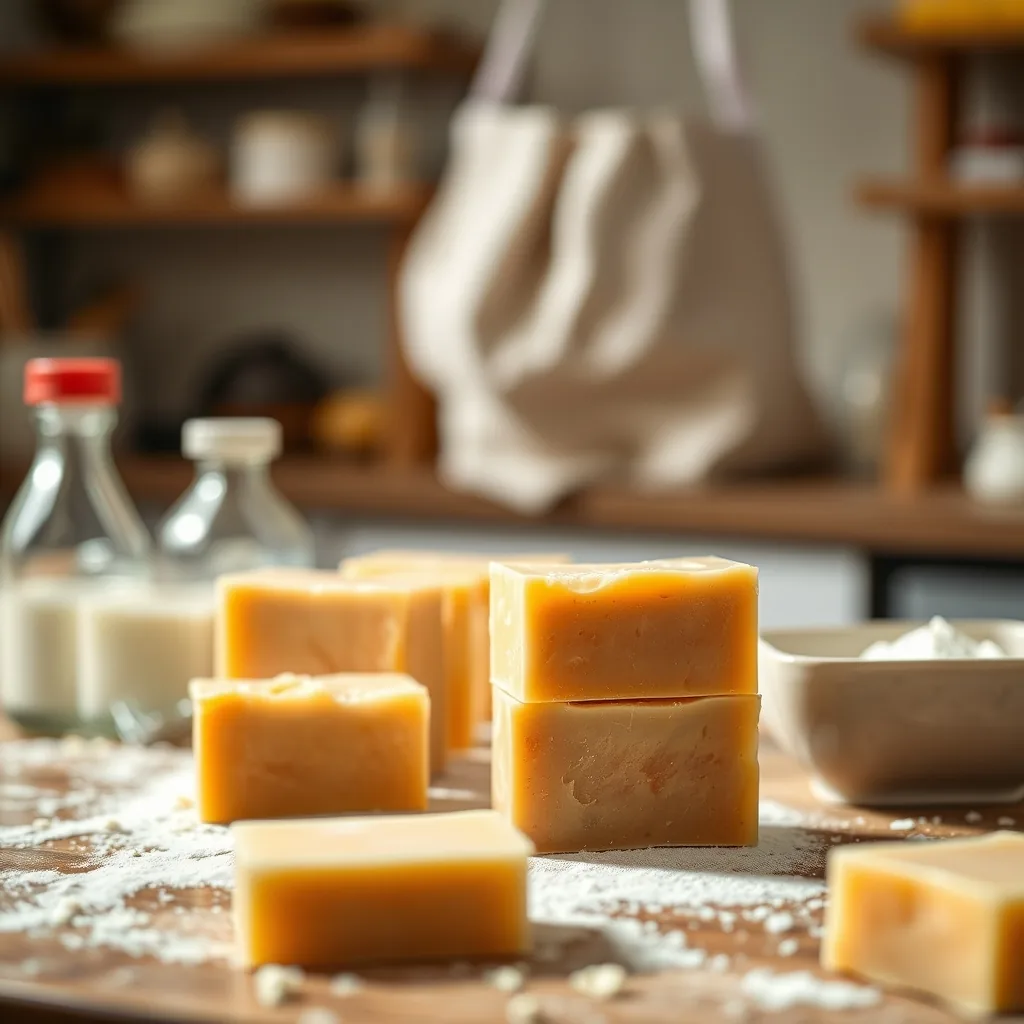
The 4-oil base formula that produces consistent, sellable bars. How to test variations without wasting batches. Why most 'advanced' recipes are marketing.

Soap makers spend disproportionate time on recipe development. There's a category of online content that suggests soap quality depends on 8-12 oils in precise ratios, exotic ingredients, and elaborate "signature blends." Most of this is marketing.
The honest reality: 90% of artisan soap is variations on one 4-oil base. Master the base. Add ingredients that earn their cost. Skip the rest.
The 4-oil base
| Oil | Percent | What it does |
|---|---|---|
| Olive oil | 40% | Mildness, slow lather, conditioning |
| Coconut oil | 25% | Hard bar, fast bubbly lather, cleansing |
| Palm oil OR lard OR tallow | 25% | Hardness, structure, creamy lather |
| Castor oil | 10% | Lather boost, slip, glide |
Total: 100%. Superfat: 5-7%. Water: 33-38% of oil weight. Lye: calculated by saponification values (use a lye calculator like SoapCalc or Bramble Berry's).
This recipe produces:
- A bar that's hard enough to last 3-4 weeks of daily use
- Fast initial lather (the coconut)
- Creamy sustained lather (the palm/lard/tallow)
- Mild on skin (the olive base)
- Smooth slip and easy rinse (the castor)
The result is a perfectly competitive artisan soap bar. Variations on this base account for most of the bars selling at $8-12 at farmers markets.
Why this recipe wins
Three reasons the 4-oil base outperforms "advanced" recipes:
- Predictable trace behavior. Mixed oils with high oleic acid (olive) and high lauric/myristic (coconut) reach trace consistently within 8-12 minutes of mixing. Recipes with exotic oils have unpredictable trace times that ruin design windows.
- Forgiving on temperature. The base recipe works at oil temps 95-130°F. Recipes heavy in shea or unusual oils have narrower temperature windows.
- Cost-effective at scale. The 4 oils are all under $4/pound bulk. Recipes with avocado oil ($7/lb), mango butter ($9/lb), or argan ($25/lb) push material cost above what wholesale margins support.
Variations that actually matter
Three variation directions worth testing:
Conditioning bar (sensitive skin)
Reduce coconut to 18%. Increase olive to 50%. Add shea butter 7%. The reduced coconut means slower-building lather but less "stripping" feel. Markets well for "sensitive skin" and "baby" lines.
Hard, fast-lathering bar (gym/active)
Increase coconut to 35%. Add palm kernel oil 10%. Reduce olive to 30%. Result: harder bar, bigger bubbly lather, faster cleansing. Markets to athletic/active customer.
Long-cure premium bar
Use 60% olive, 20% coconut, 15% palm, 5% castor. Cure 8 weeks instead of 4. Marketing positioning: "extended cure for mildness." Real benefit: very mild, very long-lasting bar. Real cost: doubled inventory carrying time.
The "specialty oils" trap
Avocado oil. Argan oil. Hemp seed oil. Coffee bean oil. Almond oil. Apricot kernel oil. Each one has a story. Each one is expensive. Few of them measurably improve the finished bar.
The reality: most specialty oils show up in soap at 3-7% of the recipe — too little concentration to meaningfully affect the bar's properties. They show up on the ingredient list as a marketing claim. The bar performs the same as the base recipe.
Honest verdict on specialty oils:
- Worth adding (functional difference): Shea butter (creaminess), castor oil (lather), neem oil (specific therapeutic claim in tiny amounts)
- Worth adding for marketing only: Hemp seed oil, avocado oil, almond oil (recognizable consumer names)
- Skip: Argan ($25/lb is impossible to justify at 5%), tamanu, sea buckthorn (specialty oils that customers don't recognize but cost a lot)
Fragrance: where the real differentiation lives
Customers buy soap by smell, not by oil profile. Two bars from the same base recipe with different fragrances are perceived as two completely different products.
The fragrance decision tree:
| Type | Cost per bar | Notes |
|---|---|---|
| Essential oil only | $0.40-0.90 | "Natural" positioning, narrower scent range, fade faster in cured bar |
| Fragrance oil only | $0.20-0.45 | Broader scent options, longer-lasting in bar, "synthetic" perception |
| EO + FO blend | $0.30-0.60 | Best of both — natural-leading scent profile with FO base for longevity |
| Unscented | $0.00 | "Sensitive skin" positioning, no marketing-driver, lower price acceptance |
The test-batch method
How to test recipe variations without wasting batches:
- Make a base batch (2 pounds of oil — 8 bars)
- Divide into 4 separate 4-bar containers BEFORE adding fragrance
- Each container gets a different fragrance/additive variation
- Pour 4 different molds. Cure 6 weeks normally.
- Test which performs best on lather, scent retention, and customer feedback
This produces 4 simultaneous tests for the cost of one batch. Much faster than running 4 separate batches over 6 months.
When to stop developing and start selling
Recipe development is an infinite well. New oils, new fragrances, new techniques. Most soap businesses fail to launch because they're still "perfecting" the recipe three years in.
The honest threshold: if you can make 3 batches in a row that come out consistent, you have a recipe. Start selling. Iterate based on customer feedback, not based on theoretical improvements.


