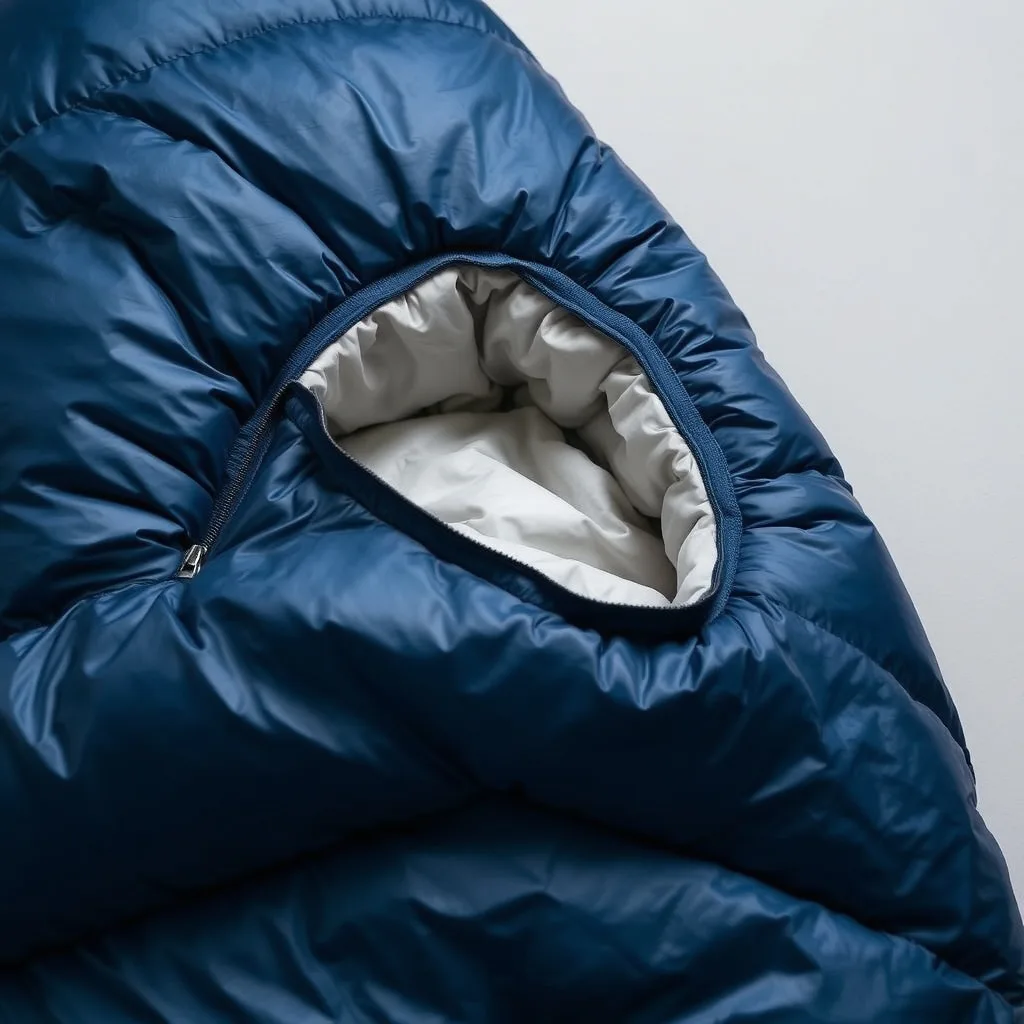
Temperature ratings: comfort vs lower limit
Modern sleeping bags sold in the US and Europe are typically rated using the EN 13537 or ISO 23537 standard, which produces three published temperatures: comfort, lower limit, and extreme.
- Comfort rating — the temperature at which a standard woman (used in the test because women typically sleep colder) can sleep comfortably in a relaxed position. This is the most relevant number for recreational camping.
- Lower limit — the temperature at which a standard man can sleep in a curled position for eight hours without waking from cold. Men typically sleep warmer, so this number is colder than the comfort rating by roughly 10–15°F on most bags.
- Extreme rating — a survival limit. At this temperature, the standard test woman is at risk of hypothermia. Not a number to camp at intentionally.
Many manufacturers advertise the lower limit or a single aggregated number that falls between lower limit and comfort. When comparing bags, check which number you're looking at. A bag labeled "20°F" that uses the lower limit has a comfort rating of roughly 28–35°F — you'll likely feel cold at 25°F.
Down vs synthetic fill
Down fill
Down is the undercoating of waterfowl — goose or duck — and provides the best warmth-to-weight ratio of any insulation currently available. The key metric is fill power, measured in cubic inches per ounce. A higher fill power means the down lofts more per ounce, trapping more air and providing more warmth per unit of weight.
| Fill power | Category | Notes |
|---|---|---|
| 550–600 | Entry-level down | Good warmth; heavier and bulkier for the rating; often found in budget and car-camping bags |
| 650–700 | Mid-range down | Good balance of cost, weight, and packability; appropriate for most backpacking use |
| 750–850 | Premium down | Meaningfully lighter and more compressible; cost premium starts here |
| 900+ | Ultra-premium | Highest warmth-to-weight; diminishing returns above 900FP; seen in expedition and ultralight bags |
Down's weakness is moisture. Wet down collapses and loses most of its insulating value. Modern hydrophobic down treatments (sold under brand names like DriDown, Nikwax Hydrophobic Down, and DownTek) add a water-resistant coating to down clusters, slowing moisture absorption significantly. If you frequently camp in wet conditions, hydrophobic-treated down is worth the modest cost premium.
Synthetic fill
Synthetic insulation — polyester fibers engineered to mimic down's structure — retains most of its warmth when wet, dries faster, and costs less than equivalent down for a given temperature rating. The trade-offs are weight and packed size: a synthetic bag rated to the same temperature as a premium down bag will typically weigh 20–40% more and pack larger.
Synthetic is a good choice for trips with significant moisture exposure (kayak camping, humid jungle environments, or any scenario where the bag is likely to get wet), for car camping where weight is irrelevant, and for children's gear where cost is a primary concern.
Shopping for sleeping bags? Browse current eBay listings → (we earn a small commission; your price is unchanged).
Bag shape: mummy, semi-rectangular, and rectangular
Mummy shape
A mummy bag tapers from shoulder width to a narrower foot box, following body contours. The tapered cut minimizes dead air space — air your body has to heat but that isn't directly against you — making mummy bags significantly warmer for their weight than roomier alternatives. An insulated hood that seals around your head is standard on mummy bags; your head is responsible for substantial heat loss in cold conditions.
Mummy bags are the appropriate choice for any bag rated below 40°F and for all backpacking use where weight and packed size matter. Some people find the snug fit claustrophobic; if you're a restless sleeper, a semi-rectangular may be worth the weight penalty.
Semi-rectangular (barrel) shape
A compromise between warmth efficiency and sleeping room. More insulation-efficient than rectangular, less so than mummy. Appropriate for 3-season car camping and trips where temperatures won't drop below freezing but you want more room to move.
Rectangular shape
The most room, the least warmth efficiency. Fine for summer camping in stable temperatures, youth camps, and car-camping scenarios where you might unzip and use it as a blanket. Not appropriate for cold weather use — the excess dead air space makes these very hard to warm up.
The sleeping pad variable
A sleeping bag's temperature rating assumes an adequate sleeping pad underneath it. When you lie on a sleeping bag, you compress the insulation against the ground, eliminating its loft and nearly all its insulating value on that side. Warmth from the ground up comes entirely from your sleeping pad's R-value.
Pair sleeping bag temperature rating with sleeping pad R-value:
- Summer (above 40°F): R-value 1–2
- 3-season (20–40°F): R-value 3–4
- Cold weather (0–20°F): R-value 4–6+
- Winter / alpine (below 0°F): R-value 6+ (often stacked pads)
Weight and packed size targets for backpacking
For a 3-season bag rated to 20–30°F comfort:
- Premium down (800+ FP): 1.5–2.2 lbs, compresses to roughly 5–7 liters
- Mid-range down (650–750 FP): 2–2.8 lbs, 7–9 liters
- Synthetic: 2.5–3.5 lbs, 10–14 liters
For car camping, weight is irrelevant. Prioritize comfort temperature, shape preference, and whether you need synthetic durability over down's compressibility.
Key mistakes to avoid
- Reading the lower limit as a comfort target — you'll be cold
- Buying the lightest bag rated to your expected low temperature without adding margin
- Choosing rectangular shape for below-freezing use
- Neglecting pad R-value — a warm bag on a cold pad means cold sleep
- Storing down bags compressed — always hang or stuff loosely to preserve loft over time
- Not accounting for personal sleep temperature — cold sleepers need a bag rated 15–20°F colder than the expected low
Find sleeping bags on eBay
We earn a small commission on qualifying sales; your price is unchanged. Full disclosure.
 Down sleeping bag
Best warmth-to-weight; check fill power and hydrophobic treatment.
View on eBay →
Down sleeping bag
Best warmth-to-weight; check fill power and hydrophobic treatment.
View on eBay →
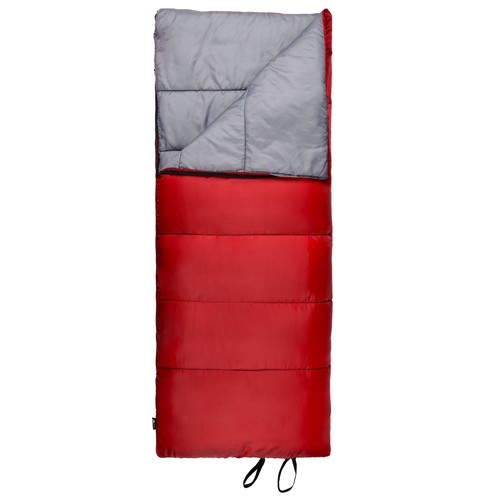 Backpacking sleeping bag
Trail-optimized; mummy shape; target under 2 lbs for 3-season.
View on eBay →
Backpacking sleeping bag
Trail-optimized; mummy shape; target under 2 lbs for 3-season.
View on eBay →
 Cold weather sleeping bag
Rated 15°F and below; draft collar matters in true cold.
View on eBay →
Cold weather sleeping bag
Rated 15°F and below; draft collar matters in true cold.
View on eBay →
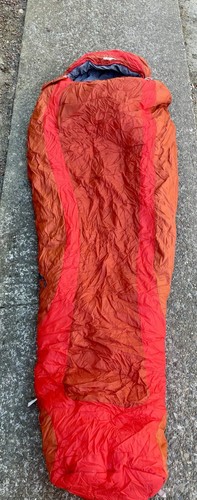 Sleeping bag 0 degree
0°F lower limit; pair with R-value 4+ sleeping pad for winter use.
View on eBay →
Sleeping bag 0 degree
0°F lower limit; pair with R-value 4+ sleeping pad for winter use.
View on eBay →
 Mummy sleeping bag
Tapered cut; insulated hood; best warmth efficiency below 40°F.
View on eBay →
Mummy sleeping bag
Tapered cut; insulated hood; best warmth efficiency below 40°F.
View on eBay →