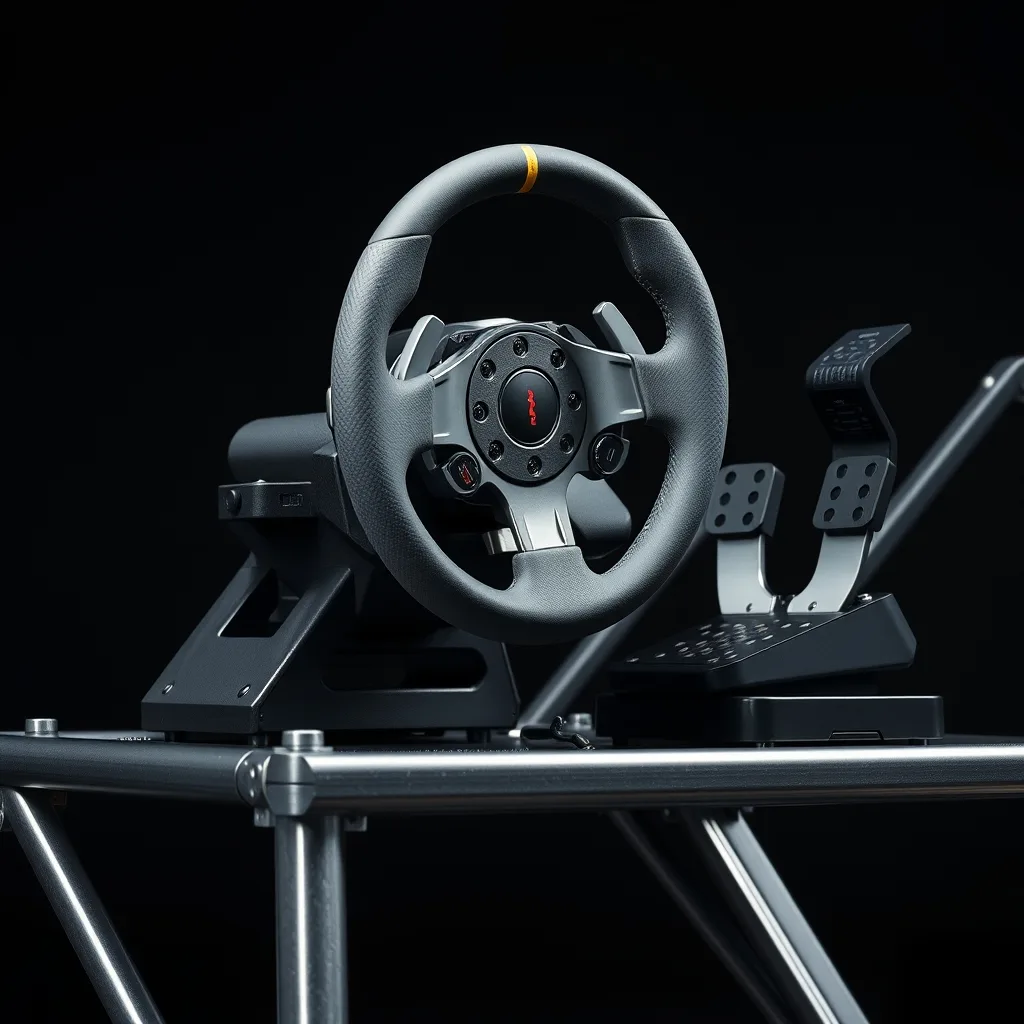
Wheel base technology: gear, belt, and direct drive
The wheel base is the motor unit that generates force feedback. The connection between the motor and the steering shaft determines the character of the feedback you feel.
Gear-driven bases
Budget wheel bases use a gear system to amplify motor torque. They're typically the least expensive option (Logitech G923, older Thrustmaster models). The trade-off is gear noise and a "notchy" feeling in the feedback — gears create small detents as they engage. Force feedback nuance is also limited by gear friction. These bases top out around 3–5 Nm of wheel torque. Fine for getting started, but their ceiling is apparent within a few hundred hours of seat time.
Belt-driven bases
Belt-driven bases (Thrustmaster T300/T500, many Fanatec bases) transmit motor torque via a belt, which is quieter and smoother than gears. The belt absorbs vibration and provides a more analog feel. Torque typically ranges from 4–8 Nm. Belt bases represent the mid-range sweet spot — meaningfully better feel than gear drives, at a manageable price point. They hold up well for regular competitive sim racing.
Direct drive bases
Direct drive bases eliminate the drivetrain entirely: the motor shaft is the steering shaft. The result is the most accurate, low-latency force feedback possible — the sim's physics data reaches your hands with minimal mechanical filtering. Torque ranges from 8 Nm (entry-level DD) to 25+ Nm (high-end). Key brands include Fanatec (DD Pro, DD1/DD2), Moza (R5, R9, R12, R21), Simagic (Alpha, Alpha Mini), and Simucube (2 Sport/Pro/Ultimate).
More torque doesn't automatically mean better — high-torque direct drive bases require proper motor tuning (in-game and in driver software) to avoid violent oscillations. 8–12 Nm is more than enough for most drivers; 15–25 Nm is for specific use cases (large-diameter steering wheels, open-wheeler setups, and maximum immersion).
| Type | Typical torque | FF quality | Noise | Price range |
|---|---|---|---|---|
| Gear drive | 3–5 Nm | Basic | Noticeable | $ |
| Belt drive | 4–8 Nm | Good | Low | $$ |
| Direct drive (entry) | 8–12 Nm | Excellent | Very low | $$$ |
| Direct drive (high-end) | 15–25 Nm | Excellent | Near silent | $$$$ |
Pedals: the upgrade that matters most
If you're currently using the stock pedals that came with a budget wheel, upgrading them before the wheel base is the highest-impact improvement you can make. The reason is the brake pedal specifically.
Potentiometer brake pedals
Standard pedals use a potentiometer — they measure how far the pedal travels (position). The problem: braking in a real car is primarily about force applied, not travel. Real brake pedals barely move under maximum braking force. Stock potentiometer pedals reward pushing through the travel range rather than applying threshold force, which trains incorrect braking habits and makes consistent brake modulation harder.
Load-cell brake pedals
Load-cell brakes measure pressure (force) rather than position. They're stiffer — often with adjustable stiffness via foam inserts or springs — and respond to pressure the way a real brake system does. The learning curve is real: you typically apply more force on a load-cell brake than you expect. But once calibrated and learned, lap time consistency improves meaningfully.
Shopping for sim racing gear? Browse current eBay listings → (we earn a small commission; your price is unchanged).
Entry-level load-cell upgrades include the Fanatec CSL Pedals load-cell kit, Moza CRP Pedals, and Thrustmaster T-LCM. Mid-range options like the Heusinkveld Sprint and Simucube Pedals step up significantly in build quality. High-end pedals from Heusinkveld Ultimate and Asetek Simsports use servo motors for programmable pedal feel.
Cockpit and rig: rigidity is the spec
Force feedback through a wheel base that's mounted to a flexible desk or cheap stand is partially wasted — the flex absorbs some of the feedback before it reaches your hands, and the visual shake of the screen is distracting. A rigid rig brings the entire setup into a fixed reference frame.
Wheel stands
A wheel stand holds the wheel base and pedal tray in a freestanding configuration. They're more compact than full cockpits and cheaper. The key limitation is flex: stands with thin tubing or insufficient cross-bracing flex noticeably under hard braking and high-torque force feedback. Next Level Racing's Wheel Stand Lite, Playseat Challenge, and similar options work fine for belt-drive and entry-level direct drive; they struggle with high-torque DD bases.
Full cockpit rigs
Cockpit rigs use extruded aluminum profiles (80/20-style) or welded steel tubing to create a rigid frame that mounts the wheel base, pedals, seat, and monitor simultaneously. No flex, fixed seating position, and monitor/screen relationship stays constant. Aluminum extrusion rigs (SimLab, Trak Racer, Next Level Racing GT Lite) allow configuration; steel tube rigs (Playseat, Omega) are more affordable but less adjustable.
The seating position matters for realism and comfort. GT-style rigs place the driver in a road-car-like position (relatively upright). Formula/open-wheeler rigs place the driver reclined, with legs elevated — closer to an F1 seating position. Most people use GT-style unless they specifically race open-wheel sims.
Force feedback: how it actually works
Force feedback in sim racing works by translating physics data from the simulation into torque commands sent to the wheel base motor. The sim calculates tire forces, surface texture, curb impacts, and self-aligning torque — all in real-time — and converts those forces to a torque value that the wheel base applies.
The quality of force feedback is therefore a function of: the sim's physics model, the FFB software stack and how it translates physics to torque, and the wheel base's ability to deliver that torque accurately and with low latency. Direct drive bases excel at the last point — they can follow torque commands rapidly with minimal lag. Belt-drive bases are slightly slower due to belt stretch and mechanical inertia.
Key FFB settings to understand
- Overall FFB strength/gain: Scales all forces up or down. Too high causes clipping (forces hit the motor's maximum and information is lost); too low means weak feedback. Set to avoid clipping with peak forces.
- Self-aligning torque (SAT): The dominant force — this is the steering returning to center as the tire's contact patch generates restoring force. Understanding SAT is understanding what FFB is primarily communicating.
- Damping and friction: Artificial weight added to the wheel. Useful for wheel control; too high masks tire information.
- Minimum force: Compensates for belt/gear deadzone in non-DD bases. DD bases typically don't need this.
Platform compatibility: check before buying
Wheel base compatibility is platform-specific and not universal:
- Logitech G29 works on PC and PlayStation; G923 adds Xbox support for some models.
- Thrustmaster T300RS is PlayStation/PC; T150 adds Xbox on some revisions.
- Fanatec bases work across platforms but often require platform-specific wheel rims (ClubSport steering wheel hubs vary by platform).
- Moza, Simagic, and Simucube are primarily PC; console compatibility is limited or absent.
If you're on console, verify platform compatibility before purchasing. The used market on eBay frequently lists console-compatible gear — check listing details or seller notes for platform specification.
Building tier by tier
Entry setup: Belt-drive wheel (Thrustmaster T300 or similar), pedal upgrade to load-cell brake (third-party or OEM upgrade kit), wheel stand. Total: solid sim racing platform that develops real skill.
Mid-range: Direct drive base (Moza R9 or Fanatec DD Pro), 3-pedal load-cell set, aluminum extrusion cockpit (SimLab or Trak Racer), sim racing seat. This is where most serious competitive sim racers end up long-term.
High-end: High-torque DD base (Moza R21, Simucube 2 Pro), full load-cell or servo pedals (Heusinkveld Sprint or Ultimate), rigid cockpit, triple monitor or ultrawide/VR. Diminishing returns after mid-range for most drivers — the hardware ceiling exceeds what driver skill typically demands.
Shop sim racing gear on eBay
We earn a small commission on qualifying sales; your price is unchanged. Full disclosure.
 Sim Racing WheelBelt and gear-drive wheels for all platforms
Direct Drive Wheel BaseFanatec, Moza, Simagic, Simucube bases
Sim Racing WheelBelt and gear-drive wheels for all platforms
Direct Drive Wheel BaseFanatec, Moza, Simagic, Simucube bases
 Load-Cell PedalsHeusinkveld, Moza CRP, Fanatec CSL
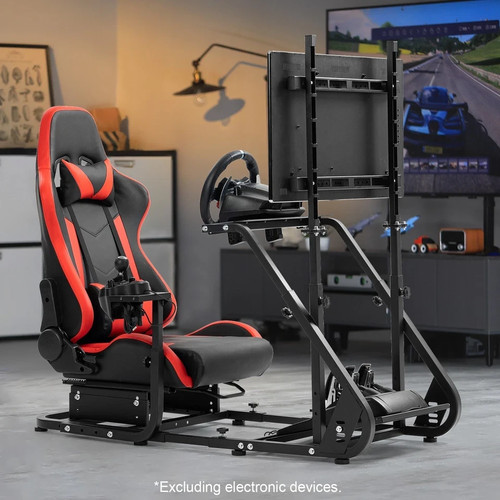 Sim Racing Cockpit RigSimLab, Trak Racer, Next Level aluminum rigs
 Racing Wheel StandCompact freestanding mounts for belt-drive