First scuba gear: the honest sub-$500 starter
Mask, snorkel, fins, dive computer, regulator setup — the honest priority order with the gear that lasts 10+ years.
Brand-new scuba divers face an inverted priority chart. The dive shop pitches you on a top-end BCD and regulator package ($2,000+). What you actually need to buy first is what touches your face, your feet, and your wrist — and renting the rest until you know what kind of diver you'll become.
Here's the honest priority order with the budget that gets you 95% of the way there.
The four things to buy first
1. Mask ($80-150)
Your mask is the most important piece of personal gear. A bad mask leaks, fogs, or pinches. Cheap rental masks fail at all three. Your own mask, fit properly, makes the difference between a fun dive and a miserable one.
Fit test: hold the mask against your face without the strap. Inhale gently through your nose. The mask should seal and stay put. If it falls or leaks, it doesn't fit your face shape. Try a different model.
Recommended starting masks: Cressi Big Eyes Evolution ($90), Atomic SubFrame ($150), Mares X-Vision ($100). All low-volume designs, easy to clear, good peripheral vision.
2. Snorkel ($25-45)
Almost any snorkel works. The differentiator is the purge valve (helps clear water with a hard exhale) and the dry-top (keeps water out at the surface). Cressi Supernova ($35) covers both.
3. Fins ($120-200)
Open-heel fins with neoprene booties beat full-foot fins for most diving — easier entries, warmer feet, more versatile. Stick with strap fins.
Power-vs-effort tradeoff matters here. Split fins (Atomic Aquatics SplitFins, $220) are easier on the legs but slower to maneuver. Paddle fins (Scubapro Jet Fin clones, $90-130) move more water but require stronger kicks. For most new divers, mid-stiffness paddle fins like Cressi Pro Light ($90) are the right answer.
4. Dive computer ($300-500)
This is where you spend real money first. A dive computer monitors depth and bottom time and tells you your no-deco limits in real time. It replaces tables and dive planning. Once you've used one, diving without one feels primitive.
Recommended entry computers:
- Suunto Zoop Novo ($240): cheap, reliable, button-controlled. Works.
- Mares Smart ($330): better screen, intuitive interface, replaceable batteries.
- Shearwater Peregrine ($430): step up to color screen, larger numbers. Worth it if budget allows.
Total starter kit
| Item | Recommended | Cost |
|---|---|---|
| Mask | Cressi Big Eyes Evolution | $90 |
| Snorkel | Cressi Supernova | $35 |
| Fins + booties | Cressi Pro Light + booties | $150 |
| Dive computer | Suunto Zoop Novo | $240 |
| Total | $515 |
What to rent for now
Rent the BCD, regulator, and tanks for your first 20-30 dives. Reasons:
- BCDs and regs cost $700-2000 new. Renting at $30-50 per dive day is cheaper for under 30 dive-days.
- What you "want" in a BCD changes once you've dived in different conditions. Wing vs jacket, weight integration, pocket layout — these preferences develop with experience.
- Regulators need annual service ($60-120). Rented regs are someone else's problem.
The exception: if you dive 20+ days per year, BCD and regs pay back within 2-3 seasons.
BCD buying when you're ready
When the math justifies buying:
| BCD type | Use case | Price |
|---|---|---|
| Travel jacket (lightweight) | Vacation diving, warm water | $400-600 |
| Standard jacket | Recreational, mixed | $500-800 |
| Back-inflate | Better trim, more advanced | $500-900 |
| BP&W (backplate and wing) | Tech diving, customization | $400-1200 |
For recreational divers, a back-inflate BCD like the Scubapro Hydros Pro ($700) or Cressi Tussa ($350) covers everything. Wing systems are for divers heading toward technical or sidemount diving.
Regulator buying when you're ready
The honest tier:
| Regulator | Type | Price |
|---|---|---|
| Apeks XTX50 | Balanced, cold-water capable | $500-650 |
| Scubapro MK25 EVO/G260 | Balanced, premium | $700-900 |
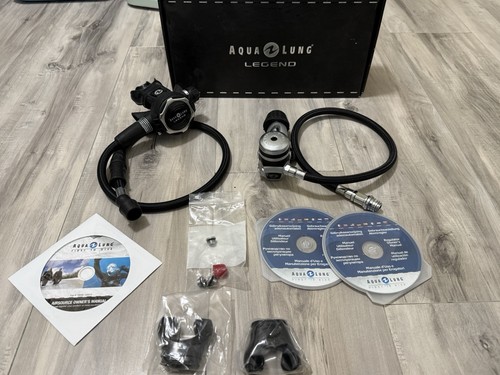
| Aqualung Core | Mid-range, warm water | $400-550 |
For most divers, the Apeks XTX50 is the right answer. Cold-water rated (because mid-Atlantic shipwreck diving is cold), balanced (consistent breathing at depth), and well-serviced everywhere.
Wetsuit buying
Wetsuits wear out faster than other gear, so buying used isn't ideal unless you find one that fits.
| Water temp | Thickness |
|---|---|
| 80°F+ | 3mm or shorty |
| 70-80°F | 3mm full |
| 60-70°F | 5mm full + hood |
| 50-60°F | 7mm full + hood + boots + gloves |
| under 50°F | Drysuit territory |
For someone diving the mid-Atlantic, a 5mm full wetsuit ($200-350) is the right starting point. Add a 3mm shorty for warmer destinations.