
Battery interoperability: what it actually means
Every major brand uses a proprietary battery connector. A DeWalt 20V Max battery will not fit a Milwaukee M18 tool, and vice versa. Within a platform, however, every tool is battery-compatible — a DeWalt 20V Max 5Ah battery (DCB205) powers a drill, a circular saw, a reciprocating saw, a chainsaw, and an outdoor blower all from the same battery pack. That's the value proposition.
The four major 18V-class platforms in North America are:
- DeWalt 20V Max (technically 18V nominal; 20V is the no-load peak voltage — same thing)
- Milwaukee M18
- Makita 18V LXT
- Ryobi 18V One+
Bosch 18V CORE18V and Craftsman V20 are viable but have narrower North American tool catalogs. Flex, Metabo, and Hilti compete in the pro segment but at premium pricing and limited retail availability.
Run-time math: what Ah actually means
Amp-hour (Ah) is the fuel gauge for a battery pack. A 5Ah battery delivers twice the run-time of a 2.5Ah battery in the same tool, under the same load. The math is straightforward: if a circular saw draws 10A continuous and you have a 5Ah battery, the theoretical maximum run is 30 minutes (5Ah ÷ 10A = 0.5 hours). Real-world figure is somewhat less due to heat, internal resistance, and the battery's protection circuitry cutting off before full depletion.
The common battery sizes in current production:
| Capacity | Typical weight | Best use case |
|---|---|---|
| 2.0 Ah | ~0.6 lb | Light tools (trim nailer, light drill) where ergonomics matter most |
| 4.0–5.0 Ah | ~1.3–1.5 lb | General purpose — the sweet spot for most combination kits |
| 6.0 Ah | ~1.7 lb | Extended sessions: framing, demo work, grinding |
| 8.0–9.0 Ah | ~2.0–2.2 lb | High-draw tools: circular saw, grinder, mower |
| 12.0 Ah | ~2.8 lb | Outdoor equipment and sustained high-current applications |
The key insight: a 5Ah battery from one brand is roughly equivalent in energy to a 5Ah battery from another brand at the same nominal voltage. The difference lies in internal cell quality (Milwaukee uses Samsung and LG cells in their High Output packs; DeWalt uses Sony/Murata cells in FlexVolt), charge retention over time, and how aggressively the battery management system (BMS) throttles under sustained high-current draw.
Brushless vs brushed motors: the difference that matters
This distinction comes up constantly in tool marketing and deserves a precise explanation rather than the usual "brushless is better" summary.
A brushed motor uses physical carbon brushes pressing against a commutator ring to deliver electrical current. The brushes wear over time (typically 100–200 hours in a drill), generate friction heat, and produce electrical noise. They are cheaper to manufacture.
A brushless (BLDC) motor eliminates the brushes entirely. Electronic commutation is handled by the tool's onboard controller using signals from hall-effect sensors or back-EMF detection. The practical results:
- 15–25% more run-time per charge — less energy lost to friction and heat
- Longer tool lifespan — no brushes to replace, less heat stress on windings
- Higher power density — more torque from the same physical motor size
- Electronic feedback control — brushless tools can modulate power based on load (a drill driving a screw senses the resistance and adjusts current)
The trade-off is cost: a brushless drill typically runs $30–$80 more than its brushed equivalent at the same Ah. For a drill or impact driver you'll use daily, brushless is worth the premium. For a drill you'll use twice a month, a brushed motor at lower cost is a reasonable choice.
Platform-by-platform breakdown
DeWalt 20V Max — breadth leader
DeWalt's 20V Max ecosystem spans well over 200 tools across construction, woodworking, outdoor, and trade applications. The ATOMIC sub-line (compact/lightweight) and FLEXVOLT line (60V Max dual-voltage) share some physical battery compatibility with 20V Max tools, giving DeWalt an upgrade path without full platform abandonment. DeWalt batteries are among the easiest to source at hardware stores nationally. Build quality sits in the professional-grade tier without quite matching Milwaukee's top-end finish.
Milwaukee M18 — pro-grade depth
Milwaukee's M18 Fuel line is the professional contractor's default choice for a reason. The M18 FUEL brushless tools genuinely outperform most competitors on torque-per-pound, and Milwaukee's REDLITHIUM HIGH OUTPUT batteries (6Ah and 12Ah) deliver measurably better performance under sustained high-current draw than most competing packs. The M18 ecosystem also includes specialty tools that DeWalt and Makita lack — cable cutters, press tools, soldering equipment. The trade-off is price: Milwaukee tools and batteries cost more, and the premium is real and consistent.
Makita 18V LXT — tool count leader
Makita claims the largest 18V tool catalog by count (300+), including a deep selection of specialty tradesman tools. Their batteries use Star Protection Computer Controls — a communication layer between tool and battery that monitors current, voltage, and temperature in real time. LXT batteries are available in a dual-port format (BL1850B with LED charge indicator), and the platform supports backward compatibility going back to 2005. Makita tools tend to be lighter than Milwaukee equivalents; the trade-off is that their latest-generation brushless motors don't quite match Milwaukee M18 FUEL torque in head-to-head testing.
Ryobi 18V One+ — the value platform
Ryobi's One+ platform is intentionally positioned below the pro tier — lower per-tool prices, primarily sold at The Home Depot. The trade-off is lower sustained-use performance: Ryobi brushless tools are closer to the quality level of DeWalt/Milwaukee entry tools than their Fuel/ATOMIC equivalents. For homeowners and weekend DIYers, the platform makes excellent sense. You'll spend half as much assembling a capable shop. For anyone drilling concrete, framing houses, or running tools for eight hours, the pro platforms deliver meaningfully better results.
Bare tool vs combo kit: the math
Combo kits bundle two to four tools with two batteries and a charger. The economics are straightforward: you're buying batteries you need anyway, and the kit price per tool is lower than buying each bare tool individually.
The right time to buy a combo kit is when you're starting a platform from zero — you need the batteries regardless, and the kit structures your investment efficiently. The right time to buy bare tools is when you already have the batteries and charger: the bare tool costs $40–$80 less than the kitted version of the same tool, and you're not buying redundant battery hardware.
One common mistake: buying a cheap 1.5Ah or 2.0Ah battery combo kit as a platform entry point, then immediately needing 5Ah batteries for real work. The starter batteries included in budget kits are sized for demonstration, not production. Budget for at least one 5Ah battery as part of your platform entry cost.
When to commit, when to wait
The platform decision matters most once you've bought your second or third tool in the ecosystem — at that point, the battery compatibility benefit is real and the switching cost (selling existing batteries, buying new ones) becomes a legitimate friction. Before that point, buying a single branded combo kit doesn't lock you in the way that two or three tools with a common battery investment does.
If you're buying your first cordless tool and have no existing batteries: buy the platform that best matches your likely tool list and budget. For homeowners, Ryobi One+. For tradespeople or serious hobbyists who'll build a real shop, DeWalt 20V Max or Milwaukee M18 depending on whether breadth-of-ecosystem or top-end performance is the priority.
If you already own a platform and are adding tools: always buy bare tools within your existing ecosystem unless the platform genuinely lacks the tool you need. Switching platforms to buy a circular saw when you have six Milwaukee batteries is expensive and unnecessary.
eBay searches for cordless platforms
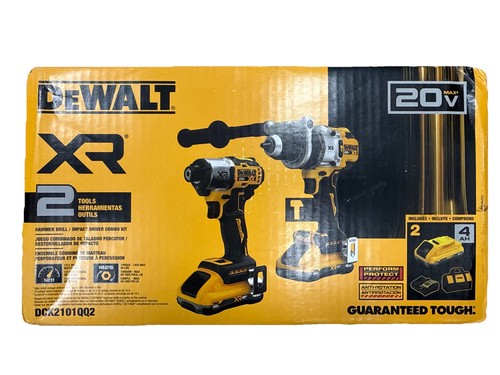 DeWalt 20V Max combo kit
Drill + impact driver starter sets with batteries included
DeWalt 20V Max combo kit
Drill + impact driver starter sets with batteries included
 Milwaukee M18 Fuel cordless drill
The pro platform anchor tool
Milwaukee M18 Fuel cordless drill
The pro platform anchor tool
 Makita 18V LXT brushless
300+ tool ecosystem, Star Protection battery management
Makita 18V LXT brushless
300+ tool ecosystem, Star Protection battery management
 Ryobi One+ battery 6Ah
The upgrade most starter kit buyers need immediately
Ryobi One+ battery 6Ah
The upgrade most starter kit buyers need immediately
 Bosch 18V brushless cordless
CORE18V platform — European build quality, precision focus
Bosch 18V brushless cordless
CORE18V platform — European build quality, precision focus