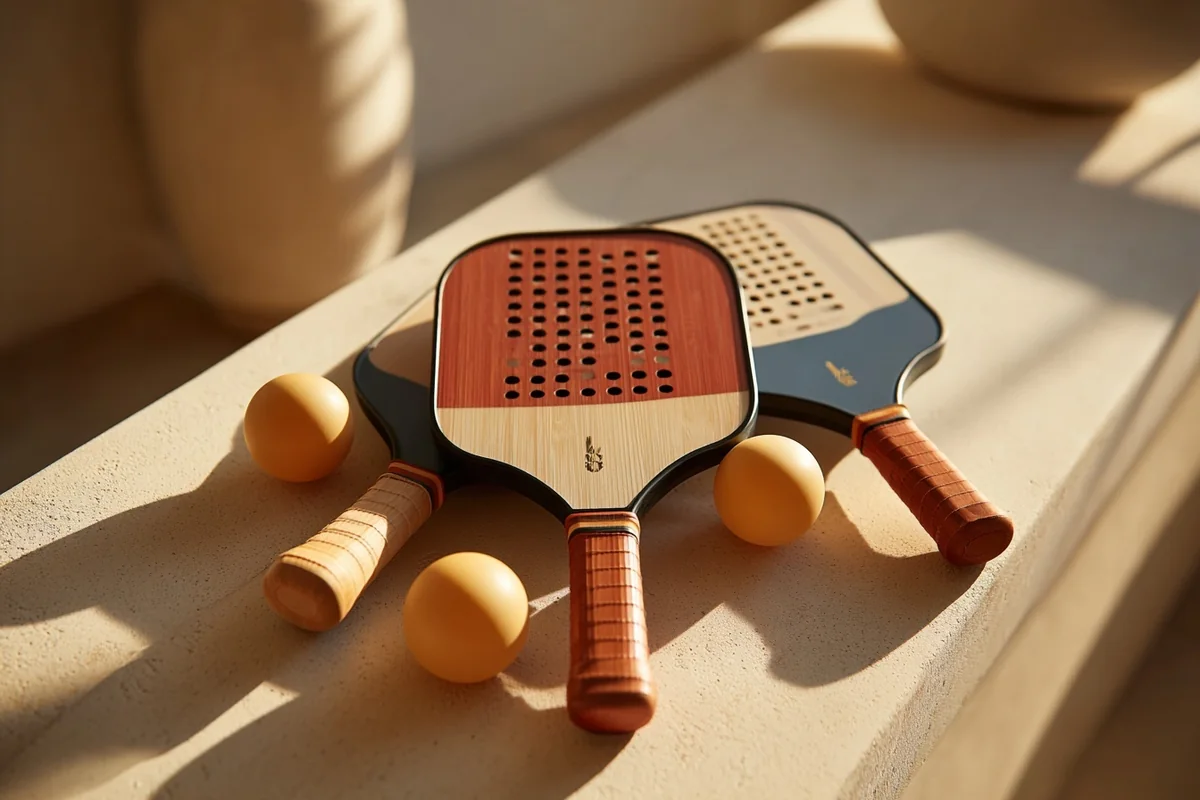
The core: what lives inside a paddle matters most
The paddle core is the single biggest factor in how a paddle feels, and it's also the spec most buyers skip when shopping online. Two paddles with identical face materials can play completely differently because of core differences.
Polymer (polypropylene honeycomb)
The dominant core material at every price point today. Polymer honeycomb consists of a polypropylene hexagonal cell structure that absorbs and returns energy well, resulting in a quieter, softer sound and a more forgiving, "deader" feel at contact. The forgiveness matters: a polymer core bends the ball less on off-center hits than stiffer alternatives. For recreational players and beginners, this is the practical default.
Core thickness within polymer paddles varies significantly — typically 13mm, 14mm, or 16mm. Thicker cores enlarge the effective sweet spot and reduce the trampoline pop on fast drives. Many intermediate players find 16mm cores the most consistent to hit with. Thinner cores feel snappier and livelier but reduce the margin for off-center hits.
Nomex (aramid honeycomb)
Nomex is a rigid, paper-like aramid fiber honeycomb. It was the dominant core material before polymer became widespread. Nomex paddles are stiffer, louder, and transmit more energy — producing a harder, faster response at contact. The feel is more like hitting a wall. Some experienced players prefer it for blocking and resetting because the lack of "give" makes touch shots more consistent once you've developed the stroke. Nomex paddles are rarer today and often available used at favorable prices.
Aluminum honeycomb
Lightweight, rigid, and an older technology mostly found on entry-level and mid-range paddles. Aluminum cores produce a loud, metallic pop. They're durable but don't offer the spin-friendly response that polymer cores have made standard. Worth noting if you're shopping used or budget paddles.
| Core type | Feel | Sound | Best for |
|---|---|---|---|
| Polymer (13–16mm) | Soft, forgiving | Quiet | All skill levels; 16mm for beginners and intermediates |
| Nomex | Stiff, fast | Loud pop | Experienced players who prioritize speed and reset consistency |
| Aluminum | Rigid, light | Metallic | Budget/entry-level; found on older paddles |
Face material: spin, texture, and feedback
The paddle face is the contact surface, and its material determines texture, stiffness, and how much spin you can generate. Three materials dominate the market.
Fiberglass (composite)
Often sold as "composite," fiberglass faces flex slightly on contact, creating a trampoline effect that produces more power with less effort. This makes fiberglass a natural fit for players still developing swing mechanics. The softer flex also rounds off spin generation somewhat. If you're a beginner who wants the ball to travel without muscling every shot, a fiberglass-faced paddle with a polymer core is a practical starting place.
Graphite
Graphite faces are stiffer than fiberglass, transferring energy more directly and providing sharper feedback at contact. The stiffness makes graphite better for touch shots — dinks and drops — where you want to feel exactly where the ball is on the paddle. Graphite is lighter than composite, which helps keep paddle weight in the control range. This is a solid intermediate-to-advanced choice, especially for players focused on the kitchen game and net play.
Carbon fiber (raw toray)
Raw carbon fiber, particularly T700 and T800 grades, has become the current performance standard. The key distinction is texture: raw carbon fiber has a visible weave that grips the ball and generates spin that graphite and composite can't match. Top-rated competitive paddles in the 2024–2025 era are predominantly raw carbon fiber. The spin potential is genuinely different — topspin and slice shots bite harder with a raw carbon face. The trade-off is a firmer, less forgiving feel that requires more precise contact to execute soft shots cleanly.
Weight: the spec that affects your arm most
Paddle weight is typically categorized as lightweight (under 7.3 oz), midweight (7.3–8.4 oz), and heavy (over 8.4 oz). Those ranges matter less as precise numbers than as a spectrum between two trade-offs: heavier paddles generate power and resist vibration; lighter paddles allow faster hand speed and are gentler on the arm over long sessions.
Arm health at volume
Pickleball's short court and fast volleys mean some players hit 300–500 shots in a single recreational session. Paddles in the 8.5–9 oz range can contribute to elbow fatigue and, in some cases, lateral epicondylitis (tennis elbow) in players with existing susceptibility. This isn't universal — stroke mechanics matter more than weight alone — but if you're playing several days a week and have any elbow sensitivity, staying in the 7.5–8.0 oz range is a reasonable precaution.
Power vs. control
Heavier paddles drive the ball with less swing effort on hard exchanges. Lighter paddles reward faster hand movement and make blocking easier. Advanced players often prefer midweight paddles in the 7.5–8.0 oz range as a balance point. Beginning players benefit from a midweight paddle that's forgiving on drives without demanding wrist strength to reset.
Shopping for pickleball paddles? Browse current eBay listings → (we earn a small commission; your price is unchanged).
Grip size: the measurement most buyers skip
Grip circumference — not length, but the distance around the handle — directly affects wrist stability and the ability to snap spin on the ball. Standard circumference sizes run from about 4 inches (small) to 4.5 inches (large), with 4.0–4.25 inches being the most common range.
A grip too small allows excessive wrist movement, which can generate spin but also leads to inconsistent contact and forearm fatigue. A grip too large locks the wrist and reduces fine motor control on dinks and drops. The conventional rule: measure from the middle crease of your palm to the tip of your ring finger. That measurement in inches is your approximate grip size.
Grip length (how far up the handle extends) also varies — longer handles allow a two-handed backhand, which some players transitioning from tennis prefer. Standard pickleball handles run around 4.75–5.25 inches; some elongated paddles push to 5.5 inches.
Paddle shape and skill level
USAPA regulations set maximum paddle dimensions at 24 inches combined length and width, with a maximum width of 17 inches. In practice, this creates three common shapes:
Standard (widebody)
Balanced length and width, usually around 15.5–16 inches wide and 15.5–16 inches long. Wider body means larger sweet spot — forgiving and consistent. The right choice for beginners and recreational players who prioritize reliability over power.
Elongated
Longer and narrower, trading sweet-spot width for reach and leverage. The longer lever arm generates more power on drives and puts more spin on serves. The narrower face requires more precise centering on contact. Generally recommended for intermediate and advanced players who've developed consistent stroke mechanics.
Hybrid
Moderate dimensions between widebody and elongated. Many competitive paddles land here — enough width for forgiveness, enough length for leverage. This is the default shape in most current performance paddles.
What changes by skill level
At the 2.5–3.0 skill level, virtually nothing except price and arm health should drive your paddle choice. A midweight polymer-core, fiberglass-face paddle in the $60–$120 range will not hold back your improvement. The shot you can't yet execute isn't limited by equipment at this stage.
At 3.5–4.0, control becomes a meaningful concern. Your dink game and reset mechanics will improve faster with a stiffer, more feedback-rich paddle. Moving to graphite or raw carbon and a 14–16mm polymer core is a legitimate upgrade at this level.
At 4.5 and above, raw carbon fiber is the competitive standard because spin generation is the primary offensive weapon at elite recreational and tournament play. Weight optimization, handle length (for two-handed options), and grip customization become meaningful refinements rather than marketing noise.
USAPA approval: when it matters
The USA Pickleball Association (USAPA) maintains an approved paddle list for sanctioned tournament play. Approval means the paddle has been tested for surface roughness, reflectiveness, sound, and size compliance. If you play in USAPA-sanctioned tournaments or leagues with strict equipment rules, verify approval before buying. For recreational play and non-sanctioned events, approval is irrelevant — focus on the specs that match your game.
Quick spec reference
| Spec | Beginner pick | Intermediate pick | Advanced pick |
|---|---|---|---|
| Core | Polymer 16mm | Polymer 14–16mm | Polymer 13–14mm |
| Face | Fiberglass/composite | Graphite or raw carbon | Raw carbon (T700/T800) |
| Weight | 7.5–8.2 oz | 7.5–8.0 oz | 7.3–8.0 oz |
| Shape | Widebody | Hybrid or widebody | Elongated or hybrid |
| Budget | $50–$120 | $100–$180 | $150–$250 |
Which paddle fits your game?
Five mistakes that cost beginners money
- Buying the lightest paddle. Ultralight feels nimble in the shop but sends more shock to the elbow and robs you of plow-through. Midweight suits most players.
- Ignoring grip size. A grip that's too big is the top cause of elbow pain. Measure ring-finger-tip to mid-palm crease and round down — you can build a grip up, never shave it down.
- Chasing pro paddles. Elongated, head-heavy pro shapes punish off-center hits; most intermediates score better with a standard-shape control paddle.
- Overpaying for 'spin'. Raw carbon faces do grip the ball, but technique drives far more spin than the last $80 of paddle price.
- Skipping core thickness. 13 mm cores are punchy but unforgiving. 16 mm is the forgiving modern default for nearly everyone.
 Graphite paddle
 Carbon fiber paddle
 2-paddle starter set
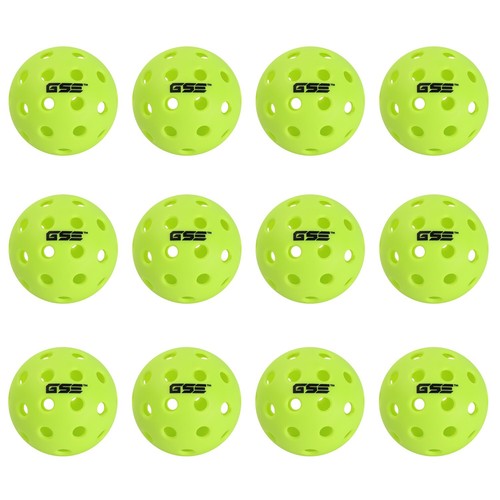 Outdoor balls (40-hole)
 Portable net