Mana base math: color requirements vs land slots, when two colors need more sources than you think
Most new Magic players build their mana bases by feel — split the lands roughly evenly, hope for the best. The problem is that "roughly even" often means both colors are underserved, and the deck loses to its own inconsistency before the opponent gets a chance to kill it.
The fundamental question: what probability are you buying?
When you build a mana base, you are buying probability: the probability that by turn N, you have the colored mana sources you need to cast your most important spells. Mana base construction is an optimization problem with real inputs — the number of colored pips in your casting costs, your deck's speed, the turn you need to cast the spell — and calculable outputs.
The commonly cited rule of thumb is that you need roughly 14 sources of a color to reliably cast a single-pip spell by turn 3 in a 60-card deck. That heuristic comes from hypergeometric distribution calculations and targets about 90% consistency — meaning in roughly 9 out of 10 games, you'll have that source available when you need it. But the rule breaks down quickly when your spells have double or triple pips, when you need to cast spells in multiple colors on the same early turns, or when your deck plays fewer lands than average.
Hypergeometric distribution: the math underneath the heuristics
The hypergeometric distribution calculates the probability of drawing a certain number of "successes" (colored sources) in a sample (your opening hand plus subsequent draws) from a population (your 60-card deck). You don't need to do this math yourself — tools like the Mana Curve calculator and Frank Karsten's source tables have done it — but understanding the inputs helps you apply the results correctly.
The key inputs are:
- Number of sources in your deck — how many lands (and mana-producing spells) produce that color
- Number of cards drawn — your opening hand (7 cards) plus the number of draw steps before you need the spell (so turn 3 = 7 + 2 = 9 cards seen)
- Pip requirement — whether you need one, two, or three of that color
- Target probability — typically 90% for competitive decks, sometimes 80% for more flexible cards
The output is: with X sources, what percentage of the time will you have the mana you need by turn N?
The source requirements by pip count
Frank Karsten's 2022 updated tables (available on his channel Magic Math) are the reference point most competitive players use. The numbers below target 90% consistency on curve:
| Pip requirement | Turn 1 | Turn 2 | Turn 3 | Turn 4 |
|---|---|---|---|---|
| 1 colored pip (e.g., {1}{W}) | 14 | 13 | 11 | 10 |
| 2 colored pips (e.g., {W}{W}) | — | 20 | 18 | 16 |
| 3 colored pips (e.g., {W}{W}{W}) | — | — | 23+ | 21 |
These numbers are for 60-card formats with 24 lands. Important: they count any source of that color, not just basic lands. A dual land that produces both white and blue counts as a source of both. A [[Arcane Signet]] in a Commander deck counts as a source. The total number of things in your deck that can produce that color is what matters.
Why two-color decks often need more sources than you'd expect
Here's the trap: a two-color deck with, say, 24 lands can't give 14+ sources to each color just by splitting the land base. 14 + 14 = 28, and you only have 24 slots. You're already in deficit before you add dual lands (which help both colors but don't increase the total count).
This is why dual lands don't just make the mana base more convenient — they're mathematically required in many two-color builds. A Sunpetal Grove or Glacial Fortress counts as a source of both colors simultaneously. That single land fills the source count for two colors at once. In a mono-color deck, you don't need them. In a two-color deck with double-pip requirements in both colors, you can't hit your source targets without them.
The actual calculation for a two-color deck
Suppose you're building a white-black deck. Your key two-drop is {W}{W} (needs 18 sources of white by turn 2) and your key three-drop is {2}{B}{B} (needs 18 sources of black by turn 3). You're running 24 lands.
If you run 12 white sources and 12 black sources (a simple split), you have 12 sources of each — well short of 18. Your consistency is roughly 75-80%, meaning you'll fail to cast your key spells on time in 1 out of 5 games before accounting for the opponent doing anything.
To hit 18 sources of white and 18 sources of black from a 24-land base, you need roughly 12 lands that produce both colors. In Standard that might mean fetchlands + shocklands or dual lands from a given set. In Pioneer or Modern it might mean fast lands, check lands, or pain lands. In budget builds, enter-tapped duals and gain lands do the work, but with a real speed cost.
The speed cost of enter-tapped lands
When a land enters tapped, it costs you a mana — effectively, it's one turn behind. In an aggro deck curving 1-2-3, an enter-tapped land on turn 1 often means you can't play your one-drop. This is the argument against budget dual lands in aggressive two-color decks, not snobbery: the consistency gain from hitting both colors is partially offset by the tempo loss from the tapped land.
The calculation shifts in midrange and control decks. A tap-land on turn 1 in a control deck that doesn't need to cast anything until turn 3 or 4 costs almost nothing. The same land in an aggro deck costs you a real game action. When evaluating your mana base, ask: on what turns do I need to cast something? If you have spells you genuinely need on turns 1 and 2, enter-tapped lands for those turns are a real cost. If your deck's first critical action is on turn 3, those lands may be fine.
Land count and how it interacts with source requirements
The source counts above assume 24 lands. Running 22 or 20 lands changes the math in two ways:
- Fewer total lands means fewer raw sources available, so hitting target source counts requires a higher percentage of those lands to produce the color
- Fewer lands means you see fewer lands by any given turn, reducing mana availability across the board
Aggressive decks often run 20–22 lands, which compresses the number of sources available. This forces those decks to concentrate their mana base heavily in one or two colors rather than three, and to accept that the small number of off-color spells in the deck will sometimes not be castable. The calculation doesn't change — you still need the same number of sources to cast your spells consistently — but with fewer land slots, you have fewer degrees of freedom to spread across colors.
Cantrips and card selection affect the math
One reason blue decks historically run fewer lands (often 20–22 even in midrange builds) is that cantrips — spells like Ponder, Preordain, or Opt that draw and filter cards — effectively give you more looks at your deck. Each cantrip gives you another card selection, which increases the probability that you've seen a colored source. This is a real effect. In a deck running 4 Ponders and 4 Preordains, you're seeing significantly more cards by turn 3 than a deck without them, and the source requirements for consistent casting are slightly lower.
The rough adjustment: four cantrips in a 60-card deck allow you to run roughly 1–2 fewer lands while maintaining similar consistency for turn 3+ spells. This doesn't help turn 1 or 2, where you haven't cast the cantrips yet.
Three-color decks: the trap gets worse
Three-color decks require sources for three colors from the same 24-land base. Unless you're running a very high density of triome lands, fetch + shock combinations, or Arcane Signet style ramp, it becomes essentially impossible to hit 14+ sources per color across three colors without extremely high-quality dual lands or intentional skewing (where one color is the "splash" and needs only 8–10 sources at the cost of casting its spells later or less reliably).
The splash color should contain spells you can afford to cast on turns 4–5, not spells you need on turns 1–2. Many three-color decks effectively function as two-color decks with a late-game splash. If your splash color contains cards you genuinely need on turns 2–3, you've built a three-color deck that requires three-color mana base support — and that requires the land quality of a competitive format to execute.
Practical steps for building a two-color mana base
- List every card with colored pips in its casting cost and the earliest turn you plan to cast it.
- Find the highest pip requirement by color and the earliest turn it appears. That determines your minimum source count per color from the table above.
- Add up the minimum sources needed per color. The difference between that total and your land count (usually 24) tells you how many dual lands you need to make the math work.
- Evaluate which dual lands in the format you're playing enter untapped often enough to serve your curve. Prioritize untapped duals for turns 1–2 if you have meaningful early plays.
- Fill remaining land slots with basics, weighting toward the color with higher pip requirements or more early spells.
The mana base is rarely glamorous. It doesn't win games on its own. But it's the infrastructure that allows your spells to function on time — and a mana base built to actual requirements, rather than instinct, consistently outperforms one that wasn't.
Gear for this
Top picks for MTG deck building and play. We earn a small commission on eBay purchases — price is the same for you. Full disclosure.
 Shocklands (Ravnica duals)The most format-flexible untapped dual lands. Enter untapped by paying 2 life, or tapped for free. Core for any two-color Pioneer/Modern mana base.
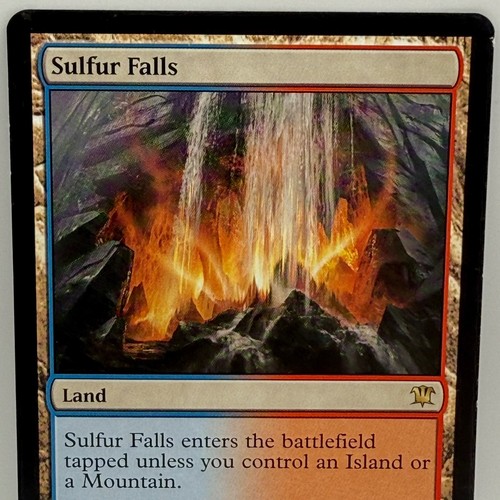 Check lands (Innistrad duals)Enter untapped if you control a basic or shockland of the right type. Budget-friendly and strong in two-color builds alongside shocks.
 Fast lands (Scars duals)Enter untapped if you control 2 or fewer other lands. Excellent in aggressive two-color decks that need turn 1–2 mana.
 Dragon Shield Matte sleevesThe standard for durability and shuffle feel. 100-count per deck. Matte finish reduces glare and shows wear less than glossy.
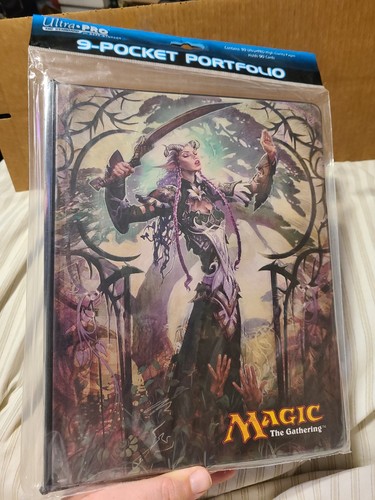 9-pocket card binderKeep your dual lands and value cards organized and protected. Avoid zippered styles — they stress card edges at the corners over time.