Walk-in vs lean-to: the first decision
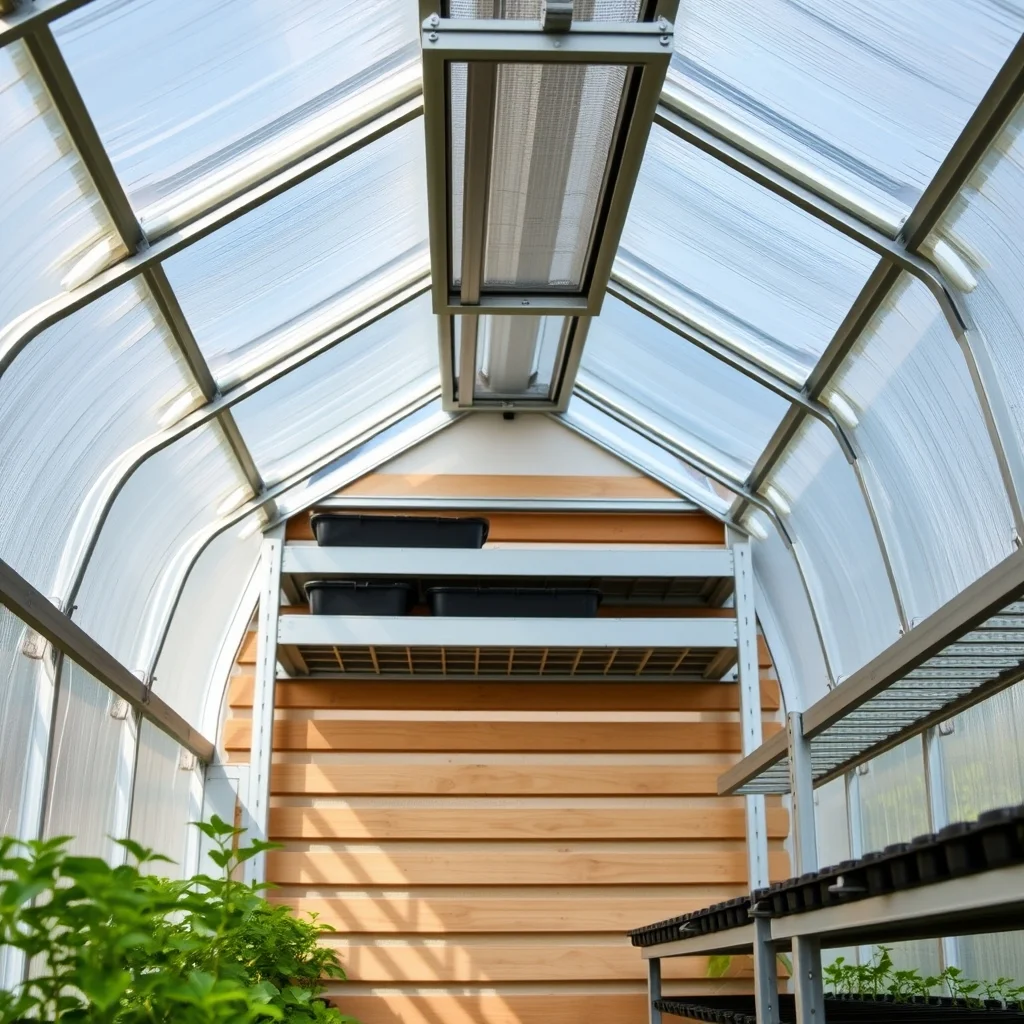
A freestanding walk-in greenhouse stands independently in the garden with four walls, a peaked or curved roof, and a door. A lean-to attaches one wall to an existing structure — typically a house, garage, or outbuilding — and uses that shared wall as thermal mass and partial structural support.
Lean-to designs generally cost less per square foot of growing space because they require fewer materials. The shared wall reduces heat loss significantly, particularly on cold north- or west-facing walls. The tradeoff is that lean-tos are limited by the available wall space and typically cannot be as tall as freestanding structures. They also require attachment to a permanent structure and may require planning permission depending on local regulations.
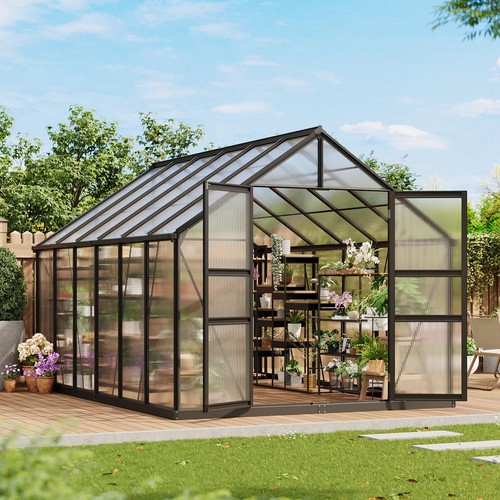
Walk-in greenhouses offer more flexibility in site placement and interior height. The standard hobby size range — 6×8 to 8×12 feet — fits most residential gardens. A 6×8 accommodates two benches with a narrow aisle; an 8×12 allows a center aisle with full benches on both sides.
Glazing materials: polycarbonate, glass, and film
Glazing is the transparent or translucent covering that lets light in and traps heat. The three practical options for hobby greenhouses are twin-wall polycarbonate, horticultural glass, and film poly (polyethylene sheeting).
| Material | Light transmission | Insulation (R-value) | Durability | Cost |
|---|---|---|---|---|
| Twin-wall polycarbonate (6mm) | ~70–80% (diffused) | ~1.5–2.0 | 10–15 years typical | Mid-range |
| Triple-wall polycarbonate (10mm) | ~65–75% (diffused) | ~2.5–3.0 | 10–15 years typical | Higher |
| Horticultural glass (4mm) | ~90% (direct) | ~0.9–1.0 | Decades if intact | Higher |
| Film poly (6 mil greenhouse film) | ~85–90% | ~0.8 single layer; ~1.5 double-inflated | 3–5 years per cover | Lowest |
Twin-wall polycarbonate
This is the dominant material for hobby greenhouse kits in the current market. The twin-wall construction — two parallel sheets connected by internal ribs — traps an insulating air layer that significantly outperforms glass for heat retention. The diffused light transmission (rather than direct) is actually beneficial for many crops, reducing hot spots and minimizing leaf scorch. The main limitation is yellowing and loss of light transmission over time from UV degradation; quality panels with UV protection on the outer surface typically last 10–15 years before requiring replacement.
Horticultural glass
Traditional glass greenhouses transmit light more directly and at higher percentage than polycarbonate. This benefits light-hungry crops and propagation work. Glass is also less prone to surface scratching and maintains clarity indefinitely. The tradeoffs: significantly heavier (structural requirements increase), breaks rather than flexes under impact, and has much lower insulating value per pane. A glass greenhouse is more expensive to heat in cold climates. Tempered or safety glass is recommended wherever falling glass is a concern.
Film polyethylene
Greenhouse-grade polyethylene film (typically 6 mil thickness, 4-year UV-stabilized) is the lowest-cost option per square foot and achieves good light transmission. Film greenhouses — often tunnel or hoop-house style — are common in commercial market gardening. For hobby use, the main drawback is that film requires replacement every three to five years and is vulnerable to wind damage and puncture. Double-layer inflation (two layers of film with a small blower maintaining an air gap) substantially improves insulation performance.
Shopping for a hobby greenhouse? Browse current eBay listings → (we earn a small commission; your price is unchanged).
Frame materials: aluminum, steel, and wood
Aluminum
Aluminum is the standard frame material for hobby greenhouse kits in the mid-price range. It is corrosion-resistant, lightweight, and dimensionally stable across temperature changes. The typical kit uses extruded aluminum sections with interlocking connectors. The disadvantage of lightweight aluminum is susceptibility to racking (distortion under wind load) if the structure is not anchored properly. Heavier-gauge aluminum sections (wall thickness of 1.2–1.5mm or more) are meaningfully more rigid than thinner economy versions.
Galvanized steel
Steel frames are heavier and stiffer than aluminum, which makes them more resistant to wind damage and racking at equivalent sizes. Commercial polytunnels and larger hobby structures typically use galvanized steel hoops. The tradeoff is weight (complicates site placement and requires a more substantial foundation) and the need to maintain the galvanizing — bare steel exposed by cuts or scratches will rust. Powder-coated steel offers an additional corrosion layer.
Wood
Cedar, redwood, and pressure-treated timber frames are traditional and aesthetically appealing. Wood provides better thermal mass than metal (metal frames can conduct heat out of the greenhouse), accommodates custom sizes more easily, and is repairable with standard carpentry tools. The tradeoffs are maintenance (painting or sealing every few years), susceptibility to rot at ground level, and heavier overall weight. Wood-framed greenhouses are typically site-built rather than kit-purchased.
Ventilation: the most underestimated design element
Greenhouse temperatures can rise dramatically on sunny days even in winter — a well-sealed greenhouse can reach 100°F (38°C) inside when it is 45°F (7°C) outside. Adequate ventilation is not optional; it is a core design requirement.
Roof vents
Hot air rises. Roof vents — hinged panels in the roof that open manually or automatically — are the most effective ventilation method. A general rule for hobby greenhouse sizing is that the total ventilated area should be approximately 20% of the floor area. A 6×8 greenhouse (48 sq ft) benefits from around 9–10 sq ft of ventilable roof area, which typically means two roof vent panels of 3×2 feet each.
Automatic vent openers (wax cylinder or electric) open roof vents when the internal temperature reaches a set threshold. They cost relatively little and eliminate the need to manually manage vents throughout the day — a significant quality-of-life improvement.
Louvered vents and doors
Louvered vents positioned low on the sidewalls create cross-ventilation when combined with open roof vents. The low intake and high exhaust setup creates a natural thermal draft that moves air efficiently without fans. The door itself serves as a major ventilation opening — a wide door (30+ inches) used in combination with an open roof vent significantly increases airflow in warmer months.
Shade cloth
In summer, supplemental shade cloth (typically 30–50% shade rating) reduces internal temperatures without requiring additional mechanical ventilation. It is draped over the exterior or clipped inside. Shade cloth addresses the light excess problem; ventilation addresses the heat excess problem — both are often needed in summer for full-sun locations.
Anchoring and foundation
Wind is the leading cause of hobby greenhouse damage. An unanchored or improperly anchored greenhouse can be significantly damaged or destroyed by wind speeds that seem unremarkable. Most kit greenhouses include a base frame, but the base frame must be secured to the ground with appropriate anchoring.
- Ground anchors (screw-in stakes): The minimum anchoring method. Suitable for sheltered sites with normal wind exposure. Screw-in earth anchors in the 30–40cm range connected to the base frame with cable or tie-downs provide meaningful resistance.
- Concrete footing: Set the base frame in or on a concrete perimeter. This is the most secure method and appropriate for exposed sites or larger structures. It also creates a clear boundary for pest exclusion and can be integrated with a paved or gravel floor.
- Paving slab base: A level perimeter of paving slabs provides a stable base and allows the frame to be bolted down. Less permanent than poured concrete but more secure than ground anchors in firm soil.
Common mistakes when buying hobby greenhouse kits
Buying minimum ventilation. Economy kits often include a single roof vent. This is inadequate for most climates. Check whether additional vents can be added or are available as accessories before purchasing.
Ignoring panel thickness. 4mm polycarbonate panels are notably less insulating than 6mm or 8mm. In cold climates, the difference in heating costs and minimum survivable temperature is significant.
Underestimating assembly time. Most hobby greenhouse kits are described as weekend projects. For a solo builder, a 6×8 aluminum kit typically takes one to two full days, and a larger 8×12 typically takes two to three. Having a second person for the assembly is strongly recommended.
Skipping the base frame or foundation. Building directly on uneven ground, grass, or loose soil leads to structural instability and pest ingress. Budget time and materials for a proper base before ordering the kit.
 Walk-in greenhouse kit
 Polycarbonate greenhouse
 Lean-to greenhouse
 Greenhouse shelving