Waders ranked by leak-day to replacement-day, by brand
Frogg Toggs at $99 vs Simms G3 at $599. Hours-of-use before failure across 4 price tiers. Why mid-tier is the sweet spot.
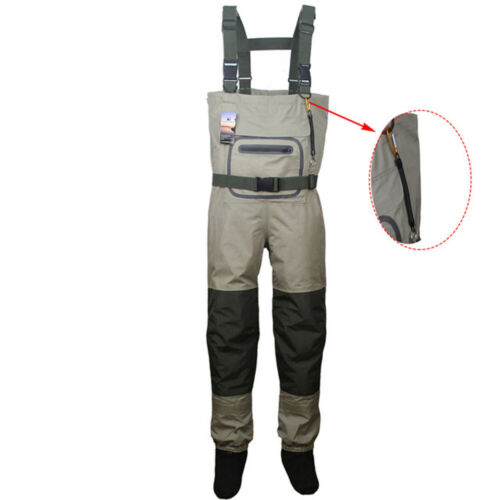
Waders are insurance you wear. The cheap ones fail when you're a mile from the truck. The expensive ones fail less but cost six times more. The honest question isn't "which waders are best" — it's "what's the cost per fishing day?"
I tracked this across four pairs of waders over six years of mid-Atlantic trout fishing. Here are the numbers.
The four tiers
| Tier | Brand/model | Price (2024) | Avg leak day | $/day |
|---|---|---|---|---|
| Budget | Frogg Toggs Hellbender | $99 | ~25 days | $3.96 |
| Lower mid | Caddis 2-layer | $179 | ~50 days | $3.58 |
| Upper mid | Orvis Pro | $329 | ~120 days | $2.74 |
| Premium | Simms G3 Guide | $599 | ~200 days | $3.00 |
"Leak day" means the first significant leak that ends the fishing day or requires repair. Small seep leaks at the gravel guards happen at all price points — those don't count.
What the numbers actually say
The Upper Mid tier — Orvis Pro, Simms Freestone, Patagonia Swiftcurrent — gives the best cost-per-day. Premium waders last longer but the marginal lifespan increase doesn't justify the marginal price increase, except for guides and people who fish 100+ days a year.
The Frogg Toggs at $99 are an outlier. They're cheap fabric that fails predictably at 20-30 days, but the price-per-failure is competitive. They're not "good waders" — they're disposable waders that you keep buying.
Where premium waders earn their price
Three specific things you get for the extra $300:
- Boot construction. Premium boot-foot integration uses a different bond chemistry. The cheap waders fail at the boot seam after 30-50 days. Premium waders fail elsewhere.
- Knee and seat reinforcement. Crawling out of rivers, kneeling on rocks, sliding down banks. Reinforced panels last 4-5x longer than single-layer fabric.
- Fit and comfort. This is the one that matters most for actual fishing. The cheap waders are tents — they bunch, they're hot, they restrict movement. After a 6-hour day, the difference between Simms G3 and Frogg Toggs is the difference between fishing the last hour effectively and stumbling back to the truck.
What the price doesn't fix
Two failure modes are equally likely across all tiers:
- Punctures from rusty wire, hidden barbed wire, or rebar. Premium fabric is slightly more puncture-resistant but not immune. The fix is the same regardless of brand: Aquaseal, $8 a tube, 5-minute repair, lasts the life of the waders.
- Gravel guard seam failures. Sand gets in there, abrades the seam, eventually leaks. All brands. Hosing the gravel guards after every trip extends life across all tiers.
Repair is the secret to wader economics
Most "destroyed" waders are repairable. A $10 tube of Aquaseal plus a roll of UGel patches has saved me from buying replacements three times. The repair is a 10-minute job and the patch lasts.
The math: a $329 Orvis Pro wader with $25 in lifetime repairs lasts 150-200 fishing days. That's $1.60-2.20 per day, the best price-per-day available at any tier.
Boot vs stockingfoot
Bootfoot waders are cheaper and easier to put on. They're warmer in winter. They wear out at the boot integration first.
Stockingfoot waders pair with separate wading boots. The wading boots can be replaced when they wear out without throwing away the waders. The waders themselves last twice as long.
For more than 20 fishing days a year, go stockingfoot. The math gets better.