Fly line: where the $90 line beats the $30 line, and where it doesn't
Cortland 444 vs RIO Gold. The honest performance gap, and the conditions where it disappears. For warm-water and small-stream fishing, the cheap line wins.
The dirty secret of fly line marketing is that there are maybe three or four companies that actually make fly lines, and they private-label for everyone else. Scientific Anglers, RIO, and Cortland do most of the manufacturing. Most "exclusive" lines from rod-makers are SA or RIO with a different jacket.
That said, there are real performance differences between cheap and expensive lines. The question is whether those differences matter to your fishing.
What you're paying for
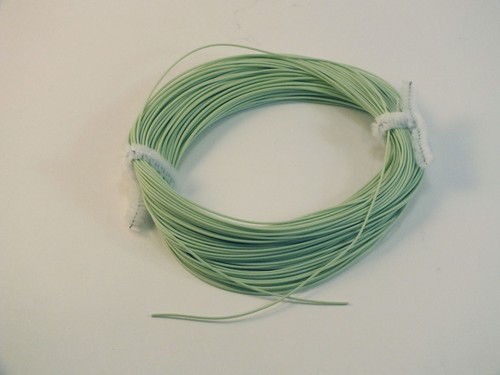
A modern premium fly line ($85-110) is the result of decades of engineering. The taper profile is computer-designed for a specific kind of casting — short-range presentation, long-range distance, big-fly turnover. The coating is a triple-layer polymer that resists tangling, sheds water cleanly, and stays supple in cold conditions. The core has been adjusted for stretch and feel.
A budget line ($30-45) skips the engineering. The taper is a generic compromise. The coating is a single-layer PVC that stiffens below 50°F and gets tacky above 85°F. The core is whatever was cheapest.
Where the premium line actually wins
Three specific conditions where you can feel the difference:
- Cold-weather fishing (under 50°F). Budget lines turn into coiled springs. They tangle, they don't shoot, they spook fish with line slap. Premium lines stay manageable into the 30s.
- Hot-weather fishing (over 85°F). Budget lines get sticky, picking up dirt and weed bits that drag through guides. Premium lines stay clean.
- Distance casting (60+ feet). The taper engineering shows up here. Premium lines shoot further and turn over heavy leaders more reliably.
If you primarily fish in shoulder seasons, in extreme temps, or you regularly need long casts, the premium line is worth $90.
Where the budget line is fine
Most freshwater trout fishing is 25-45 feet, in temps between 55°F and 80°F. The Cortland 444 ($55-65), Scientific Anglers AirCel ($35), or RIO Mainstream ($55) all perform indistinguishably from $90 lines at this range and temp.
For small-stream fishing — your typical brook trout creek where casts are 15-30 feet — the budget line is actually preferable. You can't feel the taper engineering at short range, and the cheaper line stays out of the trees as well as anything.
For bass and warm-water fishing, the premium-line argument falls apart entirely. Bass don't care about line slap. They eat poppers off lines that have been left in the sun for a month. Save the money for flies.
The honest ranking
| Line | Price | Best for |
|---|---|---|
| SA Mastery Trout | $95 | All-around premium, all conditions |
| RIO Gold | $110 | Best long-distance taper, dries |
| Cortland 444 Classic | $65 | Best budget-to-mid premium, classic taper |
| SA AirCel | $35 | Cheap and serviceable for warm-water/small stream |
| Orvis Clearwater | $45 | Decent all-around budget |
Line care extends life dramatically
A premium line treated well lasts 5+ seasons. A premium line neglected dies in one. Three habits that matter:
- Clean the line every 2-3 trips. Wipe with a soft cloth, then apply line cleaner (Scientific Anglers or RIO). 5 minutes. Doubles the casting distance immediately.
- Don't store on the reel in direct sunlight or hot car. UV and heat kill the coating fast.
- Never let the line touch DEET (insect repellent). DEET dissolves fly line coatings. Apply repellent to your hands first, then handle the line if you must.