Reading water on a small freestone trout stream
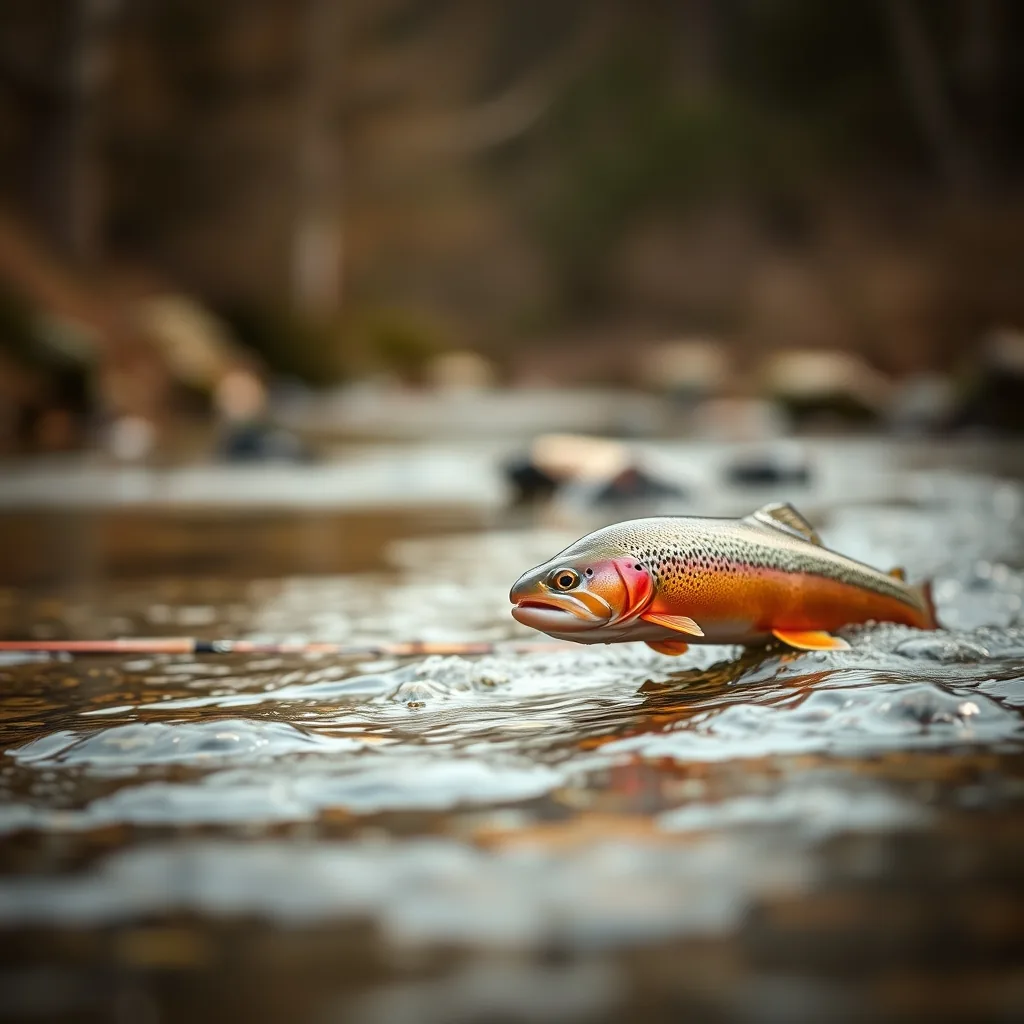
Most water in a small freestone stream holds no trout. The fish are concentrated in a small percentage of the habitat. Learning to read the difference is what separates anglers who fish efficiently from those who work every inch of water equally.
A freestone stream is one fed primarily by surface runoff and snowmelt rather than groundwater springs. Water temperature fluctuates with the seasons, the stream rises and falls dramatically with rain events, and the substrate is typically broken rock, gravel, and cobble rather than the smooth sand of lowland streams. Appalachian mountain streams, Rocky Mountain tributaries, and most of the small trout water in the Northeast are freestone systems.
Reading water in a freestone stream is fundamentally about understanding three things: where current speed is reduced, where depth provides cover, and where food is delivered. Trout are not randomly distributed. They hold in specific spots that offer all three, and they move to feeding lanes that bring food to them without requiring much energy expenditure. Once you see the pattern, you'll start recognizing it everywhere.
The two things trout need and how they conflict
Trout need food and they need safety. These two needs often conflict, which is why trout behavior seems inconsistent to new anglers but is actually quite predictable once you understand the tension.
Food comes downstream, concentrated along seams where fast water meets slow water. Insects, crustaceans, and small baitfish are carried by the current and deposited along these seams. The fastest current delivers the most food per unit of time, but fast current also costs energy to hold position in.
Safety comes from depth, overhead cover, and current breaks. A fish sitting in 6 inches of clear, fast water is extremely vulnerable — visible from above, able to be picked off by a heron standing 10 feet away, swept downstream if it moves. A fish in 3 feet of broken, tumbling water is nearly invisible and has multiple escape routes.
The best holding lies in a freestone stream give a fish both: a current break where the fish can hold without working hard, positioned close enough to a delivery seam that food comes to it, with depth or cover that provides safety. These spots are not evenly distributed.
The four productive water types
1. Pocket water behind boulders
When a large rock or boulder deflects the main current, it creates a hydraulic shadow downstream — a cushion of slow or reverse-moving water directly behind the rock. This is prime holding water. The fish sits in the cushion, facing upstream, and intercepts insects and other food carried along the edges of the cushion where fast meets slow.
On small freestone streams, boulders are often the single highest-density holding spots. A 12-inch cushion behind a two-foot boulder might hold the largest fish in a 100-yard section. The fish is protected by the turbulent water that makes presentation difficult and by the shadow the boulder casts.
How to approach it: Wade slowly and stay low. The pocket is small and a sloppy cast into the rock shadow spooks the fish before the fly gets there. Approach from slightly downstream and across. A short, accurate cast wins here; a 40-foot cast is less useful than a precise 15-foot drift. A dry fly or dry-dropper works well in pocket water because the broken surface conceals your tippet.
2. Head of a pool (plunge pool, run-in)
Where a riffle or fast run drops into a deeper pool, the oxygenated, tumbling water carries maximum food and the depth provides immediate cover. The transition zone — where the fast water from the riffle starts to decelerate as the pool deepens — concentrates fish in a small area.
The head of a pool is often the most reliable holding spot in a small freestone stream, especially in summer when water temperatures rise and oxygen content drops. Fish seek the oxygenated water entering at the top of the pool even when they can't be found elsewhere.
How to approach it: Work from below the pool, staying in the slower water at the tail. Cast to the seam at the head, letting the fly ride down along the edge where fast water meets the calmer pool water. In deeper plunge pools, a weighted nymph fished on a tight-line rig or under an indicator reaches the fish holding deeper in the column.
3. Cut banks and undercut ledges
On small freestone streams with earthen or clay banks, the current undercuts the bank over time, creating a horizontal shelf of overhanging bank or rock ledge. The largest fish in small stream systems often hold under these cuts because they offer the combination of cover overhead, slowed current near the bank, and a clear view of the food lane running along the bank edge.
Cut banks are often overlooked because anglers don't think to cast under structure — their instinct is to drop the fly in open water. A large trout sitting under a 12-inch ledge of overhanging bank in three feet of water is completely invisible and completely protected from overhead predation. It will rarely move far into open water, but it will take a fly that drifts along the bank edge within its field of view.
How to approach it: Cast up and across, presenting the fly so it drifts tight to the bank. Allow a reach cast to give extra drag-free drift time along the undercut. Expect refusals until you learn the exact feeding lane — cut bank fish are often selective about fly position, not fly pattern.
4. Tailouts of pools above riffles
The slow, flat water at the bottom end of a pool before it accelerates into the next riffle concentrates rising fish, particularly in the evening. As the current accelerates toward the riffle, it creates a shallow conveyor belt of emerging insects. Fish move into the tailout to feed during hatches and in low-light conditions when they feel safe in the shallower, flatter water.
Tailouts are daytime traps for many anglers — they look fishable but fish are rarely feeding actively there during midday bright hours. Return in the evening. The same flat, clear tailout that had nothing at noon might have multiple rising fish at 7pm during a caddis or mayfly emergence.
The two water types that waste your time
Featureless fast riffles
Fast, broken water without boulders, depth changes, or bank structure holds very few fish except in the highest-gradient, coldest streams where every inch of stream is productive. On typical freestone streams at modest gradients, flat riffles 8–15 inches deep are mostly transit water — fish move through but don't hold. You can fish this water, but the return rate is low.
The exception: hatches. During a heavy hatch, trout will move into shallow riffle water to feed because that's where the nymphs are ascending. Off hatch, this water is mostly empty.
Deep, featureless flats
A pool that's deep (3–5 feet), slow-moving, and featureless in the middle holds fish — but they're inactive, resting fish that won't feed. They'll spook easily and retreat further into the pool. This "dead water" is where you watch trout move when you spook them from good water, not where you target them. Midday bright sun increases the percentage of time fish spend in this water.
How conditions change everything
High, off-color water
After rain events, when a freestone stream is up and slightly colored, fish move toward the edges and out of the main current. The banks, shallow margins, and normally-skipped water at the stream edge holds fish that are avoiding the powerful central current. Fish tighter to cover and bank structure than usual.
Low, clear summer water
In low, clear, warm conditions, trout compress into the deepest, most oxygenated water available: plunge pools, spring inflows if present, and deep shade. Shadow — from streamside vegetation, canyon walls, or cloud cover — triggers feeding activity. Early morning and evening are often the only productive windows. Wade carefully; spook pressure is high when fish are concentrated.
Late season, cold water
Cold water slows trout metabolism. They hold in slightly deeper, slower water than they would in prime conditions and feed less frequently. Nymphs fished slowly through the slowest part of pools produce better than dry flies. Takes are often subtle — a small movement, not an aggressive rise.
Moving up a stream efficiently
On a small freestone stream, an efficient angler covers 1–2 miles in a half-day by identifying productive water from 20–30 yards away and skipping unpromising sections. Learn to read the surface texture before you enter the stream. Broken, tumbling surface = fast, shallow water. Smooth, slightly convex surface = deeper pool. Visible current lines and seams = food lanes worth presenting to.
Fish upstream rather than down on small streams. Trout face into the current; approaching from below means you're behind their line of sight. Wading upstream also keeps your disturbance moving away from the water you're about to fish. Move slowly — every unnecessary splash sends pressure waves upstream through the water column that fish detect through their lateral line.
Visit the fly fishing tools and guides for rod weight selection, fly hatch guides, and wader sizing calculators.
Gear actually worth buying
Smart eBay searches we'd start with ourselves. We earn a small commission on qualifying sales through these links; the price you pay is the same. Full disclosure.
 Wading boots (felt or rubber sole)Freestone streams mean slippery, irregular cobble. Felt soles grip algae-covered rock best; rubber soles with aggressive lug work well on drier, gravelly streams. Check local regulations — felt is banned in some states.
 Fly fishing vest or chest packSmall stream fishing requires moving efficiently. A chest pack or minimalist vest keeps tippet, nippers, forceps, and a few fly boxes accessible without the weight of a full vest.
 Polarized sunglasses (amber/copper lens)Seeing into the water is the single most valuable skill upgrade in fly fishing. Amber lenses work well in variable light on tree-shaded freestone streams.
 Elk hair caddis and stimulator dry fliesTwo patterns that cover most freestone stream dry fly situations. The elk hair caddis (#12-18) and stimulator (#8-14) are high-floating, visible, and imitate multiple natural food types.
 Fluorocarbon tippet (4x and 5x)On clear low-water freestone streams, fluorocarbon tippet is noticeably less visible than nylon. 4x handles most dry fly work; 5x for small flies and pressured fish.