Boiler types and what they mean for workflow
The boiler type is the most fundamental specification in any espresso machine. It determines whether you can pull a shot and steam milk simultaneously, how long you wait between operations, and how stable the brew temperature is during a shot.
Single-boiler (SB)
A single-boiler machine uses one boiler for both brewing espresso (approximately 93°C / 200°F) and steaming milk (approximately 120–130°C / 248–266°F). To transition between functions, the machine heats or cools the boiler — a process that takes 30–90 seconds depending on the machine. The Rancilio Silvia, Gaggia Classic Pro, and most entry-level prosumer machines are single-boiler. For home use with milk drinks, the workflow is: pull shot first, wait for steam temperature, steam milk. Single-boiler machines are simpler, have fewer components to fail, and are easier to service.
Heat-exchanger (HX)
A heat-exchanger machine has one large boiler kept at steam temperature (for continuous steaming) with a copper or stainless tube running through it. Brewing water passes through this tube and is heated by the surrounding boiler water without mixing with it — the brew water exits at approximately 93–96°C. HX machines can pull shots and steam simultaneously. The catch is temperature management: the brew water can overheat in the heat exchanger if the machine sits idle. Experienced HX users perform a "cooling flush" before pulling a shot, running a short burst of water through the group head to bring the temperature into the optimal range. Popular HX machines include the Rocket Appartamento and various Vibiemme models.
Dual-boiler (DB)
Dual-boiler machines have separate boilers for brewing and steaming, each precisely temperature-controlled. There is no workflow compromise: brew temperature is set independently of steam pressure, simultaneous operation is standard, and temperature stability is superior. La Marzocco Linea Mini, Breville Dual Boiler, and higher-end Profitec models are dual-boiler. Used dual-boiler machines carry higher prices and have more components that can fail, but the shot quality ceiling is higher.
| Type | Simultaneous shot + steam | Temp stability | Typical models |
|---|---|---|---|
| Single-boiler | No (switch and wait) | Good with PID | Rancilio Silvia, Gaggia Classic Pro |
| Heat-exchanger | Yes | Variable (requires flush) | Rocket Appartamento, ECM Classika HX |
| Dual-boiler | Yes | Excellent | La Marzocco Linea Mini, Breville DB |
Vibratory pump versus rotary pump
Most home espresso machines use a vibratory pump (vibration pump or vibe pump). A vibratory pump uses an electromagnet vibrating a piston at mains frequency (50 or 60 Hz) to push water at high pressure. They are inexpensive, compact, and widely used. They are also audible — the buzzing sound of a vibratory pump is distinctive. Ulka and Fluid-O-Tech make the vibe pumps found in most consumer machines.
A rotary pump uses a rotating motor to push water continuously. Rotary pumps are quieter, more consistent, and used in commercial machines. Some high-end home machines (La Marzocco Linea Mini rotary version, various Profitec and ECM models) use rotary pumps. Rotary-pump machines are typically plumbable directly to a water line, though most home users still use a reservoir. On a used machine, a rotary pump that has failed is more expensive to replace than a vibratory pump.
When inspecting a used machine, run it long enough to hear the pump operation. Unusual grinding, very loud vibration, or a pump that cycles on and off rapidly (pressure dropping) indicates wear or a failing pressure relief valve.
Portafilter sizing: 58mm, 54mm, 53mm, 51mm
The portafilter is the handle-and-basket assembly that locks into the group head. Size matters because it determines what baskets and accessories are compatible with the machine.
58mm is the commercial standard. Rancilio Silvia, Gaggia Classic Pro, La Marzocco Linea Mini, most commercial machines, and many higher-end home machines use 58mm. The widest range of aftermarket baskets (IMS, VST, Pullman), distribution tools, and tampers is available in 58mm.
54mm is used by Breville (the Barista Express, Barista Pro, Dual Boiler). A respectable aftermarket exists for 54mm, but it is smaller than the 58mm ecosystem.
53mm is used by Rancilio Silvia's earlier versions and some Saeco machines. Less aftermarket support than 58mm.
51mm is used by DeLonghi Dedica and some sub-prosumer machines. Limited aftermarket — buying a used machine with a 51mm portafilter locks you into a narrow accessory ecosystem.
Scale buildup: what to look for
Calcium and magnesium deposits (limescale) accumulate inside any espresso machine that runs on untreated tap water. Scale buildup is the most common cause of degraded machine performance and is invisible from the outside until it is severe. When inspecting a used machine, look for:
- White chalky deposits on the steam wand: The tip and around the wand attachment point. This is normal limescale from milk steaming. Severe buildup can block the steam tip holes.
- White or orange deposits around the group head: Visible mineral deposits on the brass or chrome group head body indicate the previous owner did not descale regularly.
- Slow flow rate: A shot that pulls extremely slowly at typical grind settings may indicate scale-restricted flow paths in the boiler or heat exchanger. Ask the seller to pull a shot without coffee — time how long it takes to push 50g of water through a blank basket.
Gasket condition and portafilter seating
The group head gasket seals the portafilter against the group head body. A worn gasket causes the portafilter to seat at a different angle than normal (usually lower than it should) and can allow steam and hot water to escape around the seal during brewing — dangerous and waste-producing. To check gasket condition on a used machine: lock in the portafilter and note the angle of the handle. On a Rancilio Silvia, the portafilter should lock at approximately the 5 o'clock position (pointing right-down). If it locks at 3 o'clock (straight right) or further right, the gasket has compressed and needs replacement. Gaskets are inexpensive (typically $5–$12) but require partial disassembly to replace.
E61 group head: identification and valuation
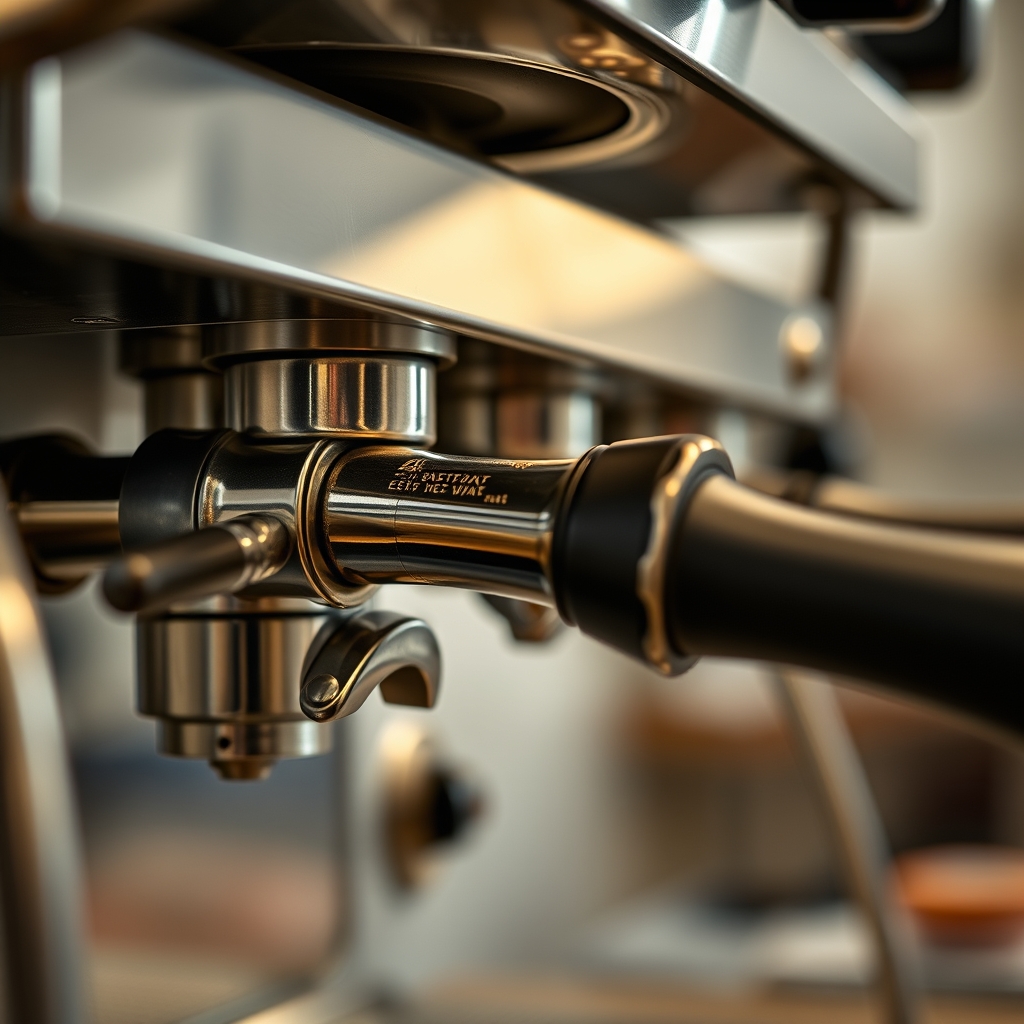
The E61 group head is a thermosyphon group head design originally by Faema (1961) that has become a widely-used standard in prosumer espresso machines. It uses the temperature of the boiler water circulating through the group head body to maintain temperature stability without an active heating element in the group. Machines with E61 group heads are identifiable by the characteristic lever (the lever is not for manual operation — it actuates the brew valve) above the portafilter and the large round group head body.
E61 group heads are serviceable, have widely available gaskets and dispersion screens, and are a positive indicator on a used machine. E61 machines include the ECM Mechanika, Rocket Appartamento, Bezzera Unica, and many Profitec models. The E61's thermosyphon design means it needs approximately 15–20 minutes to fully heat-saturate the group head before pulling shots — a workflow consideration versus thermoblock machines that heat instantly.
Used grinder inspection: burr condition
A used espresso grinder is often a better value purchase than a used machine, because grinders have fewer failure modes. The primary concern is burr condition.
New conical burrs have a sharp, machined cutting edge visible under a light. Worn burrs show a "honed" or rounded edge, sometimes accompanied by fine metal scratches on the flat surfaces of the burr. To inspect: remove the burrs (most espresso grinders allow this without tools or with a coin) and look at the edge under light. A pen light held at a low angle to the cutting surface will illuminate edge condition clearly.
For flat burr grinders (Baratza Sette, Eureka Mignon, DF64): both burrs should be inspected. The upper burr is typically more worn than the lower. Flat burrs worn to the point of visual damage (chips, visible scratches across the cutting face) need replacement — and burr sets for premium grinders range from $40 to $200 depending on the model.
Grinder motor condition is harder to assess externally. Listen for consistent motor sound — grinding noise should be steady, not pulsating or high-pitched. A grinder that has been run at high grind settings continuously will wear both motor and burrs faster than one used for espresso-fine grinding.
Search eBay for espresso machines and grinders
 Rancilio Silvia
Check for version (v1–v6). V3 and later have PID as an aftermarket mod option.
Rancilio Silvia
Check for version (v1–v6). V3 and later have PID as an aftermarket mod option.
 Breville Barista Pro
54mm integrated grinder. Inspect grinder burrs and ask about descale history.
Breville Barista Pro
54mm integrated grinder. Inspect grinder burrs and ask about descale history.
 Gaggia Classic Pro
Post-2019 Pro version has corrected OPV. Highly modifiable with aftermarket PID kits.
Gaggia Classic Pro
Post-2019 Pro version has corrected OPV. Highly modifiable with aftermarket PID kits.
 Niche Zero grinder
Single-dose conical. Near-zero retention. Check burr condition and grind adjustment collar.
Niche Zero grinder
Single-dose conical. Near-zero retention. Check burr condition and grind adjustment collar.
 La Marzocco Linea Mini
Dual boiler, saturated group. Rotary pump version preferred. Request service records.
La Marzocco Linea Mini
Dual boiler, saturated group. Rotary pump version preferred. Request service records.