Adjustable vs professional pinnable: the core distinction
The two main dress form categories serve different functional purposes, and confusing them is the most common buying mistake.
Adjustable dress forms
Adjustable dress forms (sometimes called multi-size dress forms) use a rigid outer shell — typically hard plastic or lightweight fiberglass — divided into sections. Adjustment dials, knobs, or belt mechanisms expand or contract the sections to dial in different measurements. A single form can theoretically cover a range of sizes by adjusting each section (bust, waist, hip, shoulder).
The outer shell is rigid and not designed to accept pins. You cannot stick a straight pin into an adjustable dress form and expect it to hold — the shell doesn't accept pins, and even where small gaps between sections exist, pin placement is inconsistent. Adjustable forms are useful for displaying finished garments, for photographers and retail display, and for broadly checking garment proportion and drape on a human-shaped form. They are not suitable for active draping or pattern-making work where you need to pin fabric in place.
Professional pinnable dress forms
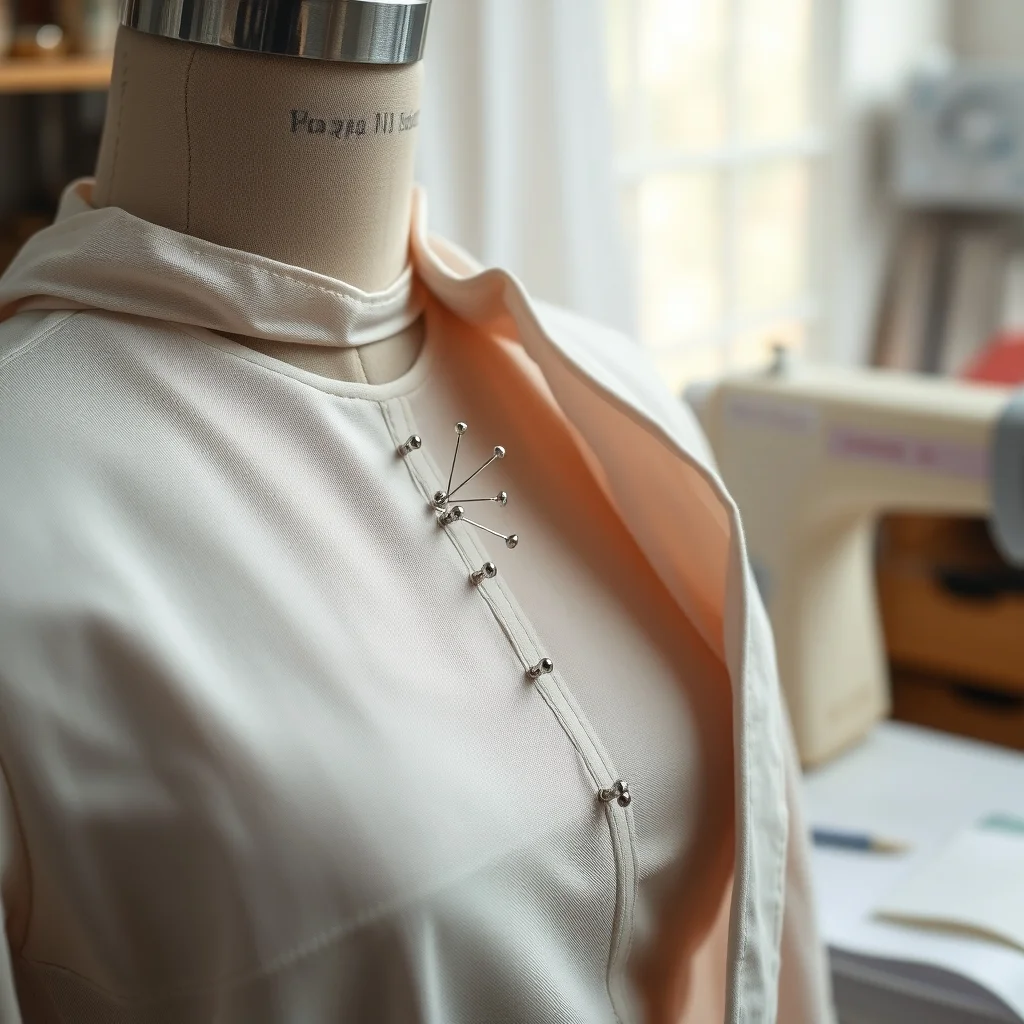
A professional dress form (dressmaker's form) has a firm foam core — typically high-density polyurethane or papier-mâché composite — covered in a dense natural-fiber fabric (usually linen or cotton canvas). The foam core is specifically designed to accept and hold straight pins. The cover fabric provides additional grip. A pin pushed into the surface at an angle remains there under the weight of draped fabric, allowing you to position, mark, and baste patterns directly on the form.
Professional forms are fixed in size — they don't adjust. You buy a specific size (or a size close to your measurements) and work within it. The trade-off for the fixed size is genuine pinability and the accurate, stable body shape that professional pattern-making requires.
| Feature | Adjustable form | Professional pinnable form |
|---|---|---|
| Pinnable | No | Yes |
| Size range | One form covers multiple sizes | Fixed size; one size per form |
| Body shape accuracy | Adjustable but often compromised at extremes | Accurate to industry standard for the size |
| Draping suitability | Poor (can't pin) | Excellent |
| Display suitability | Good (clean surface) | Good (but cover shows wear from pins over time) |
| Typical price range | $30–$120 | $150–$800+ (quality varies substantially) |
Choosing the right size: fit to your body or fit to your work
Dress form sizing follows industry sizing standards, not consumer clothing sizes. Standard sizes in professional dress forms typically run from size 2 to size 24 or similar, corresponding to specific bust, waist, and hip measurements. These measurements are published on the manufacturer's spec sheet and should be checked against your actual body measurements before purchasing.
If you're fitting garments for yourself
The goal is a form that closely matches your measurements so that garments fitted on the form transfer accurately to your body. The form doesn't need to be identical to your measurements — minor differences can be adjusted by padding the form — but it should be close. The most common approach is to buy the size that matches your largest measurement (typically hip or bust) and pad smaller areas to match. Padding a smaller form up in the bust or hip is easier and more stable than compressing a larger form.
Consider your proportions relative to industry standard sizing. Professional dress form proportions follow industry standard ratios (a specific relationship between bust, waist, and hip measurements). If your proportions differ significantly from standard — for example, you have a large hip-to-waist ratio or a non-standard torso length — a standard professional form may not reflect your body accurately even at the right measurements, and fitted garments may still need substantial adjustment on the body.
If you're making garments for clients or for commercial sizing
Choose a size that represents your typical client's measurements, or buy multiple sizes for different client categories. A home-based alterations business working with a range of clients might have forms in three or four sizes. Professional workrooms may have a rack of forms across the size range.
Shopping for dress forms? Browse current eBay listings → (we earn a small commission; your price is unchanged).
Cover material and pinability
The cover fabric on a professional pinnable form is not decorative — it's functional. It provides the surface into which pins are inserted, and it must be dense enough to hold pins at an angle without allowing them to immediately fall out or shift under the weight of draped fabric.
Linen and cotton canvas covers
The best professional forms use a tightly woven natural-fiber cover: typically Belgian linen, heavy cotton canvas, or a combination. The density of the weave is what makes pins hold. A well-woven linen cover on quality foam holds a pin at nearly any angle, and the texture provides useful friction for draping work.
Synthetic covers and what to avoid
Budget pinnable forms sometimes use synthetic fabric covers. These look similar to linen visually but don't hold pins as securely — the lower friction and different fiber structure lets pins shift. Vinyl-covered forms, which appear in some adjustable form designs, cannot be pinned at all; the material splits rather than accepting a pin cleanly.
Check manufacturer specifications for cover material before purchasing. If a listing doesn't disclose cover fabric type, it's worth contacting the seller before purchasing — a genuine professional pinnable form will always specify the cover material because it's the form's primary functional attribute.
Foam density and structural integrity
The foam core determines both how well the form holds pins and how stable it is under the physical pressure of draping and pinning fabric. Higher-density foam holds pins more securely and resists deformation when you pull or tension draped fabric against it.
Budget forms use lower-density foam that may compress over time, particularly where pins are inserted repeatedly. High-traffic areas — the shoulder, the side seam, and the center front and back lines — show the most wear on lower-density forms after extended use. Professional-grade forms (brands like Dress It Up, Uniquely You Professional, and similar) use higher-density foam specifically rated for repeated pinning.
One practical check: forms with a papier-mâché or hardened composite core rather than foam offer firmer structure that doesn't compress, but they're heavier and less forgiving with pin angles. These are found in some vintage and European professional forms.
Stand design and height adjustment
A dress form stand does two things: holds the form at working height without tipping, and allows height adjustment so the form can be positioned at a comfortable height for the sewist working with it.
Stand stability
The base of the stand determines stability. Three-legged and four-legged bases distribute weight differently; wider base footprints are more stable. A form loaded with draped fabric has a shifted center of gravity compared to an empty form; the stand must remain stable under this asymmetric load. Budget stands on light bases tip when fabric is pinned and pulled laterally. Weighted bases or stands with wide leg spread (typically 18–24 inches or more) are more stable for active work.
Height adjustment range and mechanism
Most professional forms mount on a central pole with a locking collar adjustment. Height range typically covers approximately 55 to 65 inches total height (top of shoulder to floor), accommodating sewists of different working heights. Verify the adjustment range matches your comfortable working height: the form shoulder should be at approximately the same height as your shoulder when you're working at the form, to properly assess shoulder and neckline fit.
Adjustment mechanisms vary: some use a lever-release locking collar, others use a twist-lock mechanism. Lever-release is faster for frequent height changes. Check that the lock is positive — a lock that slips under the weight of the form and draped fabric is a safety concern and a persistent frustration.
Torso length and form coverage
Standard professional dress forms end at the hip. Some include hip coverage below the hip curve to a mid-thigh or full-length hip band; others end at the natural waist or just below the hip bone. The coverage matters for:
- Dresses and skirts: You need hip coverage to properly assess hip fit and the fall of the skirt below the hip. A form that ends at the natural hip makes it difficult to assess hip curve fitting accurately.
- Bodices and tops: Waist and hip coverage is less critical; even a shorter torso form is adequate.
- Pants: Standard dress forms don't represent the crotch or legs, so pants fitting on a dress form is limited. The form is useful for checking the waistband and hip area but not the inseam or crotch depth.
Some forms include shoulder pads or specific shoulder structure; verify whether the shoulder construction represents the shoulder style your garments typically use (padded vs natural shoulder).
Padding a dress form to your measurements
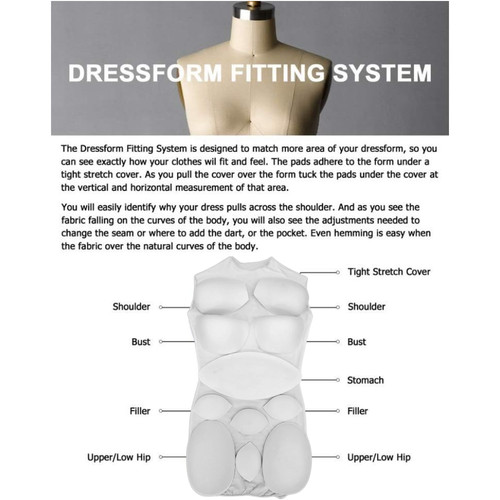
Padding a professional form to match your specific measurements is standard practice. The process involves adding layers of batting, foam, or specialty form padding in areas where your measurements exceed the form's measurements. A size 10 form with a C-cup bust can be padded to a D cup with batting and muslin cover layers. Hip or waist differences can be addressed similarly.
Padding works well for small to moderate measurement differences (typically up to 2 inches per measurement). Larger differences introduce shape distortion — the added padding changes the overall silhouette in ways that make fitted garment assessment less accurate. For large measurement differences, it's more accurate to buy a form closer to your measurements.
Many sewists create a custom cover for their form after padding — a muslin or spandex outer layer sewn to fit the padded form exactly. This provides a clean surface for marking and re-pinning without disturbing the padding layers.
The honest buying framework
If your work involves draping, pattern-making, or pinning garments directly to the form for fitting: buy a professional pinnable form in your size or the closest standard size. Verify the cover is natural fiber (linen or heavy canvas), the foam density is sufficient for active pinning, and the stand base is wide enough for stability with draped fabric.
If you need a form primarily for displaying finished garments, photographing designs, or checking general proportion without active pinning: an adjustable form is adequate and significantly less expensive. The rigid shell holds garments fine for display; you just can't use it for active sewing work.
If you're between these two uses — you mostly display but occasionally want to pin: the correct answer is still a professional pinnable form, because an adjustable form's limitations in active sewing work are significant, and the downgrade from a pinnable form to a display form is not a functional limitation for display purposes.
Search eBay for these forms
 Professional dress form
Firm foam core with natural-fiber pinnable cover. Verify size against your measurements.
Professional dress form
Firm foam core with natural-fiber pinnable cover. Verify size against your measurements.
 Adjustable dress form
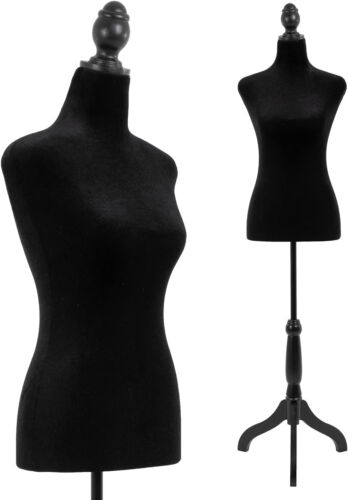
Multi-size rigid shell. Good for display; not suitable for active draping or pinning.
Adjustable dress form
Multi-size rigid shell. Good for display; not suitable for active draping or pinning.
 Pinnable dress form
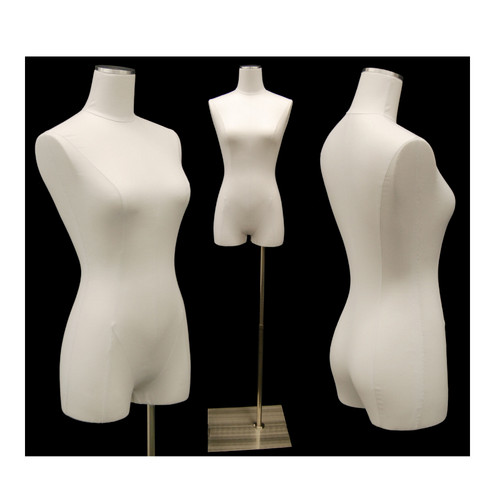
Filtered search for pinnable construction. Verify natural-fiber cover in listing specs.
Pinnable dress form
Filtered search for pinnable construction. Verify natural-fiber cover in listing specs.