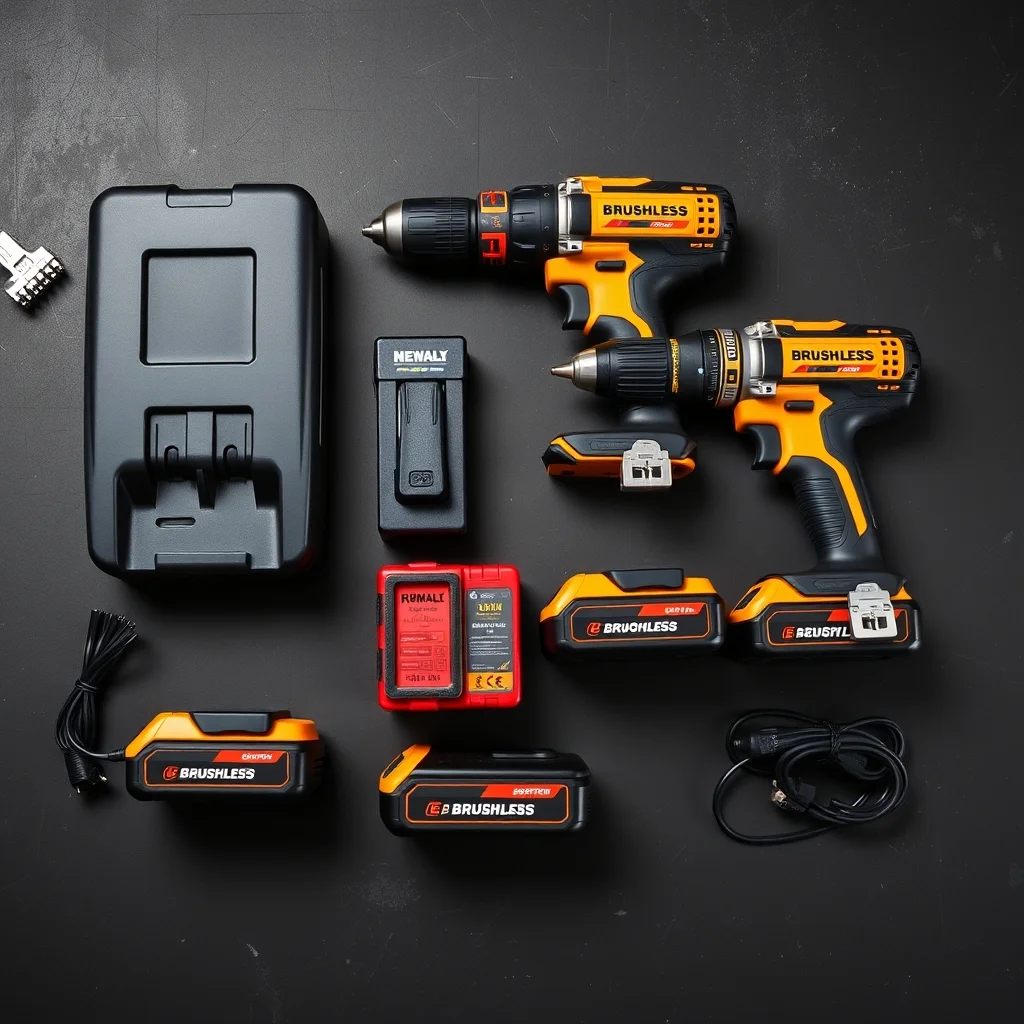
Voltage: what 12V, 18V, and 20V MAX actually mean
Voltage is the most-marketed number on a cordless drill box, and it is also one of the most misunderstood. Higher voltage generally means more torque capacity and the ability to run a larger motor — but the relationship is not linear, and real-world performance depends heavily on battery capacity, motor design, and the quality of the power electronics.
The three main voltage tiers work out to three practical use cases:
- 12V compact: Light duty — assembling furniture, drilling pilot holes in wood, driving short screws. Weighs roughly 2–2.5 lbs with battery. Fits in tighter spaces. Appropriate for frequent overhead work or one-handed tasks. Not appropriate for drilling into concrete, driving long lag bolts, or sustained heavy use.
- 18V / 20V MAX: The standard homeowner and light-trade tier. These are effectively the same voltage — 18V (nominal) and 20V MAX (peak) describe the same battery chemistry, just measured differently. This tier handles framing, hanging drywall, drilling into studs, most masonry anchors (with a hammer drill mode), and sustained use. Most accessories and batteries are designed around this tier.
- 60V / FLEXVOLT and similar high-voltage platforms: Designed for heavy trade use: drilling large-diameter holes in structural lumber, driving 3/8" lag screws repeatedly, continuous production work. These tools are heavier (5+ lbs with battery) and overkill for most homeowners.
Brushed vs brushless: the motor difference that matters
A brushed motor uses physical carbon brushes to transfer current to the rotor. Those brushes create friction, generate heat, wear down over time, and limit efficiency. A brushless motor uses electronic commutation — no physical brushes — which means less heat, less wear, more torque at the same battery draw, and longer runtime per charge.
| Factor | Brushed motor | Brushless motor |
|---|---|---|
| Efficiency | Typically 75–80% | Typically 85–90%+ |
| Heat generation | Higher (brush friction) | Lower |
| Maintenance | Brushes wear and need replacement (typically after hundreds of hours) | No wear parts in the motor |
| Runtime per charge | Baseline | Typically 25–50% longer on equivalent task |
| Price premium | Lower | Higher (typically $30–80 more per tool) |
| Best for | Occasional light use; tight budgets | Regular use; sustained heavy tasks; professionals |
For occasional DIY use — drilling a few holes a month, mounting hardware, light home repairs — a brushed drill is perfectly adequate. For anyone using a drill regularly (weekly or more), or for sustained tasks like drilling masonry or driving many fasteners in a day, the efficiency and longevity gains from a brushless motor justify the premium.
Chuck size: 3/8" vs 1/2"
The chuck is the clamping mechanism that holds the drill bit. Two sizes dominate the cordless market:
3/8-inch chuck
Accepts bits up to 3/8" shank diameter. Sufficient for nearly all standard twist bits, spade bits up to about 1.5 inches, and most hole saws. Lighter weight contributes to the compact form. The vast majority of homeowner drills use a 3/8" chuck. If your work involves standard wood and light metal drilling, this is the appropriate choice.
1/2-inch chuck
Accepts larger shank bits — large spade bits, self-feed bits for electricians, large hole saws, core bits, and more. Required for some specialty bits. The larger chuck also grips standard bits more securely, which matters when drilling hard materials. Most 18V/20V heavy-duty drills come with a 1/2" chuck. If you drill large-diameter holes or work in heavy construction, the 1/2" chuck is the right choice.
Drill/driver vs hammer drill: two different tools
A standard drill/driver rotates the bit. A hammer drill adds a rapid percussive action along the axis of the bit — a forward hammering motion that fractures masonry as the bit rotates. They look nearly identical but do very different work.
Use a standard drill/driver for:
- Wood drilling (any species, any density)
- Metal drilling (aluminum, mild steel)
- Driving screws, bolts, fasteners
- Drilling into plastic, fiberglass, drywall
Use a hammer drill for:
- Setting anchors in concrete, brick, CMU block, mortar
- Drilling through tile and natural stone
- Any masonry work where a standard bit stalls or overheats
Most 18V/20V drills sold today include a hammer mode — there is typically a selector switch with icons for drill, drive (with clutch), and hammer. If you ever plan to anchor anything into concrete — mounting a TV bracket, hanging shelves in a basement, setting a door threshold — buy a drill with hammer mode. If you only work in wood, drywall, and light metal, the hammer mode is irrelevant and you can save money by buying a drill/driver without it.
Shopping for cordless drills? Browse current eBay listings → (we earn a small commission; your price is unchanged).
Battery platform: the decision that outlasts the drill
The most consequential decision in cordless tool buying is battery platform, not the individual tool. Once you own two or three tools on a platform — drill, impact driver, circular saw — switching platforms means buying new batteries for everything. Battery costs typically run $50–120 each, and a full collection of 4Ah or 5Ah batteries represents several hundred dollars of sunk investment.
The major platforms in the 18V/20V tier as of this writing:
- DeWalt 20V MAX / FLEXVOLT: Widest tool selection in North America; FLEXVOLT batteries are backward-compatible with 20V tools at 20V and forward-compatible with 60V tools at 60V. Strong availability at home centers.
- Milwaukee M18: Deep catalog especially for trade professionals; strong in electrical, plumbing, and HVAC tool selection. Premium pricing but wide battery compatibility across the M18 ecosystem.
- Makita 18V LXT: Largest overall 18V tool catalog globally; strong build quality; batteries are well-regarded for runtime. Slightly less retail presence in some US regions.
- Ryobi ONE+ (18V): Entry-level to mid-range; wide tool selection at lower price points; largest number of compatible tools of any platform. Good for homeowners who want variety without the professional-tier price.
- Bosch 18V: Strong in European markets; solid quality; smaller North American catalog than DeWalt or Milwaukee.
If you're buying your first cordless tool, choose the platform you expect to stick with, not just the cheapest individual drill. If you're adding to an existing collection, buy within your platform whenever possible.
Torque, clutch settings, and speed ranges
Torque is typically listed as in-lbs or ft-lbs on the spec sheet. The number is the maximum torque under stall — a rarely achieved edge case. More useful is the clutch: most drill/drivers have 15–25 clutch positions plus a drill mode. The clutch disengages the driver at a set torque threshold, preventing overtightening screws into soft materials (stripping threads or overdriving into wood). Lower numbers = less torque before the clutch slips.
Two-speed gearboxes (common on most 18V drills) give you a low-speed/high-torque mode for driving fasteners and a high-speed/low-torque mode for drilling. Rule of thumb: use low gear (1st speed) for driving screws; use high gear (2nd speed) for drilling holes.
Weight and ergonomics: the spec nobody publishes prominently
Drill weight with battery — not the bare tool weight — is the number that matters for a day of overhead work or a long framing project. Weights vary from about 2.0 lbs (12V compact with battery) to 5.5+ lbs (large 20V hammer drill with 5Ah battery). If you are doing overhead work — installing ceiling fans, mounting upper cabinets, running wire — choose accordingly. A 3.5 lb drill feels fine for 30 minutes of bench work; it feels very different after two hours at shoulder height.
Common buying mistakes
- Buying a drill without buying batteries: "Bare tool" listings on eBay are common and good value if you already own the platform. If you don't, always buy a kit (drill + at least one battery + charger).
- Assuming higher voltage means better: A high-quality brushless 12V drill outperforms a cheap brushed 20V drill on efficiency and longevity. Voltage tier is a proxy for use-case category, not absolute quality.
- Buying a hammer drill when you only need a driver: Hammer drills are slightly heavier and cost more. If your work is wood and drywall, save the money and weight.
- Neglecting battery amp-hours: A 1.5Ah battery and a 4.0Ah battery look identical in store photos. The 4.0Ah lasts roughly 2.5× longer per charge. For serious work, always buy at least a 2.0Ah battery; 4.0Ah or 5.0Ah for heavy use.
- Starting a collection on a no-name platform: Cheap off-brand batteries degrade faster and may not be available in three years. The major platforms all have genuine replacement batteries and long tool catalogs.
The honest summary
For most homeowners doing occasional projects — hanging things, assembling furniture, light renovation work — an 18V/20V brushless drill/driver from any major platform (with a 2.0Ah or larger battery) is the right call. It is the most versatile tier, accessories are universally available, and the brushless motor means the tool will outlast most use cases.
Buy the hammer drill variant if you ever anchor into concrete. Buy within a major platform you plan to expand. Skip the biggest batteries for a first kit and upgrade when you know how much you actually use it.
 Cordless drill set
 Brushless drill kit
 Impact driver