
The four methods and what separates them
Camp coffee has four practical methods that cover the range from solo ultralight to group car camping: immersion pressure (AeroPress), immersion steep (French press), bypass gravity (pour-over), and percolation (stove-top perc). Each produces acceptable coffee. The differences that matter in the field are extraction consistency at altitude, cleanup water demand, filter logistics, and weight.
What most camp coffee comparisons skip is that water temperature at altitude changes extraction in ways that affect which method performs best. Water boils at roughly 202°F at 5,000 feet elevation and around 194°F at 10,000 feet. That 10–12°F drop matters more for some methods than others, and adjusting for it without a thermometer is straightforward once you understand the off-boil timing approach covered below.
| Method | Gear weight (approximate) | Filter required? | Cleanup water | Best for |
|---|---|---|---|---|
| AeroPress Go | 11.5 oz (with travel mug) | Yes — micro-filter paper | Minimal (eject grounds in one disc) | Solo, quality-focused |
| Snow Peak titanium French press insert | 0.9 oz (insert only) | No | Moderate (rinse grounds from mug) | Solo, filter-free, ultralight |
| Stanley Adventure pour-over | 4.4 oz (cone + reusable filter) | No (reusable mesh) | Minimal (rinse cone) | Solo or duo, no paper supply |
| GSI Halulite percolator (1L) | 8.6 oz (hard-anodized aluminum) | No | Moderate (rinse basket + pot) | Group (2–4 people) |
AeroPress Go vs standard AeroPress: what actually changed
Aerobie introduced the AeroPress Go in 2019 as a travel-optimized variant of the original AeroPress. The substantive differences are small but relevant for backpacking use.
The Go weighs 11.5 oz total including its integrated travel mug, which doubles as the carry case for the plunger, filter cap, funnel, and stirrer. The standard AeroPress is slightly larger (makes up to 10 oz per press vs the Go's 8 oz capacity), weighs 6 oz for the unit alone (no travel mug included), and requires separate carry organization. For backpacking, the Go's self-contained case is a genuine advantage — everything nests inside the mug, nothing rattles loose.
The extraction mechanism is identical. Both use the same immersion-pressure method: grounds steep in hot water for 1–2 minutes, then you press a plunger through a micro-filter paper, forcing coffee into the cup below. The micro-filter (paper or metal) produces a cleaner cup than French press because it removes nearly all fine particles and oils. For those who find unfiltered coffee acidic or hard on the stomach in the field, this matters.
Where the Go is slightly worse: it makes only one 8 oz cup per press, so for two people you press twice. The standard AeroPress can make a stronger 4 oz concentrated shot you then dilute into two cups. Small difference, but worth knowing if you're regularly making coffee for two.
Snow Peak titanium French press insert
Snow Peak's titanium French press insert is designed to fit inside Snow Peak's 450 ml (15.2 oz capacity) or 600 ml (20.3 oz capacity) titanium mugs. The insert itself weighs 0.9 oz — it is essentially a titanium mesh plunger that rests on top of ground coffee and hot water, then presses down to force grounds to the bottom after steeping.
French press produces a different cup than AeroPress. Without a paper filter, coffee oils pass through into the drink, producing a heavier-bodied, more aromatic result with some fine sediment at the bottom of the mug. Whether this is better or worse is a preference question, not a quality question. Many camp coffee drinkers prefer it precisely because of the fuller body. Others find the sediment or oilier texture unappealing, particularly on early mornings when picky coffee needs are not the priority.
The titanium French press requires moderately coarse grounds — the same grind you'd use for a home French press. Too fine and grounds work through the mesh; too coarse and extraction is flat. The benefit over paper-filter methods is that you carry no paper supply. The tradeoff is more cleanup: after drinking, you rinse grounds out of the mug, which uses more water than the AeroPress's eject-the-disc cleanup.
Stanley Adventure pour-over with reusable mesh
The Stanley Adventure pour-over is a stainless steel cone with a built-in reusable stainless mesh filter. It sits directly on top of a wide-mouth mug or camp cup while you pour hot water through it. Stanley's design targets the mug-sitting position specifically, which means it only works reliably with mugs that have a standard wide-mouth opening — it will not sit stably on a narrow opening or a pot.
The pour-over method requires more attention than the AeroPress or French press: you pour water slowly in a controlled stream, ideally in circles, over evenly distributed grounds. Without a gooseneck kettle — which nobody backpacks with — this controlled pour is harder to achieve from a standard camp pot or water bottle. Most backpackers manage by pouring slowly from a pot handle position, accepting that the pour is imprecise. The result is still good coffee; it just requires more attention than pressing a plunger.
The advantage of the Stanley model over paper cone filters is that you carry no paper supply. The mesh filter is permanent; rinse it and pack it. The cleanup involves rinsing grounds from the mesh cone — less water than a French press mug but slightly more fiddly than an AeroPress puck disc. At 4.4 oz for the cone alone, it is heavier than the Snow Peak French press insert but lighter than the full AeroPress Go system.
GSI Halulite percolator: the group method
The GSI Halulite 1-liter percolator is a hard-anodized aluminum camp percolator in the traditional stovetop design: a pot with an internal basket and tube. You add coarsely ground coffee to the basket, fill the pot with cold water below the basket level, and heat it on a stove or fire. As the water heats, it percolates up through the tube and over the grounds repeatedly until you pull it from heat.
Percolation produces strong, hot coffee efficiently for groups. A 1-liter percolator makes approximately four 8 oz cups per batch. The GSI Halulite weighs 8.6 oz and nests internally for pack organization. The hard-anodized aluminum construction handles direct fire and stove heat without issue — unlike titanium, which is technically fine over fire but develops discoloration over time.
The percolator's weakness is control: it is easy to over-extract (percolation cycles the coffee back over hot grounds repeatedly), producing bitter results if left too long. The general field rule is to watch for the liquid in the glass percolator dome to turn amber-brown, then remove from heat immediately. Percolated coffee will not be as clean or nuanced as AeroPress or pour-over. For a group that wants hot strong coffee efficiently and is not concerned with extraction finesse, it is the right tool.
Grind size by method
Grind size controls extraction rate. Finer grinds expose more surface area and extract faster; coarser grinds extract slower. Matching grind to method produces consistent results even without precise water temperature or timing.
- AeroPress Go / standard AeroPress: Medium-fine to medium. Similar to drip coffee grind. The paper or metal micro-filter handles fines without clogging. If using a metal filter with the AeroPress, go slightly coarser to reduce sediment pass-through.
- Snow Peak titanium French press: Coarse — similar to sea salt crystal size. Finer grinds work through the mesh and create a muddy cup. If you have only pre-ground coffee available, let the cup sit two extra minutes before drinking so fines settle.
- Stanley pour-over (mesh filter): Medium-coarse. The reusable stainless mesh is slightly coarser than paper, so going medium rather than fine prevents pass-through. A true paper cone filter would take medium-fine, but the metal mesh needs a coarser grind.
- GSI percolator: Coarse — same as French press. Fine grinds pass through the basket perforations and clog the tube. Extra-coarse if the coffee tends toward bitter.
Water temperature without a thermometer: off-boil timing
The standard guidance for coffee brewing is 195–205°F. At sea level, water boils at 212°F, so you need to let it cool slightly before brewing — the common advice is 30 seconds off boil, which produces approximately 205°F water. At altitude, this changes because boiling point drops.
The practical altitude adjustments for camp use:
- Sea level to 3,000 feet: Let boiling water rest 30–45 seconds off heat before brewing. This targets 200–205°F.
- 3,000–6,000 feet: Brew immediately after removing from heat. Water boils around 205–208°F at this range, putting you in the ideal window without waiting.
- 6,000–9,000 feet: Brew with water still on or just removed from heat. Boiling point is approximately 198–203°F — at the low end of ideal but workable. Extend steep time by 30 seconds to compensate for slightly lower extraction rate.
- Above 9,000 feet: Water boils at 194°F or below. Use water directly at boil and extend steep time for AeroPress to 2–2.5 minutes (standard: 1–1.5 min) or French press to 5 minutes (standard: 4 min). Percolator results are affected most at high altitude — bitter extraction is less likely, but flat or weak extraction becomes common. Compensate by using more coffee rather than extending percolation time.
Packability tradeoffs: the honest weight math
For solo backpacking, the Snow Peak titanium French press insert wins on weight if you already carry a compatible Snow Peak mug (you add 0.9 oz). If you do not already carry that mug, the AeroPress Go system at 11.5 oz is the better choice because its travel mug is a functional coffee cup you would have carried anyway — effectively the AeroPress mechanism adds 4–5 oz to your pack.
The Stanley Adventure pour-over at 4.4 oz sits between those two options. Its appeal is the permanent filter and the ability to use it with any wide-mouth vessel you already carry. If you use a wide-mouth Nalgene or a compatible camp cup, the pour-over cone is the only item to add.
For group camping where weight per person is shared, the GSI Halulite percolator at 8.6 oz for four cups means approximately 2 oz per person. At that math, it becomes competitive with any solo method in a group context, plus it produces coffee in a single step without per-cup brewing.
Filter paper supply logistics matter more than weight on multi-day trips. The AeroPress Go ships with 350 micro-filter papers. Each brew uses one filter. For a seven-day trip with one brew per day, you use seven filters — weight is negligible, but you must remember to pack them. A forgotten filter supply on a remote trip means no AeroPress coffee. The Snow Peak French press insert and Stanley pour-over reusable mesh carry no such risk.
Search eBay for this camp coffee gear
 AeroPress Go portable
11.5 oz with travel mug that doubles as carry case. 350 micro-filter papers included.
AeroPress Go portable
11.5 oz with travel mug that doubles as carry case. 350 micro-filter papers included.
 Snow Peak titanium French press
0.9 oz insert for Snow Peak 450 or 600 titanium mugs. No filters needed.
Snow Peak titanium French press
0.9 oz insert for Snow Peak 450 or 600 titanium mugs. No filters needed.
 Stanley Adventure pour-over
Stainless cone with permanent mesh filter. No paper supply needed.
Stanley Adventure pour-over
Stainless cone with permanent mesh filter. No paper supply needed.
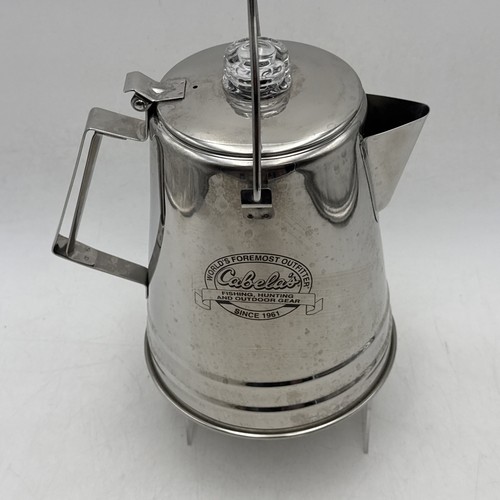 GSI Halulite percolator
1L hard-anodized aluminum for 2–4 people. Direct fire and stove compatible.
GSI Halulite percolator
1L hard-anodized aluminum for 2–4 people. Direct fire and stove compatible.
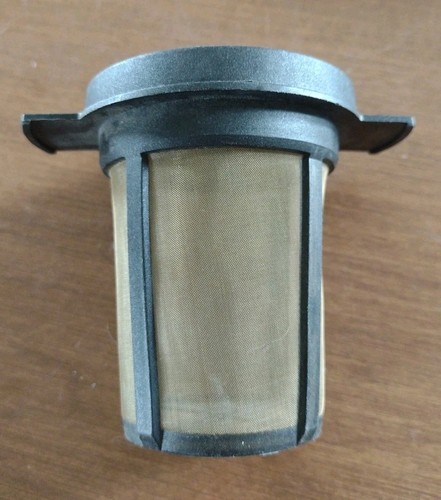 MSR MugMate
0.5 oz immersion filter for any wide-mouth mug. Minimum viable camp coffee.
MSR MugMate
0.5 oz immersion filter for any wide-mouth mug. Minimum viable camp coffee.