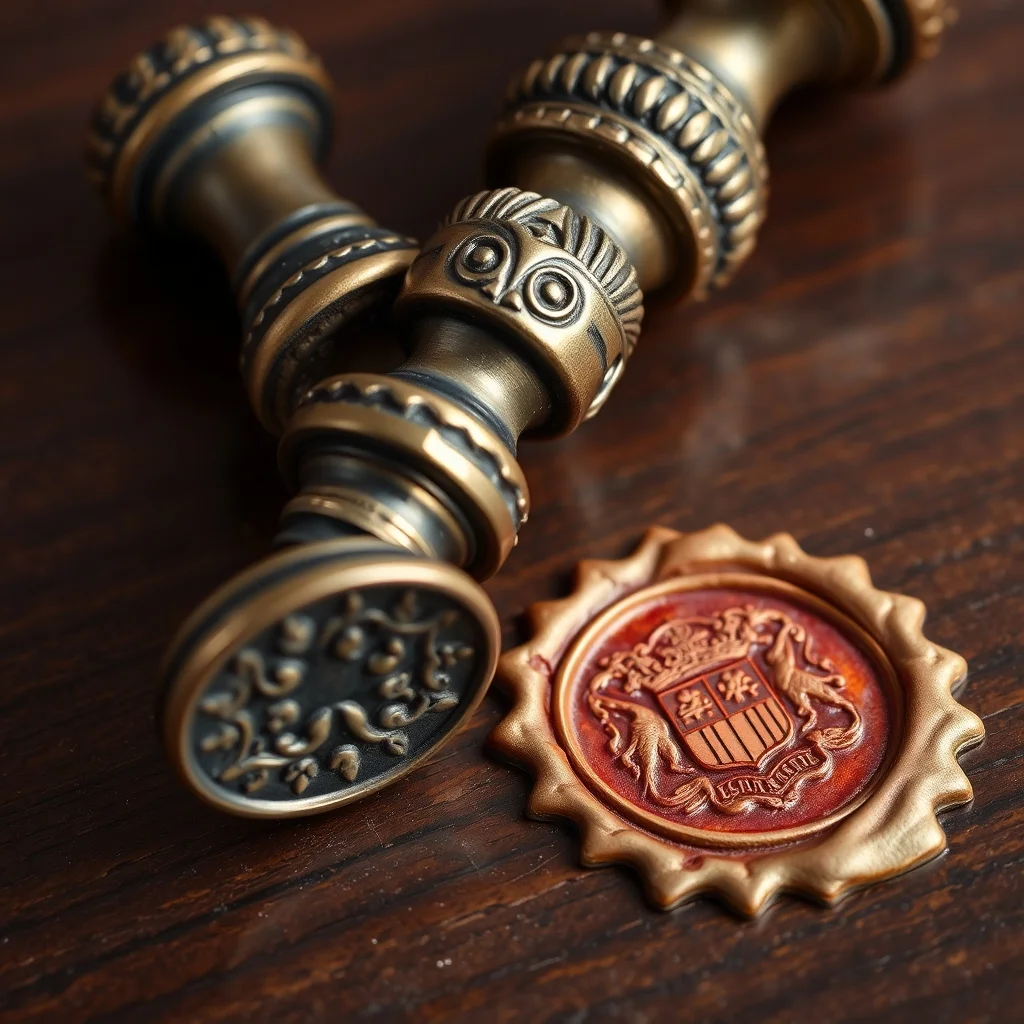
Three types of antique stamps and seals
When collectors use the term "antique stamp" they might mean any of three fairly different objects: a wax seal matrix (the engraved die used to press a design into sealing wax), an ink-based rubber or metal stamp used for office or commercial marking, or a postal cancellation device used by post offices to void postage. Each has a different history, different collector community, and different value logic.
Understanding which category a given piece belongs to — before assigning value or doing research — is the first practical skill.
Wax seal matrices
A wax seal matrix is the engraved die that makes the impression in wax. The handle is separate: a turned wood grip, a cast metal handle, or sometimes just the die alone designed to be held in the fingers or set into a signet ring. The matrix face carries the engraved design in reverse (so it appears correctly in the impressed wax).
Materials and quality grades
The finest antique wax seal matrices are hand-engraved in brass or bronze by trained seal engravers (sometimes called diestickers). Hand engraving produces variable line depth that catches light differently at different angles; machine-engraved dies have perfectly uniform depth and a slightly mechanical appearance. This distinction is visible under a loupe and determines a significant portion of value.
Steel matrices were used for more utilitarian commercial applications. Brass is most common for personal seals. Some high-end historical pieces use silver or gold for the matrix face, though this is exceptional.
Armorial and heraldic seals
Seals bearing heraldic devices — coats of arms, crests, and supporters — represent the highest collector interest in this category. A genuine early armorial seal belonging to a named family, with documented provenance, can be a significant piece of English, Scottish, or Continental heraldic history. Attribution requires knowledge of heraldic blazon (the formal verbal description of arms) and access to reference sources like Burke's General Armory or the Ordinary of British Armorials.
Many "heraldic" seals found at estate sales bear invented or generic-looking devices that were sold as decorative objects with no actual armorial standing — these were common Victorian-era products. The difference is usually researchable through heraldic reference works.
Monogram seals
Monogram seals — one, two, or three intertwined initials — were made in large quantities from the mid-Victorian period through the 1940s. They were personal objects and were often given as gifts. Quality ranges from flat stamped cheap examples to deep hand-engraved intertwined scripts. Fob seals (small seal matrices designed to hang from a watch chain) with fine engraving and decorative handles are the most collectible monogram examples.
Shopping for antique stamps and seals? Browse current eBay listings → (we earn a small commission; your price is unchanged).
Office and commercial stamps
Rubber stamps
Rubber stamps — a vulcanized rubber die mounted on a wooden or metal handle — replaced hand stamps in commercial use from roughly the 1870s onward. Antique rubber stamps are collected primarily for two reasons: the impressiveness of the handle design and the content of the stamp face.
Advertising rubber stamps with decorative brass or cast-iron handles were made to sit on desks and be used constantly. The finer ones have substantial weighted bases and ornate mounts. The stamp face content — particularly early advertising or unusual commercial messages — has its own collector interest.
The rubber element of any antique stamp will have hardened over time. "Working" condition (still capable of making a clean impression) is nice but not required for most collectors; the handle and mount are the primary objects of interest.
Handle materials and types
Handle quality runs a wide spectrum:
- Turned wood: The standard. Pine, maple, or walnut. The quality is in the turning profile — simple cylinders are common; decorative turned profiles with multiple rings and tapers are more interesting.
- Cast iron: Used for larger, heavier commercial stamps. Often with company name cast directly into the base. The weight and heft of these pieces give them presence as display objects.
- Brass: Higher-end office stamps used solid or plated brass handles, sometimes with engraved or chased decoration.
- Composition/early plastics: Some mid-century stamps used Bakelite handles. These are a distinct collector category at the intersection of stamp collecting and Bakelite collecting.
Notary seals and embossers
Notary public seals are authentication instruments with a specific legal purpose: impressing the notary's name, state, and commission information into a document to attest witness of a signature. Two types are common in the antique market:
Hand seals: A single-tool device with two opposing engraved die faces that close together to crimp the paper. The notary applies pressure by hand. These are typically brass, sometimes with wooden handles. The state name and commission county visible in the die identify origin.
Desk embossers: A lever-action desktop device that applies mechanical advantage to emboss clearly. These are larger and heavier and make a cleaner impression than hand seals.
Notary seals from earlier periods — particularly those with state territorial designations that no longer exist (territory rather than state, or early statehood commissions with low commission numbers) — carry additional historical interest. The value depends heavily on which state and approximate date the seal represents.
Postal cancellation devices
Postal cancellation devices (also called cancellers or postmarks) were used by post offices to mark stamps as used and record the place and date of mailing. These tools are studied and collected within the specialty field of marcophily.
Hand cancellers — struck by hand against the stamp — are the most common antique postal marking device. The die face typically carries the post office name, state, and a date indicator (sometimes a dial or rolling date element). Rare post offices, early territorial post offices, and unusual cancellation formats drive value in this sub-category.
Mechanical cancellers — the large postal machines used to cancel stamps by the thousands per hour — are essentially industrial equipment and are less commonly collected as whole units, though individual die components from them appear in the market.
Condition criteria across the three categories
| Type | Primary condition factor | Secondary condition factor |
|---|---|---|
| Wax seal matrix | Engraving clarity and depth; die face intact without damage | Handle completeness and condition; original case if any |
| Rubber stamp | Handle condition; mount integrity | Rubber element condition; original content legibility |
| Notary seal | Mechanism function; die legibility | State and date rarity; commission specifics |
| Postal canceller | Die legibility; post office identification | Rarity of the specific post office represented |
Reading a wax seal impression
Before buying a wax seal matrix, you can assess die quality by making a test impression in modelling clay or play-doh. A quality hand-engraved die produces clear, crisp lines with natural variation; a machine-engraved die produces mechanically even lines; a damaged die shows breaks, chips, or flattened areas that result in missing detail in the impression.
Heraldic devices are most easily research-checked from an impression rather than from looking at the reversed die face directly. Making an impression and then consulting a heraldic ordinary (an index of designs, organized by the elements present rather than by family name) is the standard research approach.
Building a collection
The most focused collections in this category tend to specialize in a single type. Wax seal matrix collectors often focus on a period (Georgian, Victorian), a geographic origin (English, Scottish armorial, French imperial), or a subject matter (armorial, monogram, trade or merchant seals). Postal cancellation collectors typically focus on a state or region and build comprehensive coverage of that area's post offices.
A mixed-type collection of "interesting stamps and seals" can also be satisfying as a display collection, where the visual range of handle types and die designs is the point. This approach is more accessible for beginning collectors and doesn't require the deep specialist knowledge that armorial research or marcophily demand.
Antique stamps & seals on eBay
We earn a small commission on qualifying sales, and 90% of it goes to charity (you can pick which); your price is unchanged. Full disclosure.
 Antique wax seal stamp
Engraved dies for wax. Test impression quality in clay before buying online when possible.
View on eBay →
 Vintage rubber stamp
Office and commercial stamps. Handle quality and cast-iron base pieces are the collectible targets.
View on eBay →
 Brass seal stamp antique
Solid brass matrix seals. Hand vs machine engraving visible as the primary quality divide.
View on eBay →
 Vintage notary seal
Embossing crimpers and hand seals. State and era rarity determine value above mechanism quality.
View on eBay →
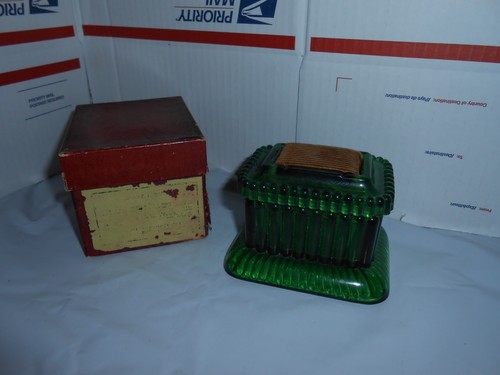 Antique postal stamp device
Cancellation devices for marcophily collectors. Post office rarity is the primary value driver.
View on eBay →