The three metals, from a reference table
These numbers are general reference data for the metals, not tests of any pot. Thermal conductivity is how fast a metal moves heat sideways; higher means fewer scorched spots. Density is how heavy a block of it is.
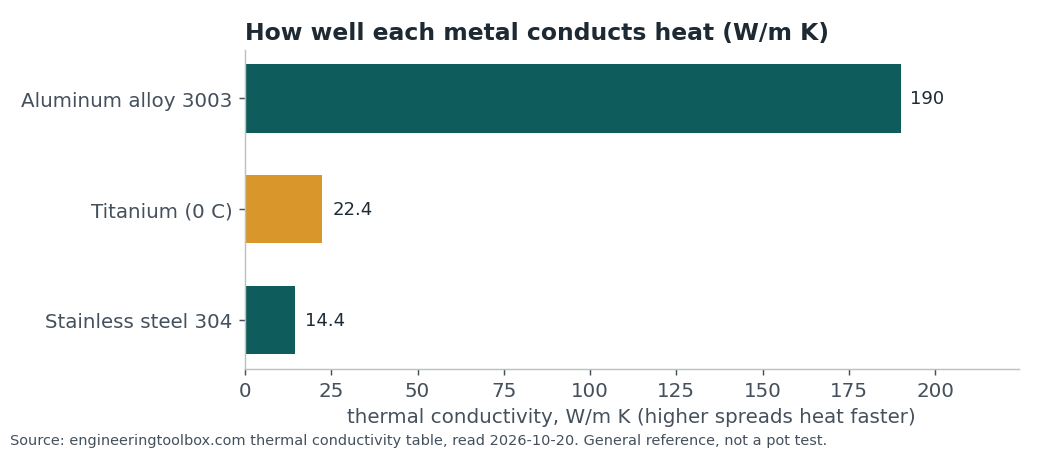
| Metal | Conductivity (W/m K) | Density (kg/m3) | What it means in a pot |
|---|---|---|---|
| Aluminum alloy | 190 (alloy 3003) | 2,712 to 2,730 (aluminum, 3003); 2,720 (6061) | Spreads heat fast. Cooks evenly. General knowledge: bare aluminum is often coated or anodized in cookware. |
| Titanium | 22.4 at 0 C | 4,500 | Heavier per block than aluminum, but pots use thin walls. Heat stays where the flame hits. General knowledge: food can scorch. |
| Stainless steel 304 | 14.4 | 7,480 to 8,000 (stainless steel, general) | Heaviest and the slowest to spread heat. Tough and cheap. General knowledge. |
Sources: engineeringtoolbox.com tables for thermal conductivity and for density of metals and alloys, read 2026-10-20. The density page lists "stainless steel" as a range and has no separate 304 entry. The conductivity page has no 6061 entry.
Read the figure this way: titanium conducts about 1.5 times better than stainless and about one eighth as well as aluminum alloy. That is why thin titanium pots heat the spot over the flame and why SilverAnt's claim that titanium is "a great heat conductor" does not match the reference table.
How thin do the walls go?
Toaks states its lightest 450 ml titanium cup is "0.3 mm pure titanium" at 48 g. A wall that thin is how a dense metal ends up light. We found no stated wall thickness on SilverAnt's pot pages.
What the makers state for a 750 ml-class pot
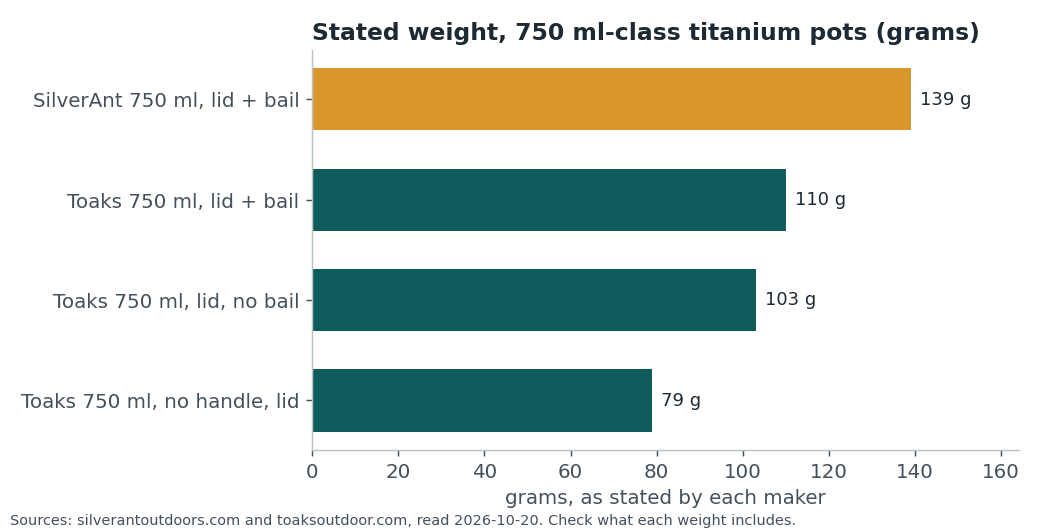
On these numbers SilverAnt's 750 ml pot is 29 g heavier than Toaks' bail version, taking both at face value. That gap is not large, and the SilverAnt pot was listed as sold out on 2026-10-20. Sea to Summit sells aluminum pots and Vargo sells titanium mugs, but neither states weights in the text we could read.
Grams saved per dollar: do the sum yourself
We do not print prices because they move. Enter the numbers you see on the day. The formula is: extra dollars paid for titanium, divided by grams saved.
Take the result as a rough price for lightness. A 30 g saving at a large price per gram is a luxury; a 100 g saving at a small price per gram is how many people trim a pack. The calculator runs in your browser and sends nothing anywhere.
Which metal for which cooking
| What you do | Pick | Why |
|---|---|---|
| Boil water for freeze-dried meals and coffee | Titanium if your pack is lean; otherwise a pot you own | Scorching does not matter when there is only water in it. Weight is the only thing titanium offers. |
| Simmer, fry, cook rice from scratch | Aluminum | It spreads heat. Sea to Summit says its hard-anodised aluminum bases heat "quickly and evenly". |
| Car camping or a base camp | Stainless steel or any cheap pot | You are not carrying it far. Weight does not matter. |
| Cooking over a campfire | Anything you can scrub | Soot and heat wreck all three. Bail-handle pots help; see the hot tent guide for stove safety. |
The honest cheaper option
Use the pot you have. A used aluminum or stainless pot from an online marketplace boils water exactly as fast as it always did. Spend on titanium only after your pack, shelter and sleep system are as light as you want them.
We have not tested any pot. We have not measured how any pot heats food. The metal figures are from a general reference table; the pot weights are the makers' own numbers.