Smith Corona dominated the US portable typewriter market through the 1950s with machines like the Silent, the Silent-Super, the Sterling, and the Clipper. Mechanically they are well-made — steel type slugs, solid segment construction, reliable ribbon mechanisms — but seventy years of storage means you are usually dealing with at least three distinct problems simultaneously: dried ink in the type slugs, congealed oil in the segment and escapement, and accumulated dust, eraser debris, and paper fibers everywhere else.
Different cleaning agents address different problems. Canned air and mineral spirits are both valid tools, but applying either one to the wrong problem wastes time at best and causes damage at worst. This guide separates the problems and matches the right approach to each one.
What You're Actually Cleaning
Before reaching for any cleaner, identify what you are dealing with. On a 1950s Smith Corona that hasn't been serviced recently, you typically encounter four kinds of contamination:
- Ink buildup in type slugs. The face of each character becomes partially or fully clogged with dried ribbon ink, producing blurry, incomplete, or filled-in impressions. The letter O is the classic diagnostic — if it prints as a solid black disk rather than a ring, ink buildup is the problem.
- Gummy oil in the segment and escapement. The segment is the slotted metal piece that guides the typebars. Oil applied during previous servicing, or factory lubricant, breaks down over decades and becomes a thick, sticky residue that slows or freezes typebar movement. This is the most common cause of sluggish or non-returning typebars.
- Loose debris throughout the mechanism. Eraser shavings, paper fibers, dust, and dead insects accumulate in the segment slots, under the platen, around the ribbon spools, and between keytops. This is mostly cosmetic but fine particles in the escapement can cause irregular spacing.
- Surface grime on painted and chrome surfaces. Exterior grime is cosmetic but also indicates how the machine was stored. Heavy exterior grime usually means the interior is in similar shape.
Canned Air: What It Does and Where It Fails
Canned air is compressed gas in a canister — typically difluoroethane or similar. It moves loose debris out of areas you can't reach with a brush. It does nothing to dissolve ink, oil, or sticky residue. This distinction matters because one of the most common mistakes is using canned air on a machine with gummy typebars, getting frustrated when the typebars still stick, and concluding the machine is "broken."
Where canned air works
- Blowing paper fibers and dust out of segment slots
- Clearing debris from under the platen and from around the ribbon spool mechanisms
- Removing loose eraser particles from the type basket after typing
- Dislodging visible debris before applying any solvent — so you aren't pushing contaminated material further into the mechanism
Where canned air fails
- Ink clogged into type slug recesses. The ink is bonded to the metal; air pressure at normal canister pressure cannot remove it.
- Congealed oil in segment slots. Sticky oil does not respond to airflow. You can see this fail in real time — the debris just moves slightly and then settles back.
- Anything requiring dissolution rather than displacement.
Use canned air first, before any wet cleaning, to remove what is loose. Then assess what remains.
Mineral Spirits: What It Does and Where It Fails
Mineral spirits is a petroleum distillate solvent — the same family as paint thinner but with a slower evaporation rate and milder smell. In typewriter cleaning, its primary use is dissolving congealed oil and grease in the segment, typebar pivots, and escapement.
Why mineral spirits over other solvents
The short answer is that mineral spirits is effective on petroleum-based residue (the old oil) while being relatively safe for the materials it contacts on a 1950s Smith Corona — steel, aluminum alloy, painted steel, rubber platen. Harsher solvents like acetone or lacquer thinner can attack painted surfaces and rubber. Lighter fluid (naphtha) also works and evaporates faster, but mineral spirits provides more working time, which matters when you are working old oil out of a gummed segment.
Water-based cleaners do not work well on petroleum oil residue and can promote rust in the steel mechanism. Avoid them inside the mechanism.
The segment flush procedure
The most effective way to clean a gummed segment on a Smith Corona portable:
- Remove the top cover of the machine. On most 1950s Smith Coronas, this involves two screws under the front of the carriage and possibly one or two at the back. The exact location varies slightly by model year.
- Place the machine on a work surface with newspaper underneath to catch runoff.
- Depress each typebar individually, working from one side of the basket to the other, while applying a small amount of mineral spirits to the typebar pivot points at the segment with a stiff brush or eyedropper. Do not flood the segment — work in small amounts.
- Continue working each typebar through its full range of motion. You will see darkened, oily fluid running out of the segment. This is the old lubricant dissolving.
- Allow the mineral spirits to evaporate fully — 20 to 30 minutes minimum — before testing typebar action.
- After the segment is clean and dry, apply a single drop of light machine oil (sewing machine oil is appropriate) to each pivot point. Do not over-oil. The amount of oil that fits on the tip of a pin is correct for each pivot.
Where mineral spirits fails
- Ink in type slugs. Dried typewriter ribbon ink is not petroleum-based. It is a combination of oil-based dye carrier and other components that have dried and bonded to the metal. Mineral spirits has limited effectiveness on it. You will see minimal improvement from applying mineral spirits to clogged type faces.
- Rubber parts. Keep mineral spirits away from the platen (the rubber roller) and the feed rollers. Prolonged contact softens rubber. Brief incidental contact is not catastrophic, but do not soak rubber components.
- Very heavy oxidation or rust. Mineral spirits is a solvent, not an abrasive or rust remover. Rust spots on the type slugs or mechanism require a different approach.
Cleaning the Type Slugs: Neither Mineral Spirits Nor Canned Air
Type slug cleaning is the most hands-on part of servicing a 1950s Smith Corona and requires a different set of tools. The correct approach is mechanical removal using a stiff-bristled brush and a mild solvent that is more aggressive than mineral spirits on dried ink.
Type cleaning solution
Dedicated type cleaning solution is sold specifically for typewriters. It is more aggressive than mineral spirits on dried ink while being safe for the metal type slugs. Denatured alcohol is a workable alternative and easier to find at hardware stores. Isopropyl alcohol at 90% or higher concentration also works, though it is slightly less effective on older dried ink than denatured alcohol.
The cleaning process
- Apply a small amount of the cleaning solution to a stiff-bristled brush — a dedicated type cleaning brush works best, but a stiff toothbrush is a legitimate substitute.
- Scrub the face of each type slug. Work in small groups, keeping track of where you have been. The 1950s Smith Coronas have 42 to 44 typebar keys; on a machine with severe buildup, this takes 20 to 30 minutes done properly.
- Wipe residue with a clean cloth or paper towel as you go. Do not let dissolved ink run back into the mechanism; work with the basket tilted forward so runoff exits away from the segment.
- Test print after cleaning. The O test is reliable: a clean slug produces a clear ring. If impressions are still blurry or filled-in after cleaning, the slug may need a second pass, or the problem may be a different issue — see below.
When cleaning doesn't fix the print quality
If type slug cleaning and a fresh ribbon still produce poor impressions, the problem may not be the slugs at all. Two other causes produce similar symptoms:
- Hard platen. The rubber platen hardens with age and provides inadequate impression cushion. A hard platen produces shallow, uneven impressions regardless of how clean the slugs are. There is no chemical fix for this; the platen needs to be replaced or re-covered.
- Strike force adjustment. 1950s Smith Coronas have a touch control or impression adjustment lever. If it has been moved to a very light setting, impressions will be faint across all characters. Check the setting before concluding the mechanism is at fault.
Cleaning the Exterior
The painted exterior of 1950s Smith Coronas is durable — most survivors still have intact paint — but seventy years of handling leaves grime that dulls the surface.
A dilute solution of dish soap and water on a damp cloth removes most surface grime without risk to the paint. Work in small sections and dry immediately; do not let water pool around seams or openings. For stubborn grime, automotive plastic detailing cleaner applied with a soft cloth is effective and safe on these painted steel surfaces. Avoid abrasive compounds — the paint scratches and the scratches are permanent.
Chrome trim on 1950s Smith Coronas polishes easily with a cloth and a small amount of chrome polish or metal polish. Light surface rust on chrome responds to fine steel wool (0000 grade) used carefully with chrome polish.
The Failures That Need a Different Approach
Some Smith Corona problems cannot be resolved with cleaning at all, and it is worth knowing when to stop before you make things worse.
- Broken or bent typebars. If a typebar does not return to the basket even after the segment is clean and free-moving, look carefully at the typebar itself and its connection to the pivot. A bent typebar can be straightened with care but requires knowing the correct geometry. A typebar that has come free of its pivot needs to be re-seated or replaced — cleaning will not address this.
- Escapement problems causing irregular spacing. The escapement on a Smith Corona is a precision mechanism with small parts. If spacing is irregular and cleaning the escapement with mineral spirits does not resolve it, the escapement may need adjustment or have a worn part. This is a repair, not a cleaning task.
- Carriage not advancing. If the carriage stops advancing entirely, the mainspring may be broken or disengaged. On a 1950s Smith Corona, the mainspring is inside the left carriage end and can disengage from its spool. Re-seating a disengaged mainspring is feasible with patience; a broken mainspring requires a replacement.
- Keytops that are loose or missing. 1950s Smith Coronas used plastic keytops applied over metal bases. Old adhesive can fail. Re-adhering loose keytops with appropriate adhesive is straightforward; missing keytops require hunting down matching replacements, which are available through typewriter parts dealers.
Working Order That Makes Sense
The cleaning sequence matters because each step changes conditions for the next one. A rational order for a 1950s Smith Corona that hasn't been serviced:
- Visual inspection before touching anything. Note what problems are present so you can evaluate whether cleaning addresses them.
- Canned air to remove loose debris. Work systematically from back to front, tilting the machine so debris exits.
- Mineral spirits segment flush if typebars are slow or sticky. Allow full evaporation before testing.
- Type slug cleaning with type cleaner or denatured alcohol. Test print after this step.
- Light re-oiling of pivot points only — not the segment slots, not the escapement rack.
- Exterior cleaning last, so cleaning fluid residue from the mechanism doesn't contaminate a freshly cleaned exterior.
A 1950s Smith Corona that has been through this sequence properly is typically a well-functioning machine. The design has very little that wears out under normal use, and the common problems — gummy oil, clogged slugs, debris accumulation — are exactly the problems cleaning addresses. The machines that need actual repair rather than cleaning are the minority, not the majority.
Gear for this job
Smart eBay searches for the supplies in this guide. We earn a small commission on qualifying sales; the price you pay is the same either way. Full disclosure.
 Type cleaning solution + brushes
Dedicated type cleaner dissolves dried ribbon ink better than general solvents. Comes with a stiff brush or buy a separate type-cleaning brush.
Type cleaning solution + brushes
Dedicated type cleaner dissolves dried ribbon ink better than general solvents. Comes with a stiff brush or buy a separate type-cleaning brush.
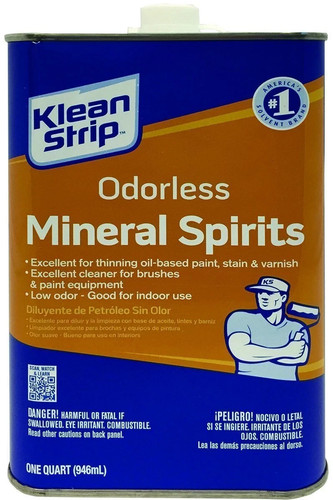 Odorless mineral spirits
 is slower-evaporating and better ventilated than regular mineral spirits. Hardware store quarts are more than enough for multiple machines.
Odorless mineral spirits
Odorless mineral spirits is slower-evaporating and better ventilated than regular mineral spirits. Hardware store quarts are more than enough for multiple machines.
 Light machine oil
Sewing machine oil is the right viscosity for typewriter pivots. Dedicated typewriter oil is the same product in smaller bottles, often at a premium price.
Light machine oil
Sewing machine oil is the right viscosity for typewriter pivots. Dedicated typewriter oil is the same product in smaller bottles, often at a premium price.
 Canned air / electronics duster
Standard electronics duster cans work fine. The straw extension is essential for directing airflow into segment slots and under the platen.
Canned air / electronics duster
Standard electronics duster cans work fine. The straw extension is essential for directing airflow into segment slots and under the platen.
 Universal typewriter ribbons
Always install a fresh ribbon after cleaning. An old dried ribbon will produce poor impressions regardless of how clean the slugs are — making it impossible to evaluate whether cleaning worked.
Universal typewriter ribbons
Always install a fresh ribbon after cleaning. An old dried ribbon will produce poor impressions regardless of how clean the slugs are — making it impossible to evaluate whether cleaning worked.