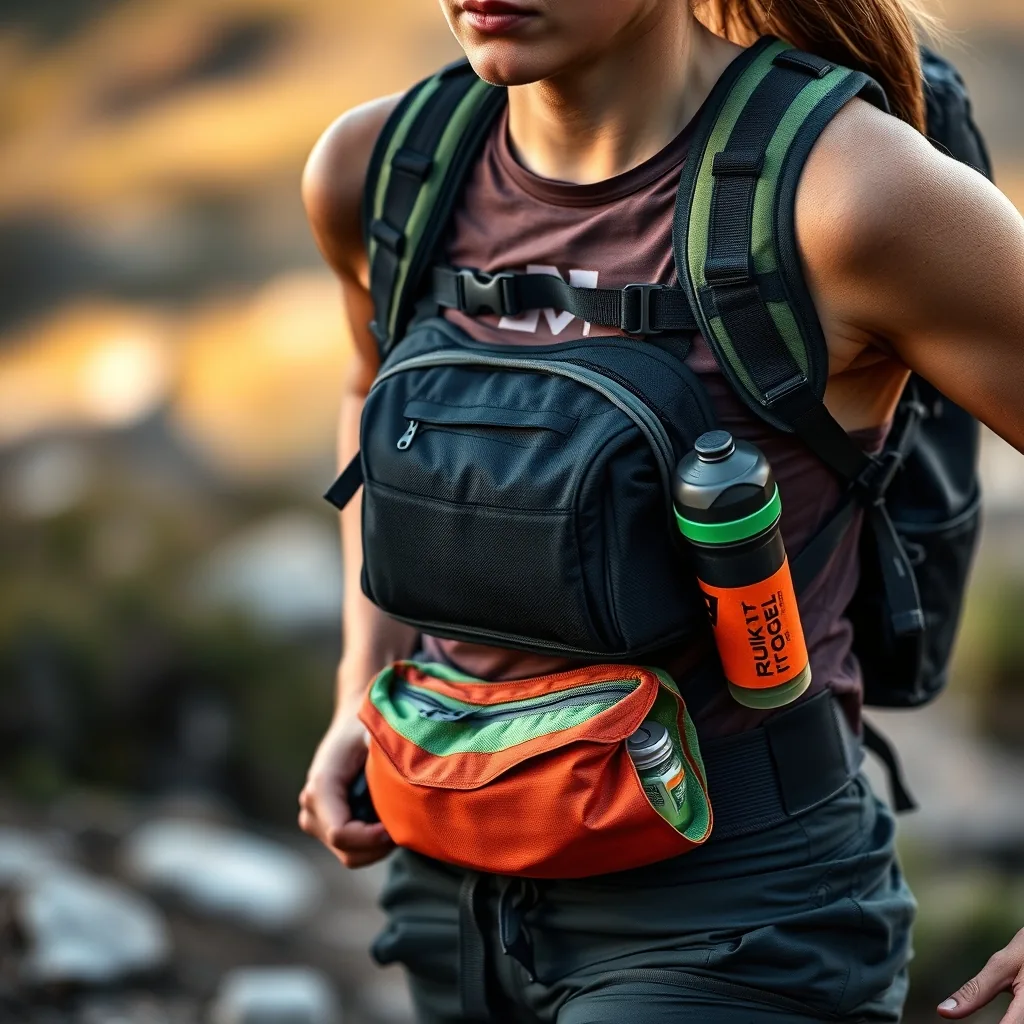
The three main fluid carriage systems for trail running — hydration vests, handheld bottles, and running belts — each have legitimate use cases. The mistake is picking a category because it looks right or because someone on a forum recommends it, without thinking through the specific demands of your run. A vest that works perfectly for a 30-mile mountain race is overkill and bounce-inducing on a 6-mile loop with two water fountains. A handheld that's fine for a cool morning run becomes inadequate in a desert canyon with no shade.
This guide breaks down each system honestly: what it's designed for, where it fails, and the variables that should drive the decision.
The Three Systems, Briefly
Handheld Bottle
- 500–750ml capacity
- Minimal bounce
- One hand occupied
- Fastest to refill
- No gear storage
Running Belt
- 500ml–1.5L capacity
- Hands free
- Small pocket for keys/phone/gels
- Bounce varies by fit
- Limited to flat-ish terrain
Hydration Vest
- 1.5L–6L+ capacity
- Hands free
- Carry food, layers, first aid
- Warmth-adding in cold
- More to fit correctly
Handheld Bottles: When They Make Sense
A handheld bottle is a soft or hard bottle with a hand strap so you're not gripping it constantly. They typically hold 500–750ml. Nathan, Salomon, and Ultimate Direction all make versions; the differences come down to the strap design and how easy the top is to open while running.
Best case: shorter distances with aid, cooler conditions
Handhelds shine on runs under 10 miles where resupply is available every 3–5 miles — organized trail races, loops on known routes, park running where water fountains or streams are reliable. At these distances, 500ml is often enough fluid between stops, and the simplicity of a handheld beats managing a vest.
They're also the right tool on technical terrain where you want both hands available for scrambling, but you need to drink frequently. In that case, some runners carry a single handheld in the weaker hand and use the dominant hand for climbing moves. This works only if the terrain isn't so technical that both hands need to be completely free.
Where handhelds fail
- Distance. 500ml is inadequate for anything over 10 miles in heat, or 15+ miles in mild conditions. You can carry two handhelds, but most runners find this awkward beyond 90 minutes.
- Rocky technical terrain. Falling onto a handheld is a real risk on uneven ground. If you're scrambling or frequently catching yourself, a handheld introduces a hazard.
- Trekking poles. You can't effectively use poles with a handheld in one hand. If your terrain or fitness level calls for poles, switch to a vest or belt.
- Mandatory gear. Trail races and organized events increasingly require runners to carry a phone, emergency blanket, first aid supplies, or rain gear. A handheld carries none of this.
Running Belts: The Middle Ground
Running belts (also called waist packs or hydration belts) sit at your hips and carry one or more bottles — usually 150–500ml total — plus a small pouch for keys, phone, and nutrition. They range from simple single-bottle holders to more elaborate designs with compartmentalized pockets.
Best case: moderate distances, flat to rolling terrain, known routes
Belts work well for 8–18 mile runs where you need more fluid than a single handheld but don't want a vest, on terrain that doesn't require precise hip or torso stability, and on routes where you know the resupply points and can plan accordingly. Many road-to-trail runners start with belts as a step up from handhelds.
They're significantly lighter and less hot than vests, which matters in summer or at lower elevations. On flat to moderately hilly routes, bounce is manageable once you find the right tightness and bottle placement. Belts also work better for shorter women and runners with narrower torsos who find vests difficult to fit without significant bouncing.
Where belts fail
- Technical descent. On steep rocky terrain, hip-level weight shifts your center of gravity in a way that vest chest weight doesn't. Many runners find belt bounce becomes a real problem on technical descents over 15% grade.
- Larger bodies. Belts that fit securely on smaller frames sometimes don't cinch tight enough on larger frames to eliminate bounce. The range of adjustability varies significantly by model — try before committing.
- Capacity. If you need more than 1.5L of fluid between stops — typically runs over 15 miles in moderate heat or 10 miles in significant heat — a belt won't hold enough without adding a handheld alongside it, which defeats the purpose.
- Mandatory gear requirements. Same limitation as handhelds. Race-mandatory gear items don't fit in belt pouches.
Hydration Vests: When You Actually Need One
A hydration vest sits on your torso like a small backpack with front pockets. The fluid is typically in a bladder at the back (accessed by a hose at the shoulder) or in soft flasks in the front chest pockets, or both. Storage for food, layers, phone, and mandatory gear is standard.
Best case: 15+ miles, remote terrain, mandatory gear, heat or cold extremes
Once you're beyond 15 miles, or running terrain where you're more than an hour from assistance, or participating in a race with mandatory gear requirements, a vest becomes the appropriate tool. The additional storage for navigation, emergency supplies, nutrition for 3–6+ hours, and a rain layer makes it a genuinely different category of equipment from belts and handhelds.
Vests also work better in cold conditions. They add a layer over your torso, which extends the warmth range of a lighter shirt. For runs where temperatures may drop significantly during the outing — mountain trails in spring and fall, high-elevation routes — a vest that holds a packable layer in a back pocket is a meaningful safety tool, not just fluid storage.
Capacity: how much fluid do you actually need?
The standard guidance for trail running is 500ml per hour of effort in moderate conditions, increasing to 750ml–1L per hour in heat and at altitude. Using those figures:
- A 2-hour run: 1–2L between stops
- A 4-hour run: 2–4L total, depending on conditions and resupply access
- A full-day effort (8+ hours): 6–10L total consumption, but resupply is almost always available for runs this length
Most vests are sold in sizes based on total storage capacity (6L, 12L, 20L) with the hydration bladder accounting for 1.5–2L of that. A 6L vest is appropriate for events up to about 50K with aid stations. A 12L+ vest is for self-supported multi-hour efforts or races requiring significant mandatory gear.
The Self-Support Variable
Self-support means carrying everything you need to complete the run without external assistance — no aid stations, no crew, no ability to exit quickly if conditions change. This changes the gear calculation fundamentally.
Self-supported runs require:
- Navigation: Downloaded maps or a GPS device, not just a phone with signal-dependent apps.
- Emergency signaling: A whistle at minimum; a PLB or satellite communicator for remote mountain terrain.
- Shelter: Emergency bivvy or space blanket for runs where weather can change rapidly.
- First aid: Blister kit, compression bandage, and any personal medications for runs over 3 hours in remote terrain.
- Extra food: At least one extra gel or bar beyond what you plan to eat, for the case where your pace drops significantly.
- Water treatment: A filter or purification tablets if stream crossings are your resupply.
None of this fits in a belt or a handheld. Self-supported running, defined honestly, requires a vest — and a vest with enough capacity to carry these items plus fluids and food without being stuffed so tight it creates pressure points.
Heat Changes the Math
At 85°F or above, sweat rate for most runners exceeds 1L per hour. In direct sun and low humidity, it can reach 1.5–2L per hour. At those rates, a handheld 500ml bottle lasts about 20–30 minutes in real terms. Fluid carriage that was adequate on a cool morning becomes dangerously inadequate in an afternoon desert canyon.
As a practical rule: add one system tier for heat. If you would carry a handheld in cool conditions, carry a belt in the heat. If you would carry a belt, carry a vest. The fluid requirement in high heat on a 10-mile run equals the fluid requirement in moderate conditions on a 20-mile run.
Terrain Changes the Math
Technical terrain — sustained rocky descents, scrambling, stream crossings — changes the tradeoffs between systems. On smooth single-track, any system can work. On terrain where foot placement demands attention and frequent course corrections, the interference from bouncing gear becomes safety-relevant, not just annoying.
Vests, properly fitted so that straps don't bounce on the chest, are generally more stable on technical terrain than waist systems because the weight sits higher and closer to the body's center of mass. A vest that fits well on smooth trail should fit equally well on rocky terrain. A belt that's marginally okay on smooth trail becomes more of a problem on technical ground.
Fit Before Capacity
Every category of hydration gear performs poorly if it doesn't fit correctly. The most common mistake runners make is buying on capacity or brand name without testing fit during a real run, or testing fit in-store with light pockets and then loading the vest fully for the first time on a long run.
Specific fit cues to check before committing:
- Vests: Front straps should sit flat without crossing over the collarbones. The sternum strap keeps lateral movement in check. Shoulder straps shouldn't dig in when arms swing forward. Load the vest to running weight before evaluating.
- Belts: Should sit at the iliac crest (top of the hip bone), not the waist. If it rides up during running, it's too loose or positioned too high.
- Handhelds: The strap should grip the back of the hand without cutting off circulation. You should be able to loosen it completely within seconds — useful if you need both hands unexpectedly.
Decision Summary
If you run races or trails regularly, you'll likely own at least two of these systems over time. The practical guidance:
- Under 10 miles, cool, aid stations available: handheld
- 10–18 miles, moderate conditions, known route: belt or single-flask vest
- 15+ miles any conditions, or any distance in significant heat: vest
- Any self-supported run in remote terrain: vest, period
- Race with mandatory gear list: read the list before buying anything — most require a vest
Fluid carriage gear worth buying
Smart eBay searches for vests, flasks, and hydration gear. We earn a small commission on qualifying sales. Full disclosure.
 Hydration vest (6L)Nathan Pinnacle and Salomon ADV Skin 6 are the benchmark mid-range vests for runs up to marathon and 50K distance. Both fit well on narrow and medium torsos.
 Soft flasks (500ml)Soft flasks collapse as you drink — no sloshing, lighter as they empty. Salomon and Ultimate Direction flasks are the standard. Bite-valve tops open faster than screw caps on the run.
 Handheld bottle with strapNathan SpeedDraw Plus and Ultimate Direction Jurek AK are the benchmark handhelds. The pouch behind the bottle holds gels, keys, and a folded ID — more useful than it looks.
 Running beltFlip Belt and Nathan Hipster are stable options for runners who want hands-free without a vest. Fit at the iliac crest, not the waist — most bounce problems are a positioning issue.
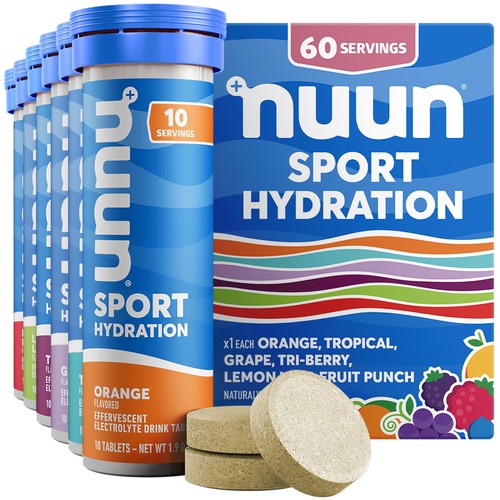 Electrolyte tabletsPlain water without electrolytes isn't sufficient over 90 minutes of effort in heat. Nuun Sport and SaltStick Fastchews are both compact enough for a vest chest pocket or belt pouch.